Today's edition is inspired by the developers of Dune: Awakening who managed to use an impressive amount of lore-acurate references in their game - including a bunch of Fremen technology, some of which were relatively obscure, throw-away references in the original book.
This made me think to comb through the pages of Dune and try to find all the tech that's specific to the way of life on Arrakis.
I've noticed three main themes that ring true for most, if not all, Fremen technology.
First, as you'd expect of innovation born out of a complete lack of resources, the focus is always on function, not form. Fremen are considered backward savages by the Imperium, desert rats who scrape by - because their technology is invisible.
Paul lifted the paracompass from the pack, returned it, said: "Think of all these special-application Fremen machines. They show unrivaled sophistication. Admit it. The culture that made these things betrays depths no one suspected."
— Dune [1965]
Secondly, instead of trying to conquer their environment, they adapted to it; they made themselves part of Arrakis. They're the de facto rulers of the planet precisely because they understand its necessities and live by them.
And finally, this way of life translates to much of their tech having at least cultural, if not outright religious significance.
Take maker hooks as an example.
Yes, at first glance they're just oversized fishing gear for oversized worms - sticks with curved ends - but these "simple" tools let a human mount and control the biggest apex predator known to mankind.
Their design demonstrates the Fremen understanding of the sandworm's biology in redirecting its own instincts. And their cultural importance is in the name - they're sacred implements for communing with Shai-Hulud, essential tools for the Fremen rite of passage.
"Thus it is spoken," Chani said. "Giudichar mantene: It is written in the Shah-Nama that water was the first of all things created."
— Dune [1965]
Let's start with the obvious: all the tech required for the most important substance in the desert. Getting it, keeping it, and ultimately, passing it to the tribe.
The "biggest" source of water on Arrakis is atmospheric moisture - and while there's not much of it, a little can go a long way. The only question is how to capture it.
The smallest devices are dew collector or dew precipitators. These are the size and shape of an egg and their main feature is that they can "force" condensation.
Here's Harah explaining it to Paul:
"Each bush, each weed you see out there in the erg," she said, "how do you suppose it lives when we leave it? Each is planted most tenderly in its own little pit. The pits are filled with smooth ovals of chromoplastic. Light turns them white. You can see them glistening in the dawn if you look down from a high place. White reflects. But when Old Father Sun departs, the chromoplastic reverts to transparency in the dark. It cools with extreme rapidity. The surface condenses moisture out of the air. That moisture trickles down to keep our plants alive."
— Dune [1965]
Here's one I absolutely did not remember until Dune: Awakening put an Holtzmann-field powered scythe in my hands to gather droplets of water from a field of flowers.
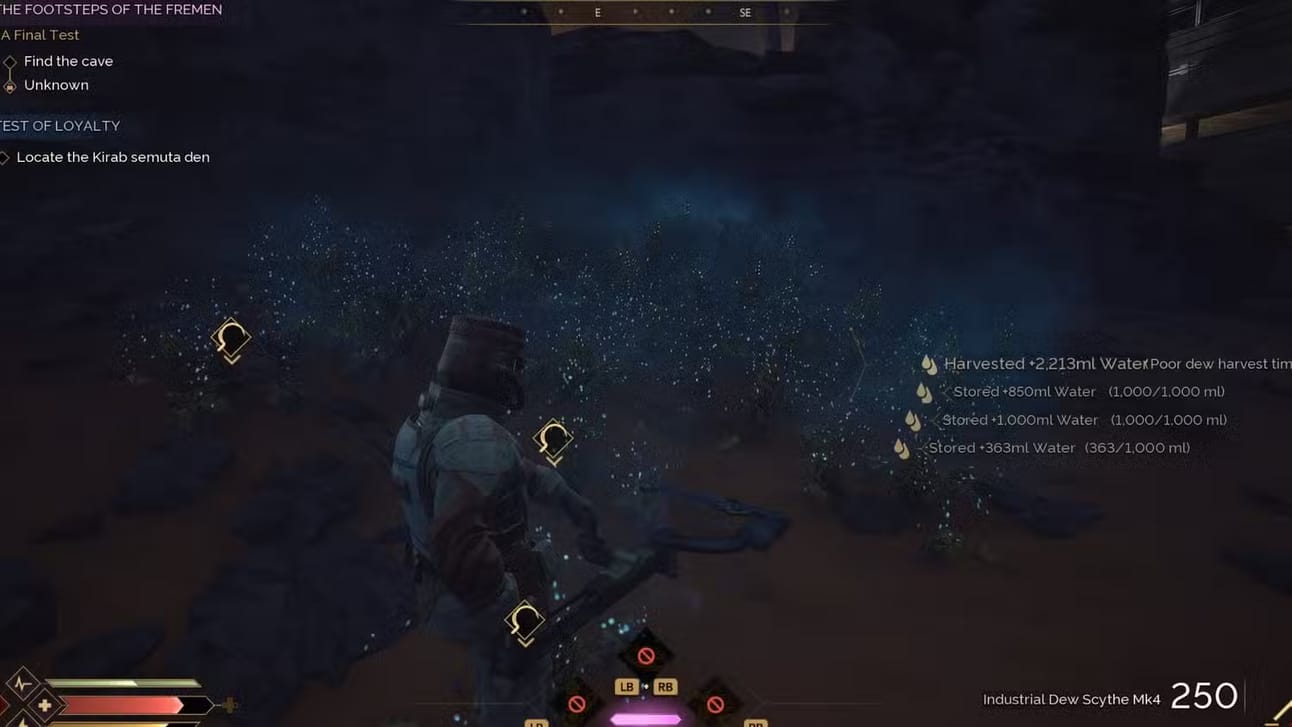
But it's absolutely canon, the Terminology of the Imperium describing dew gatherers as workers who (I kid you not) "reap dew from the plants of Arrakis, using a scythelike dew reaper."
The Duke nodded, thinking: Perhaps this planet could grow on one. Perhaps it could become a good home for my son.
Then he saw the human figures moving into the flower fields, sweeping them with strange scythe-like devices—dew gatherers. Water so precious here that even the dew must be collected.
— Dune [1965]
And if you need a consistent supply that needs no manual labor, you build yourself a large condensation device.
WINDTRAP: a device placed in the path of a prevailing wind and capable of precipitating moisture from the air caught within it, usually by a sharp and distinct drop in temperature within the trap.
— Terminology of the Imperium, Dune [1965]
These concealed surface intakes funnel moisture-laden night air into deep, cold caverns where temperature differential precipitates water into vast hidden cisterns.
While their use is not exclusive to Fremen, it's certainly a requirement on Arrakis.
"There were water riots when it was learned how many people the Duke was adding to the population," she said. "They stopped only when the people learned we were installing new windtraps and condensers to take care of the load."
— Dune [1965]
But once you figured out how to get water, you have a whole new problem: making sure it doesn't immediately escape and evaporate.
Stilgar came up behind Jessica, called an order to a group on the left. "Get the doorseal in place and see to moisture security."
— Dune [1965]
Made out of plastic, these portable sheets ensured a hermetic seal; they're basically airlocks designed to trap humidity.
Similar to a doorseal, the stilltent provides a safe space. This portable structure reclaims moisture from the air inside while providing protection from the elements. And since those elements include sand, a sandsnork would be used to pump surface air into a sand-covered stilltent.
But of course, the most iconic piece of tech, and certainly the identifying garment of the Fremen is the stillsuit. Its fabric is a micro-sandwich performing functions of heat dissipation and filter for bodily wastes. Reclaimed moisture is made available by tube from catchpockets.
"It's basically a micro-sandwich—a high-efficiency filter and heat-exchange system." He adjusted the shoulder seals. "The skin-contact layer's porous. Perspiration passes through it, having cooled the body… near-normal evaporation process. The next two layers…" Kynes tightened the chest fit. "… include heat exchange filaments and salt precipitators. Salt's reclaimed."
[…]
"Motions of the body, especially breathing," he said, "and some osmotic action provide the pumping force." He loosened the chest fit slightly. "Reclaimed water circulates to catchpockets from which you draw it through this tube in the clip at your neck."
[…]
"Urine and feces are processed in the thigh pads," he said, and stood up, felt the neck fitting, lifted a sectioned flap there. "In the open desert, you wear this filter across your face, this tube in the nostrils with these plugs to insure a tight fit. Breathe in through the mouth filter, out through the nose tube."
— Dune [1965]
A properly fitted stillsuit loses you only "a thimbleful of moisture a day" - 2-5 milliliters versus the 10+ liters without its protection.

"A man's flesh is his own; the water belongs to the tribe."
— Dune [1965]
This one's a piece of tech that we know exists, but its functioning isn't really described in the core canon.
The word "deathstill" doesn't even show up in the first two books.
When it was done, Muriz clapped his hands once. Attendants came and began removing the bodies, taking them to the deathstill where they could be rendered for their water.
— Children of Dune [1976]
We know from Kynes's description that Fremen recover the water of the dead because - while it might sound morbid - the dead don't need their water. The living do.
And we know from Jamis's funeral that his body provided over 33 liters.
The Fremkit, as the name implies, is a kit of Fremen manufacture. Basically a pack containing anything you might need to survive in the open desert.
Literjons of water, stilltent, energy caps, recaths, sandsnork, baradye pistol, sinkchart, filtplugs, paracompass, thumpers, maker hooks, fire pillar…
Some of these might look less familiar than others.
Recaths and filtplugs handle water filtration. The baradye pistol is not really a gun - it's a static-charge tool for laying down a large dye marker area on sand. And the sinkchart contains navigational data with reference to the most reliable paracompass routes between places of refuge.
Speaking of which.
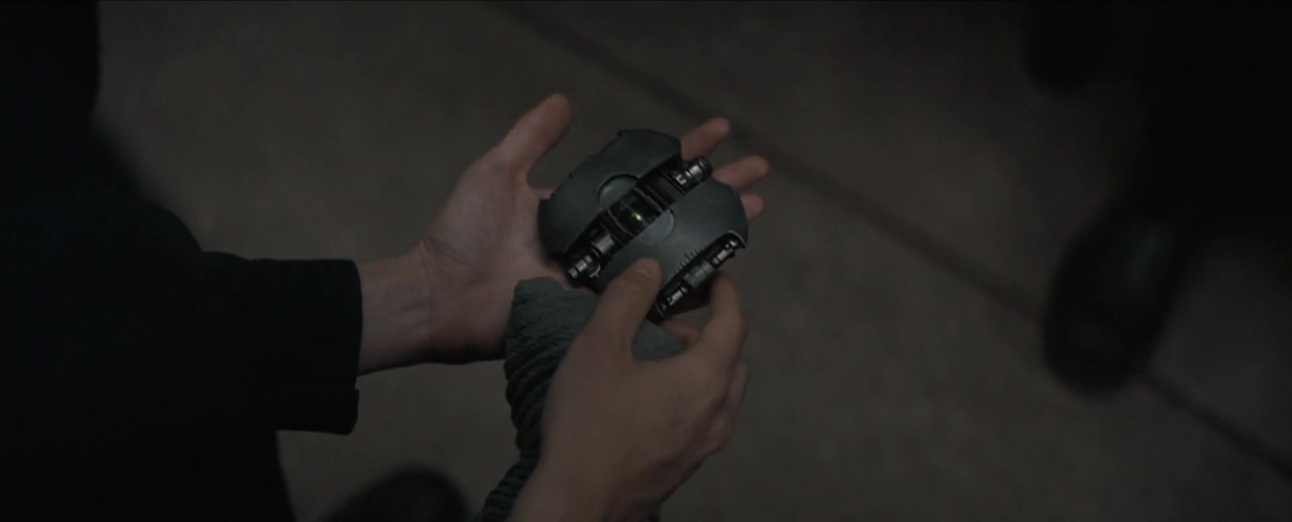
While it's not explained in detail, we know for a fact that a normal compass just doesn't work on Arrakis - it might be due to the general instability of the planet's magnetic field or only an issue during severe magnetic storms.
Instead, we have paracompasses that can determine direction by local magnetic anomalies.
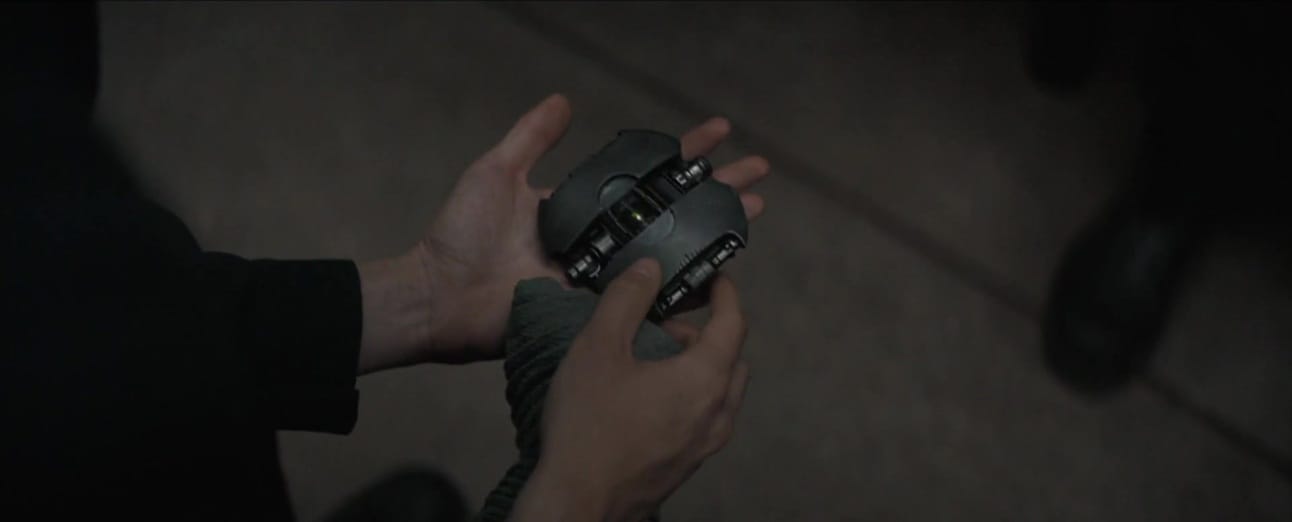
Canonically, this device should be a relatively large piece of equipment because it has a powerpack housing a good few ounces of acidic infusion.
Like the deathstill, this is another piece of tech that we know exists but isn't really explained or showcased.
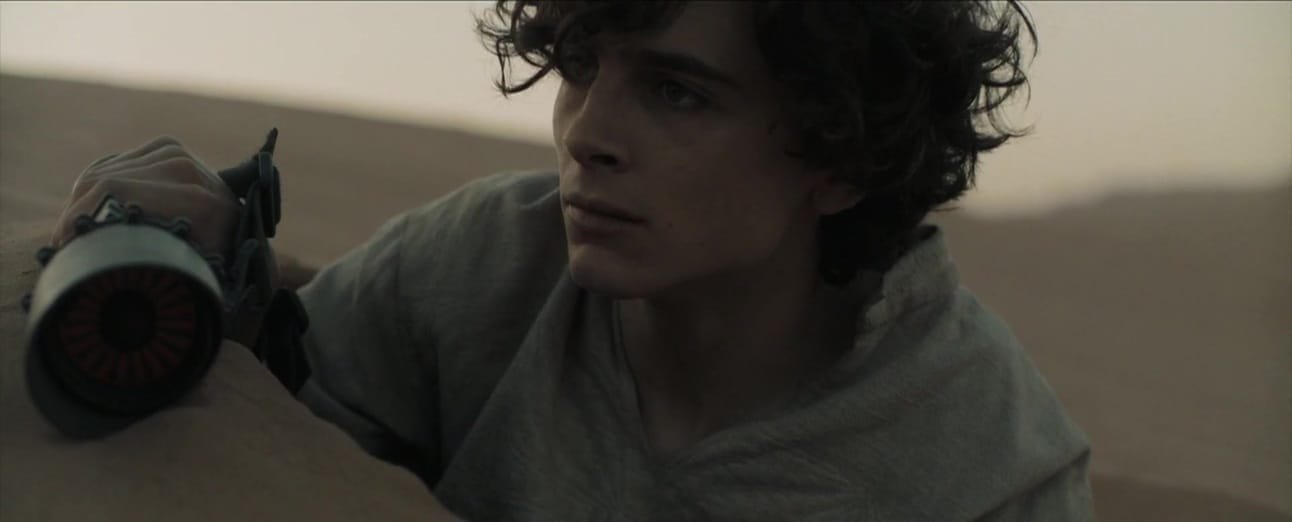
We only call it a sand compactor colloquially because we know that's what it does.
Remember when Paul's and Jessica's stilltent gets buried under sand overnight and they need to "dig" themselves out?
Well, a shovel wouldn't help you much in that situation - but the "static compaction tool" not only moves the sand out of the way but keeps it in place, acting like some kind of forcefield, creating a tunnel.
Sand rasped as he opened the sphincter and a burred fizzle of grains ran into the tent before he could immobilize it with a static compaction tool. A hole grew in the sandwall as the tool realigned the grains. He slipped out and her ears followed his progress to the surface.
What will we find out there? she wondered. Harkonnen troops and the Sardaukar, those are dangers we can expect. But what of the dangers we don't know?
She thought of the compaction tool and the other strange instruments in the pack. Each of these tools suddenly stood in her mind as a sign of mysterious dangers.
— Dune [1965]
Anyone even slightly familiar with Fremen will know that they have blue-within-blue eyes, they wear stillsuits to preserve water and that they ride the giant sandworms.
How do they do that?
Well, they plop down a thumper, which is a meter-long rod "with spring-driven clapper at one end" to call the worm; they then use the aforementioned maker hooks to mount and steer.
But do you remember goads?
You're forgiven if you don't because it's a blink and you'll miss it type of reference.
Freed of its goads and hooks, the big worm began burrowing into the sand. Paul ran lightly back along its broad surface, judged his moment carefully and leaped off. He landed running, lunged against the slipface of a dune the way he had been taught, and hid himself beneath the cascade of sand over his robe.
— Dune [1965]
There's no real description of what they are, but there's another quote that explains what they're used for.
And far to the rear along the worm's surface, Paul heard the beat of the goaders pounding the tail segments. The worm began picking up speed. Their robes flapped in the wind. The abrasive sound of their passage increased.
— Dune [1965]
Although strictly speaking it's not an invention, it's so fundamentally and exclusively Fremen that the Harkonnen were willing to pay one million solari to get their hands on a single one of these knives.
They're milky white and glow seemingly with a light of their own.
CRYSKNIFE: the sacred knife of the Fremen on Arrakis. It is manufactured in two forms from teeth taken from dead sandworms. The two forms are "fixed" and "unfixed." An unfixed knife requires proximity to a human body's electrical field to prevent disintegration. Fixed knives are treated for storage. All are about 20 centimeters long.
— Terminology of the Imperium, Dune [1965]
"May thy knife chip and shatter" takes on a whole new meaning, knowing that they naturally do that when their owner dies. It's the Fremen version of "I hope you die."
"It is said that the Duke Leto Atreides rules with the consent of the governed," Stilgar said. "Thus I must tell you the way it is with us: a certain responsibility falls on those who have seen a crysknife." He passed a dark glance across Idaho. "They are ours. They may never leave Arrakis without our consent."
— Dune [1965]
While it might feel like a secret, it really isn't: sietch factories.
Kynes talked about them relatively freely.
"The design and manufacture of these stillsuits bespeaks a high degree of sophistication," the Duke said.
"Someday I may show you a sietch factory," Kynes said.
"I would find that interesting," the Duke said. "I note that suits are manufactured also in some of the garrison cities."
"Inferior copies," Kynes said. "Any Dune man who values his skin wears a Fremen suit."
— Dune [1965]
But obviously, no one really knew the full extent of the production facilities.
He heard his mother cough then, and her voice came back to him through the press of the troop: "How rich the odors of your sietch, Stilgar. I see you do much working with the spice … you make paper … plastics … and isn't that chemical explosives?"
[…]
They passed another brightly lighted room visible through an arch on their left. "What's made there?" Paul asked.
"They repair the weaving machinery," Harah said. "But it must be dismantled by tonight. " She gestured at a tunnel branching to their left. "Through there and beyond, that's food processing and stillsuit maintenance." She looked at Paul. "Your suit looks new. But if it needs work, I'm good with suits. I work in the factory in season."
— Dune [1965]
They even made musical instruments.
As they neared the qanat they heard music from a high entrance of the sietch. It was an old-style Fremen group -- two-holed flutes, tambourines, tympani made on spice-plastic drums with skins stretched taut across one end. No one asked what animal on this planet provided that much skin.
— Children of Dune [1976]
As I mentioned in the beginning, what makes Fremen technology so real is that their tools are part of who they are. They're not just implements of survival but the way of life on Arrakis.
The deathstill serves as both industrial equipment and holy altar. Crysknives are simultaneously weapons and religious artifacts. Maker hooks enable transportation and enforce spiritual connection with Shai-Hulud.
Fremen technology enforces social contracts. Waterdiscipline violations result in water debt. The ritual of "blooding" crysknives creates immediate personal cost for drawing weapons, forcing reflection before violence. Every device reinforces the cultural tenet that collective survival depends on individual discipline.
PS: That's why it's so heartwrenching that by the fourth book, a culture of necessities becomes cultural performance. In God Emperor, the "Museum Fremen" perform traditional skills for entertainment, their tools reduced to theatrical props.

.svg.png)
.png)

If you wanna chat, find me on BlueSky.
Even if you're not a supporter (yet), you can get new articles as an email as soon as they're published - full length for free stuff and a preview of the premium content.