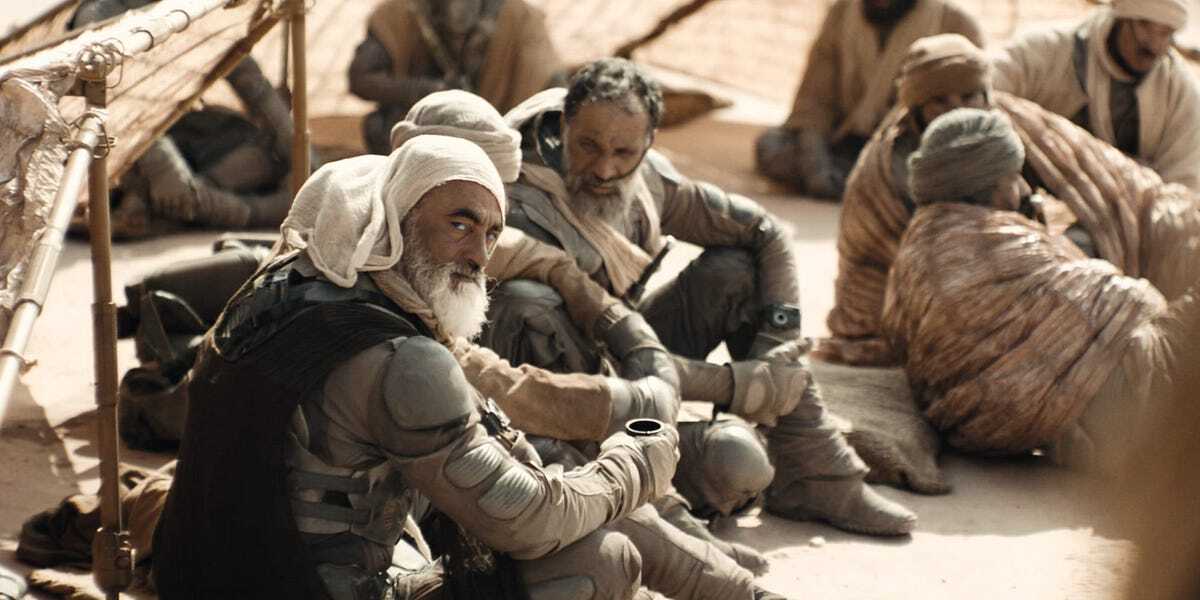
For last week's newsletter, I went through all the Dune books to create a complete collection of the Collected Sayings of Muad'Dib - my absolute favorite in-universe book.
As I mentioned then, Dune was the first book I've ever seen that used epigraphs at the beginning of chapters and they always felt interesting because they provided a glimpse behind the curtain.
Well. What began as focused research into a single Irulan book, quickly spiraled into an obsession.
I have to admit, this particular rabbit hole made me feel like I was Princess Irulan's Princess Irulan: haunting her as she haunted Paul, trying to document every quote, every in-universe book title, and every fragment of her extensive literary output across all Dune novels.
But it's done.
And today, I'm thrilled to share with you my most ambitious Dune project yet - a comprehensive database of Princess Irulan's complete literary works.
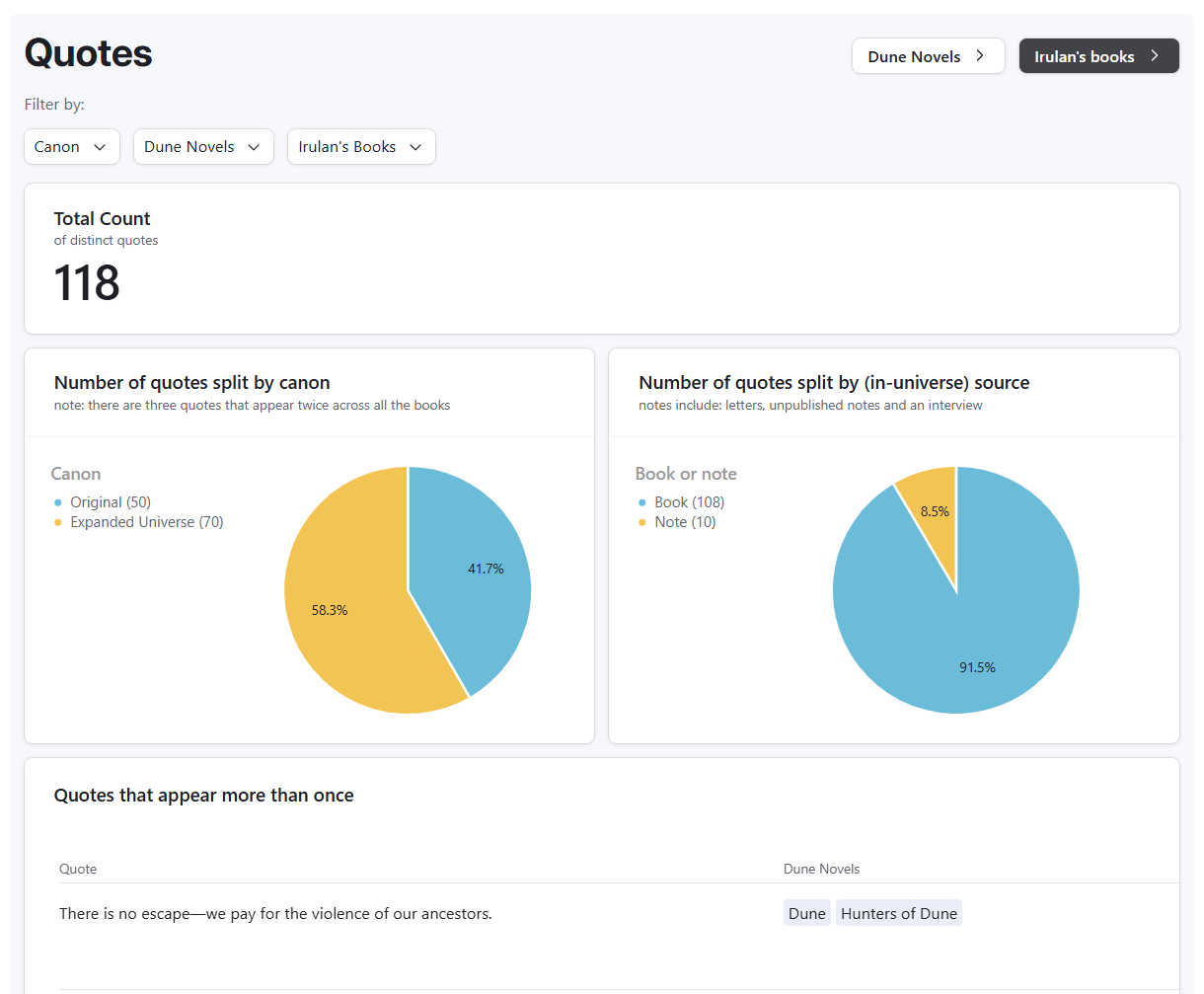
You can explore this database through three different Airtable interfaces.
1. Quotes - every epigraph attributed to the Princess Irulan; can be filtered by canon, Dune novels and Irulan's books to show only the quotes you're interested in.
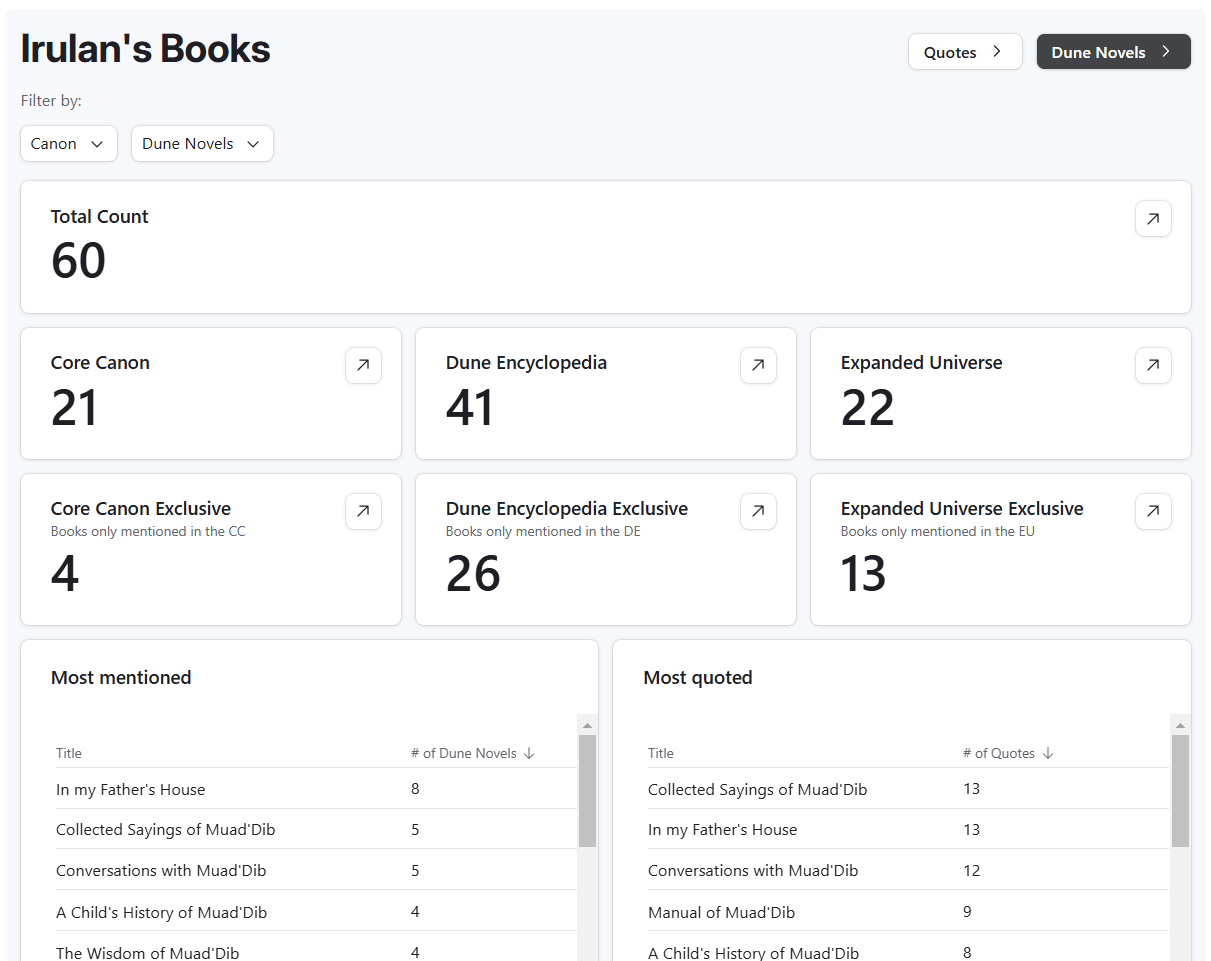
2. Irulan's books - every book attributed to the Princess Irulan and how often they show up; can be filtered by canon and Dune novels to show only the books you're interested in.
3. Dune novels - all Dune novels and how many of the in-universe books and quotes they contain; can be filtered by Canon and Irulan's books to show only the novels you're interested in.
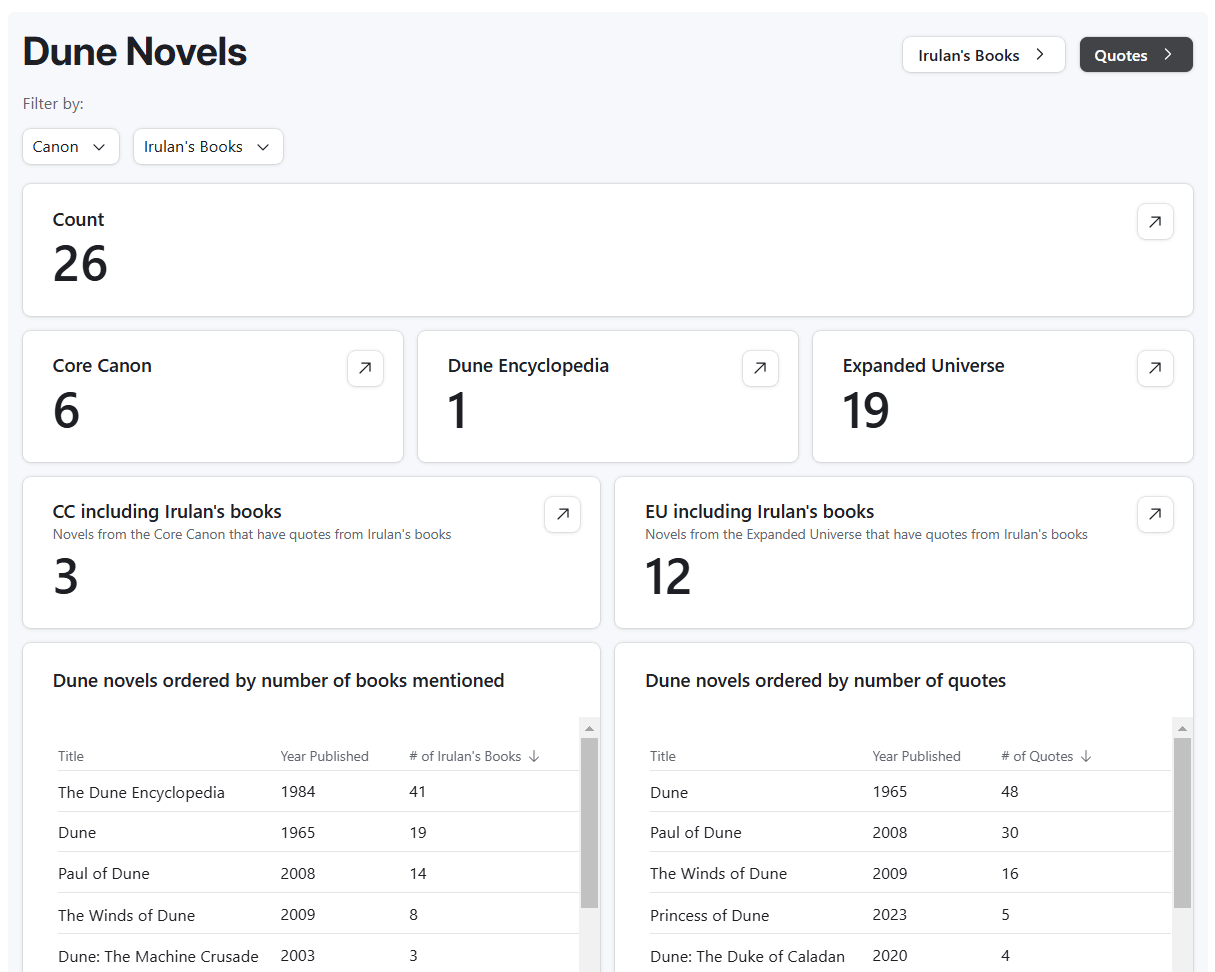
Wherever you start, you can always click over to the other two interfaces.
(This was a labor of love and I double-checked everything. Even so, there might be mistakes or errors - if you find any, please feel free to reach out.)

I would argue that Irulan's books and insights are the most fascinating of all the epigraphs in the Dune novels because of the complex position she ended up in.
She was:
Irulan understood that imperial power is both magnificent and constraining - a theme that would apply equally to Paul's reign. As she notes in In My Father's House:
My father […] was a man fighting constantly to escape the bars of an invisible cage. You must remember that he was an emperor, father-head of a dynasty that reached back into the dimmest history. But we denied him a legal son. Was this not the most terrible defeat a ruler ever suffered?
In the same in-universe book, she provides a uniquely intimate glimpse of her father's relationship with Duke Leto: "my father secretly wished the Duke had been his son."
This reveals the complex web of admiration, rivalry, and regret that characterized imperial politics - qualities that would later define her own relationship with Paul.
There's a total of 60 Irulan books across all the Dune novels - 41 are mentioned in the Dune Encyclopedia, which also provides help with categorizing the Princess' work:
I can only echo the Dune Encyclopedia, which states that Irulan's literary output was staggering in its breadth and depth.

As you browse through the database, sorting and filtering by different criteria, several themes emerge across Irulan's writings.
Her writings aren't just historical accounts - they reveal her unique perspective on power, prescience, and destiny.
First and foremost, Irulan grapples with her dual role as both historian and myth-maker. She's acutely aware that recording history also shapes it. Through her writings, she doesn't just document Paul's rise - she actively constructs the legend of Muad'Dib that will outlive him. This tension between objective recording and subjective interpretation runs throughout her work.
A second prominent theme is her analysis of power's mechanisms. Her observations on imperial politics reveal surprising insight into how power isolates and corrupts even the well-intentioned.
Irulan offers some of the trilogy's most profound reflections on the nature of seeing the future and whether such vision liberates or traps the seer. She understands that Paul's ability to see possible futures doesn't simplify his choices – it paralyzes him with too much knowledge.
Finally, though not Fremen herself, Irulan proves a keen observer of desert philosophy and how Arrakis itself shaped Paul's worldview. She recognizes how the harsh desert bred disciplines and perspectives that were alien to imperial thinking, yet crucial to understanding Muad'Dib's approach to power.
I encourage you to dive into the database - perhaps you'll discover patterns I've missed entirely. (Again, if you find any mistakes, I'd be more than happy to correct them.)
In many ways, the readers of Dune inhabit a position similar to Irulan's - observers fascinated by Paul's journey, trying to make sense of its philosophical implications, its warnings about power.
I'd argue that through these writings, we better understand our own relationship to history, mythology, and truth.

.svg.png)
.png)

If you wanna chat, find me on BlueSky.
Even if you're not a supporter (yet), you can get new articles as an email as soon as they're published - full length for free stuff and a preview of the premium content.