We all know Muad'Dib - the hopping rodent we'd call Jerboa on Earth.
"I will tell you a thing about your new name," Stilgar said. "The choice pleases us. Muad'Dib is wise in the ways of the desert. Muad'Dib creates his own water. Muad'Dib hides from the sun and travels in the cool night. Muad'Dib is fruitful and multiplies over the land. Muad'Dib we call 'instructor-of-boys.' That is a powerful base on which to build your life, Paul-Muad'Dib, who is Usul among us. We welcome you."
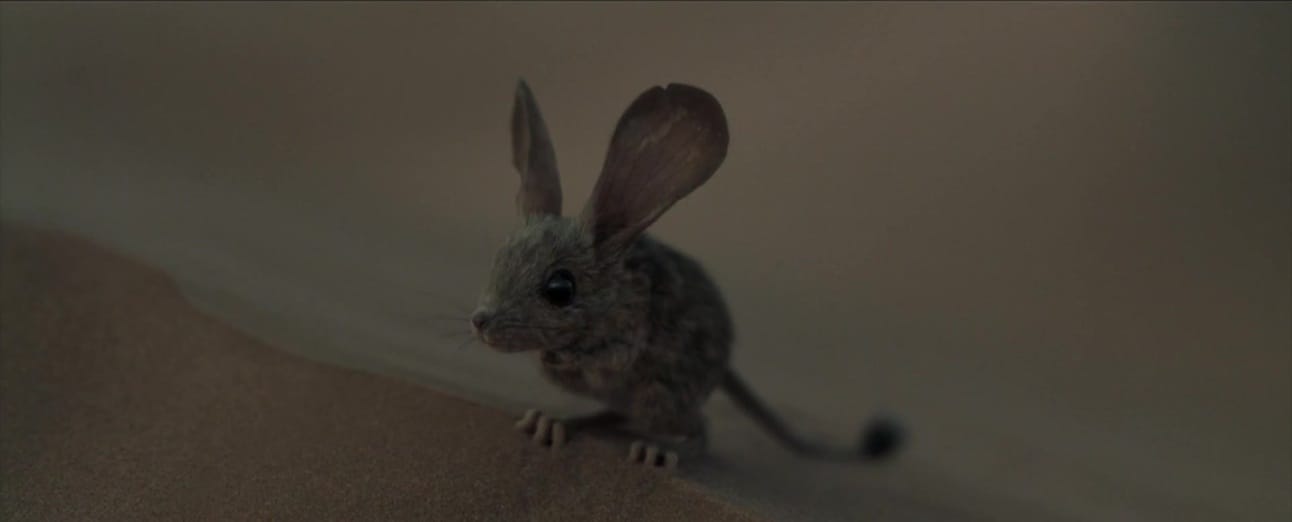
But like a toddler at Halloween, Paul could have chosen from a menagerie of desert animals to cosplay as.
In the original Dune, Frank Herbert sets up a really subtle piece of foreshadowing that only pays off if you continue reading past the story's end and are willing to check out the various appendices.
At the very beginning of the book, before leaving Caladan, Dr. Yueh gives Paul a filmbook on Arrakis' ecology and makes this comment:
The planet seems to have opened its arms to certain terranic life forms. It's not clear how. I must seek out the planetary ecologist when we arrive — a Dr. Kynes — and offer my help in the investigation.
You only need to keep this in mind for a few hundred pages. Once you get to Appendix I: The Ecology of Dune, you realize that the good Dr. Kynes wouldn't have needed any help with that investigation.
It was his father, Pardot Kynes, who started the terraforming efforts, which Liet-Kynes continued working on - with the active support of the Fremen.
They turned then to the necessary animal life — burrowing creatures to open the soil and aerate it: kit fox, kangaroo mouse, desert hare, sand terrapin… and the predators to keep them in check: desert hawk, dwarf owl, eagle and desert owl; and insects to fill the niches these couldn't reach: scorpion, centipede, trapdoor spider, the biting wasp and the wormfly… and the desert bat to keep watch on these.
And while the fluid stability of the ecological system is awe-inspiring, I'd like to focus on the unsung heroes: the working animals that deserve way more recognition.

These furry little creatures are the Fremen's primary way of communication.
Imagine a homing pigeon, but instead of tying a written note to the body, Fremen use so-called "distrans" devices to imprint a message on the bats' nervous system.
This modifies the animal's normal cry to carry the message imprint, which can be deciphered by another distrans device.
And while bats are my personal favorites, anything with a nervous system can carry a distrans - some sietches use birds, but throughout the books, we've seen messages implanted in humans as well.
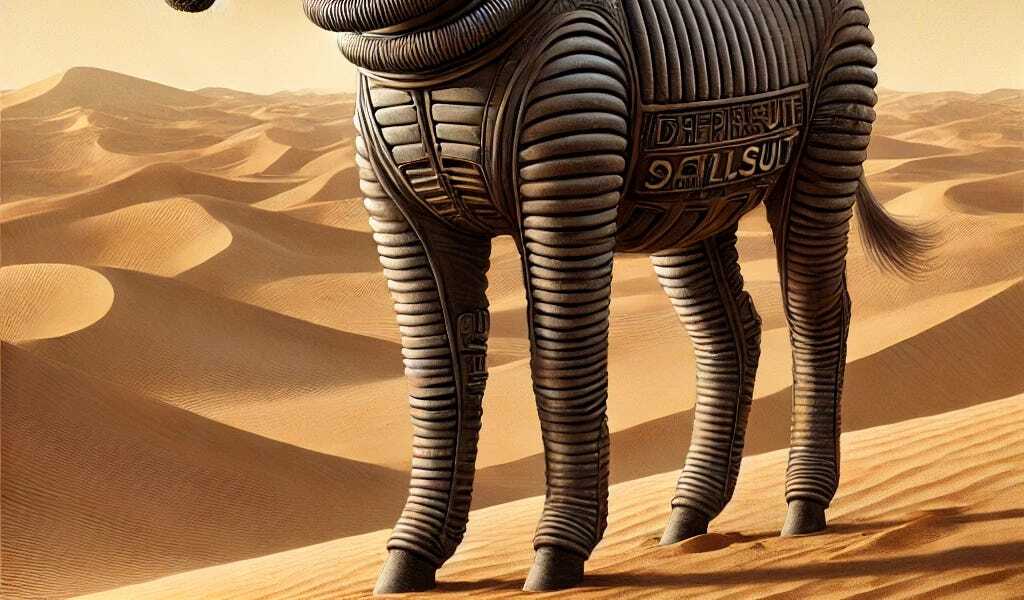
If there's one thing I sorely missed from the movie adaptations, it's a donkey in a stillsuit.

The only place to find a description of this majestic beast of burden is, again, Appendix I of the original Dune.
Pets were almost unknown, stock animals rare. Some smugglers employed the domesticated desert ass, the kulon, but the water price was high even when the beasts were fitted with modified stillsuits.
Whether it's the Lynch or Villeneuve version, the cuteness rating of the movies would've been through the roof.
Yes, indeed: fish on Arrakis.
In the third book, Children of Dune, we learn that Fremen always planted predator fish in their water cisterns.
Your first thought might be that it's to keep the water clean from various insects and critters - and while I'm sure some of that is happening, the primary target was sandtrout.
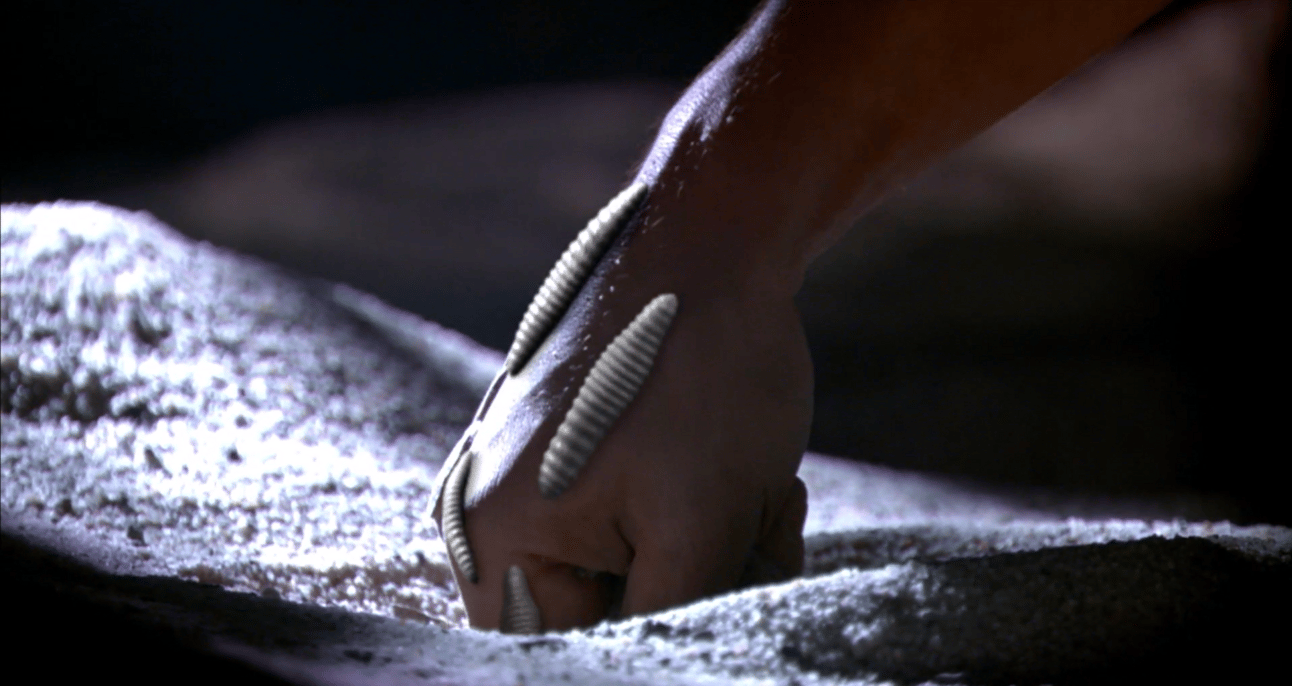
Sandtrout are the harmless larval form of giant sandworms, and they really like water. To the point where it's the sandtrout that turned Arrakis into a desert planet.
So it makes sense that if you're trying to collect water, you'd protect it from these creatures.
I love that Frank Herbert thought to include such a variety of working animals.
These details, some of which are hidden in notes and appendices, make the world of Dune that much more real and immersive.
When it comes to building a world, Herbert almost seems to be talking directly to the reader when he has Pardot Kynes explain ecology.
The thing the ecologically illiterate don't realize about an ecosystem," Kynes said, "is that it's a system. A system! A system maintains a certain fluid stability that can be destroyed by a misstep in just one niche. A system has order, a flowing from point to point. If something dams that flow, order collapses. The untrained might miss that collapse until it was too late. That's why the highest function of ecology is the understanding of consequences.
The same could be said about writing fiction.
.svg.png)
.png)

If you wanna chat, find me on BlueSky.
Even if you're not a supporter (yet), you can get new articles as an email as soon as they're published - full length for free stuff and a preview of the premium content.

_01460.jpg)