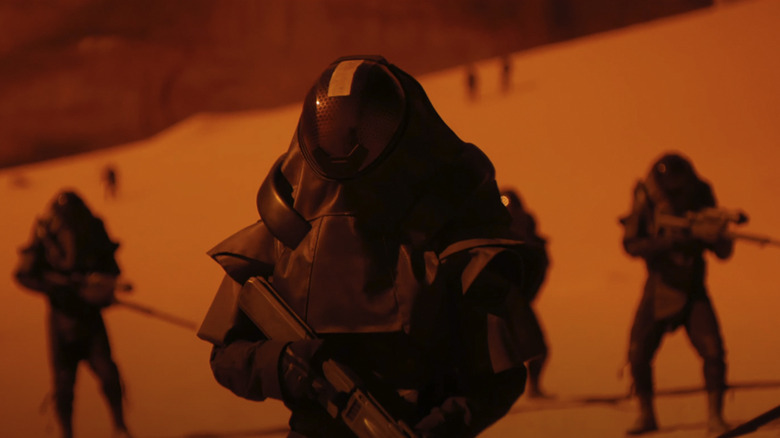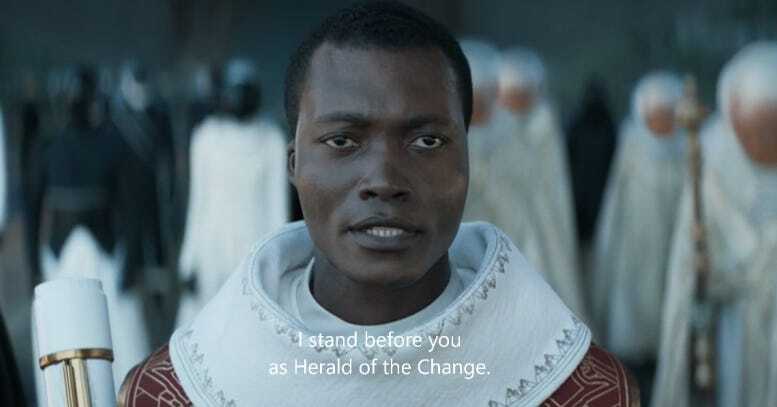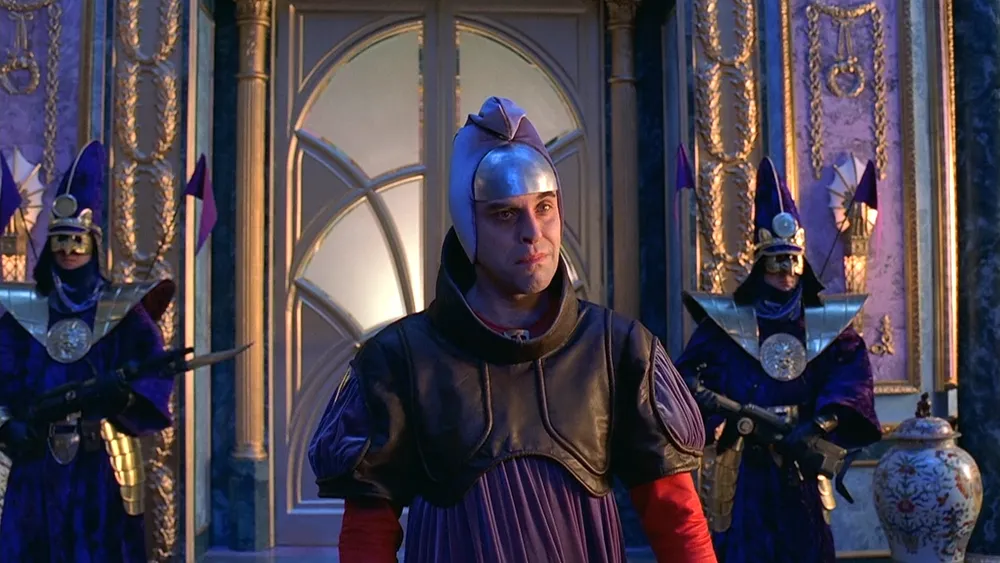
Count Hasimir Fenring is one of those characters who appear in like two chapters and still manage to steal the show.
One part of the power couple of the known universe, an almost Kwisatz Haderach with the political mind of Machiavelli and the fighting skills of John Wick, he's a nerd looking fella who blends into the wallpaper and who single handedly decided to allow Muad'Dib to take over.
With all this to his name, I'm perplexed why only the SyFy mini series allowed him any screen time. And even there, he was basically remade into an imperial mentat.
So let's give him the spotlight he deserves… and so carefully avoids.
Fenring's appearance was his first and greatest weapon - specifically, how utterly unthreatening he looked.
"Dapper and ugly little man" was Irulan's charitable description. Feyd-Rautha, with the casual cruelty of youth, was more detailed: "a small man, weak-looking. The face was weaselish with overlarge dark eyes. There was gray at the temples."
Despite being lean and muscular, he was small-statured and, by all accounts, an unattractive man.
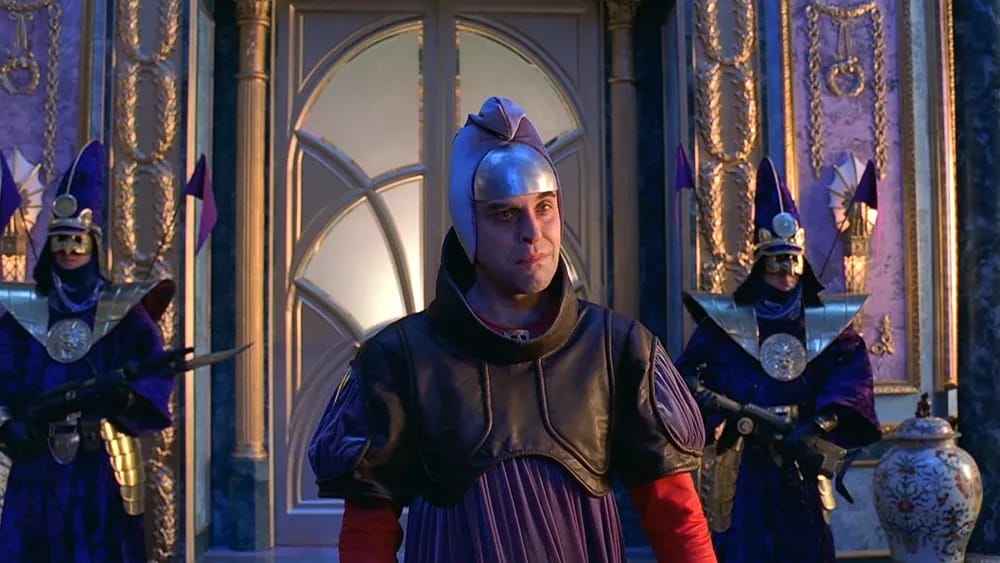
The expanded universe books lean into this imagery even harder, dubbing him "the Ferret" and describing his "narrow face and pointed chin" as well as a nasal voice that only accentuated his most distinct mannerism, a halting speech pattern, punctuated by hums and seemingly random vocalizations.
"Um-m-m-m-ah-hm-m-m-m," said the Count. He studied Feyd-Rautha. "The, hm-m-m-m, precise young man, ah, my … hm-m-m-m … dear?" The Count glanced at the Baron. "My dear Baron, you say you've spoken of us to this precise young man? What did you say?"
"I told my nephew of the great esteem our Emperor holds for you, Count Fenring," the Baron said, And he thought: Mark him well, Feyd! A killer with the manners of a rabbit—this is the most dangerous kind.
"Of course!" said the Count, and he smiled at his lady.
— Dune [1965]
The Baron got it right: Fenring was one of the deadliest fighters in the Imperium.
Everything about Fenring's presentation was weaponized misdirection.
All the way to the arena, though, the Baron sat back among the armored cushions of his car, casting covert glances at the Count beside him, wondering why the Emperor's errand boy had thought it necessary to make that particular kind of joke in front of the Houses Minor. It was obvious that Fenring seldom did anything he felt to be unnecessary, or used two words where one would do, or held himself to a single meaning in a single phrase.
— Dune [1965]
All those 'hums' and 'ums' that made him look like he was fighting a speech impediment were a secret language that he could use with his Bene Gesserit wife, Lady Margot, right in front of people.
And the Lady Margot herself was part of the deception: "golden-haired and willowy" with perfect Bene Gesserit composure, she presented herself as a trophy wife while actually being a master seductress and political operative.
The Fenrings were the ultimate power couple. Their marriage was an alliance between two apex predators who happened to love each other.
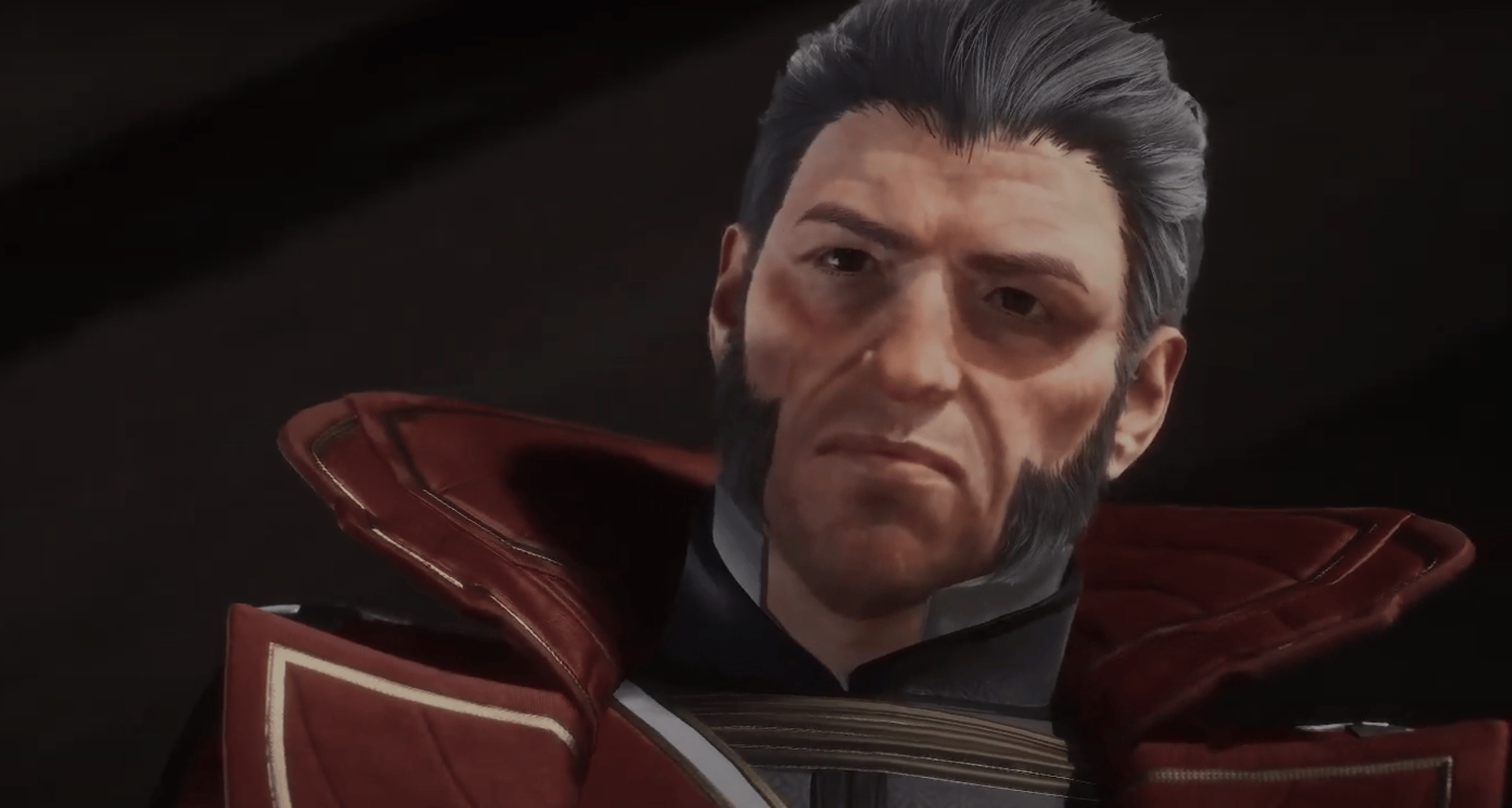
The Emperor's unofficial "problem solver" - or to borrow a title from Westeros, Count Fenring was Shaddam IV's Hand, acting with significant delegated authority.
He's identified as a "distaff cousin" of House Corrino but the trust required for such a position of power comes from his long standing relationship with the Padishah Emperor - they grew up together.
My father had only one real friend, I think. That was Count Hasimir Fenring, the genetic-eunuch and one of the deadliest fighters in the Imperium.
— "In My Father's House" by the Princess Irulan, Dune [1965]
He served as the Imperial Agent on Arrakis during the final years of the Harkonnen regime, a position that placed him at the center of the spice trade.
"At Arrakeen," Piter said, "the Duke and his family will occupy the Residency, lately the home of Count and Lady Fenring."
"The Ambassador to the Smugglers," the Baron chuckled.
"Ambassador to what?" Feyd-Rautha asked.
"Your uncle makes a joke," Piter said. "He calls Count Fenring Ambassador to the Smugglers, indicating the Emperor's interest in smuggling operations on Arrakis."
Feyd-Rautha turned a puzzled stare on his uncle. "Why?"
"Don't be dense, Feyd," the Baron snapped. "As long as the Guild remains effectively outside Imperial control, how could it be otherwise? How else could spies and assassins move about?"
— Dune [1965]
He then held the title of Governor of Arrakis during the transitional period of the fief-change to House Atreides.
Following the Atreides' move to Arrakis, he was named Siridar-Absentia of Caladan, effectively making him the planet's caretaker ruler in Duke Leto's absence.
Personally, I think that Fenring is a true friend to Shaddam and so is his loyalty, but if you want to be cynical and think about it through the lens of realpolitik, you could easily make the argument that Fenring's position and power were entirely dependent on Shaddam's patronage.
I called him the Hand of the King, but in-universe he's mockingly referred to as "the Emperor's errand boy."
Now, some of those errands were "off-the-books" operations.
The frequently discredited Pirate History of Corrino related the curious story that Fenring was responsible for the chaumurky which disposed of Elrood IX.
— Appendix IV: The Almanak en-Ashraf, Dune [1965]
This storyline is fleshed out in detail in the Prelude to Dune trilogy of the expanded universe (Fenring being responsible not only for the death of Shaddam's father but also his older brother) and further establishes Fenring as a ruthless, sometimes even cruel political mind who truly believes that the ends justify any means necessary.
While the core canon implies that his status is not anchored in the traditional power structures of the Landsraad, which are based on planetary wealth and military levies, the Dune Encyclopedia's account paints a slightly different picture.
What is certain, however, is that the Count's fortune was assured from the very beginning of Shaddam's reign. To the already considerable sources of income Fenring had inherited with his title, the emperor added enough estates, shares in CHOAM, and the like, to make his friend as wealthy as many of the heads of Houses Major.
— The Dune Encyclopedia [1984]
Either way, the trust between Shaddam and Fenring was absolute… but seemingly broken at a pivotal moment in the Imperium's history.
The measure of Count Fenring's friendship may be seen first in a positive thing: he allayed the Landraad's suspicions after the Arrakis Affair. It cost more than a billion solaris in spice bribes, so my mother said, and there were other gifts as well: slave women, royal honors, and tokens of rank. The second major evidence of the Count's friendship was negative. He refused to kill a man even though it was within his capabilities and my father commanded it. I will relate this presently.
— Count Fenring: A Profile by the Princess Irulan, Dune [1965]
We all remember Paul ascending to the Golden Lion Throne after defeating Feyd-Rautha at the end of the book, despite the latter fighting with a poisoned blade.
But there's one moment right after this fight, Paul bruised and tired, where Shaddam IV could've maintained his rule.
The Emperor turned, looked at Count Fenring. The Count met his stare—gray eyes against green. The thought lay there clearly between them, their association so long that understanding could be achieved with a glance.
Kill this upstart for me, the Emperor was saying. The Atreides is young and resourceful, yes—but he is also tired from long effort and he'd be no match for you, anyway. Call him out now … you know the way of it. Kill him.
Slowly, Fenring moved his head, a prolonged turning until he faced Paul.
"Do it!" the Emperor hissed.
The Count focused on Paul, seeing with eyes his Lady Margot had trained in the Bene Gesserit way, aware of the mystery and hidden grandeur about this Atreides youth.
I could kill him, Fenring thought—and he knew this for a truth.
— Dune [1965]
But something stopped him from acting - a recognition.
Something in his own secretive depths stayed the Count then, and he glimpsed briefly, inadequately, the advantage he held over Paul—a way of hiding from the youth, a furtiveness of person and motives that no eye could penetrate.
Paul, aware of some of this from the way the time nexus boiled, understood at last why he had never seen Fenring along the webs of prescience. Fenring was one of the might-have-beens, an almost-Kwisatz Haderach, crippled by a flaw in the genetic pattern—a eunuch, his talent concentrated into furtiveness and inner seclusion. A deep compassion for the Count flowed through Paul, the first sense of brotherhood he'd ever experienced.
— Dune [1965]
And Fenring, despite being "only" an "almost" Kwisatz Haderach, felt the same.
Fenring, reading Paul's emotion, said, "Majesty, I must refuse."
Rage overcame Shaddam IV. He took two short steps through the entourage, cuffed Fenring viciously across the jaw.
A dark flush spread up and over the Count's face. He looked directly at the Emperor, spoke with deliberate lack of emphasis: "We have been friends, Majesty. What I do now is out of friendship. I shall forget that you struck me."
— Dune [1965]
He refused Shaddam and allowed Paul's rule to happen.
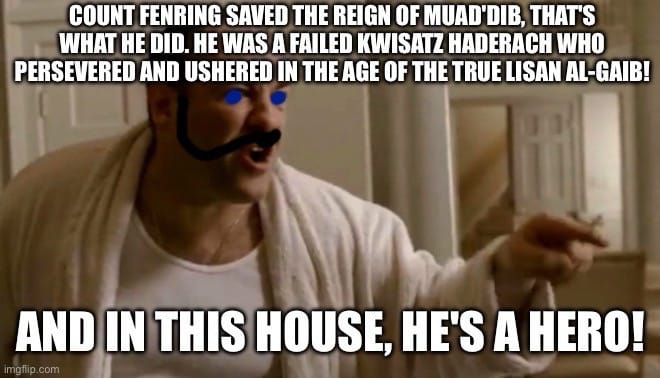
Fenring is one of those people who doesn't even try and still manages to be the coolest person in the room.
Most people would agree that the line he delivered right after Shaddam struck him is movie-worthy.
But allow me to add two more from the core canon, and a few from the expanded universe.
If reading through this, you think they sound eerily similar to what a Bene Gesserit might say, you're not alone.
A favorite remark of his, which amused Lady Margot tremendously but often offended her visiting sisters, was that he was "more Bene Gesserit than human."
— The Dune Encyclopedia [1984]
Following Paul's rise, Fenring remained loyal to his deposed friend, joining Shaddam IV in exile on Salusa Secundus where he spent his final years. His story in the original novel (and the Dune Encyclopedia) ends with quiet dignity - his last significant act being the preservation of his Emperor's life and the protection of the Kwisatz Haderach.
But the expanded universe novels can't resist bringing Fenring back.
The Heroes of Dune trilogy reveals that Fenring and Lady Margot raised the daughter sired by Feyd-Rautha (from Margot's Giedi Prime mission) and trained her as an assassin to kill Paul and seize the Imperial throne.
And while that's indeed a cool story, it makes little sense to me, given how it was Fenring's decision to allow Paul's rule.

.svg.png)
.png)

If you wanna chat, find me on BlueSky.
Even if you're not a supporter (yet), you can get new articles as an email as soon as they're published - full length for free stuff and a preview of the premium content.