
In today's edition, we'll talk about my childhood favorites: the Mentats.
MENTAT: that class of Imperial citizens trained for supreme accomplishments of logic. "Human computers."
— Terminology of the Imperium, Dune (1965)

I found something utterly captivating about people trained to be the smartest person in the room.
They can retain information and data like a computer and run complex probability calculations in the blink of an eye - mind you, they can do all this without the help of Spice.
So, while Earth's notable lack of Spice prevented me from ever becoming a Kwisatz Haderach or even a prescient Guild Navigator, Herbert assured my 13-year-old self that all I needed to become a Mentat was the right training.
Because Mentats didn't need Spice to be Mentats.(Yes, Piter de Vries certainly developed a well-documented taste for it, but that was… more of a personal choice than a professional one.)
In Paul Atreides' time, most Mentats preferred sapho juice - a potent stimulant extracted from barrier roots of the planet Ecaz that stained their lips ruby red.
"It is by will alone I set my mind in motion. It is by the juice of sapho that thoughts acquire speed, the lips acquire stains, the stains become a warning."
— Piter de Vries, Dune (1984)

Sapho juice helps boost mental acuity, but it's more like coffee for the super-brain than an absolute necessity. This is underlined by the fact that the later books never once mention it.
Speaking of later books, in this article, I'll cover everything the original six Frank Herbert books tell us about Mentats.
This time around, I'm sticking exclusively to core canon. No Encyclopedia additions and none of the expanded universe stories - just the good stuff, straight from the source.
So, let's start at the beginning:
As Reverend Mother Gaius Helen Mohiam explains to Paul:
"Once men turned their thinking over to machines in the hope that this would set them free. But that only permitted other men with machines to enslave them."
[…]
"The Great Revolt took away a crutch," she said. "It forced human minds to develop. Schools were started to train human talents."
— Dune (1965)
Mentats aren't just savants with a knack for arithmetic. They're humans whose minds have been systematically rewired from infancy to process information like machines - even better.
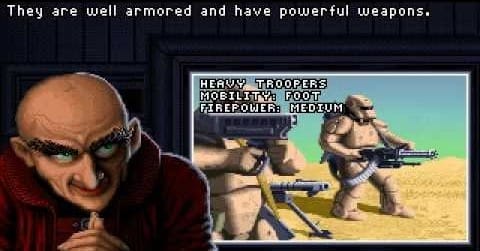
They store and cross-reference data, analyze probabilities, and spot patterns that would remain invisible to normal human perception.
Think of them as walking quantum computers with a personality... and occasionally, a spice addiction that would make a Guild Navigator blush.
And speaking of personalities, contrary to what many might imagine a "human computer" to be like, mentats aren't emotionless robots in human skin.
They feel everything we do - they've just learned to put those feelings in a mental lockbox while they're busy computing.

Imagine you've just overthrown a corrupt and unfair system, melted down all your computers, and added a commandment to the Orange Catholic Bible that would survive for millennia: "Thou shalt not make a machine in the likeness of a human mind."
Great! Now, how exactly will you manage an interstellar civilization spanning the galaxy without computational assistance?
Well, if you can't build them, grow them.
Order of Mentats, founded by Gilbertus Albans; temporary sanctuary with Bene Tleilax who hoped to incorporate them into Tleilaxu hegemony; spread into uncounted 'seed schools'...
— Bellonda, Chapterhouse: Dune (1985)
While in Paul's time, Mentats were widely used - to the point where the Baron Harkonnen argues that he never was without one - apparently, the order's foundation was not met with great enthusiasm.
The reason for the initial animosity is alluded to by everyone's favorite Tleilaxu:
Scytale glanced at the old Reverend Mother, seeing the ancient hates which colored her responses. From the days of the Butlerian Jihad when "thinking machines" had been wiped from most of the universe, computers had inspired distrust. Old emotions colored the human computer as well.
— Dune: Messiah (1969)
And since no good deed goes unexploited, the genetic tinkerers of the Bene Tleilax, who initially provided sanctuary, undoubtedly took copious notes on the training process so they could create their own twisted versions.
Once they got going, it was clear that human computers were actually an improvement over machine ones.
This comes through in a telling exchange between Baron Harkonnen and his twisted Mentat, Piter de Vries:
"I sometimes think the ancients with their thinking machines had the right idea."
"They were toys compared to me," Piter snarled. "You yourself, Baron, could outperform those machines."
— Dune (1965)
The reason for this improvement seems to be their human nature. Mentats integrate computation with intuition, creativity, and adaptability. They can make logical leaps that algorithms couldn't have dreamed of.
This means that while it's easy to frame the Butlerian Jihad as a Luddite retreat, it was actually the spark for human advancement. By removing the technological crutch, humanity was forced to develop latent mental abilities.
Nothing like the threat of civilizational collapse to motivate some serious neural rewiring.
Mentats aren't born looking different from other humans, but their training and habits leave visible marks.
Think of it as an occupational hazard, like painter's hands or programmer's posture.
The most recognizable Mentat trait is that distinctive ruby stain around their mouths.
"SAPHO: high-energy liquid extracted from barrier roots of Ecaz. Commonly used by Mentats who claim it amplifies mental powers. Users develop deep ruby stains on mouth and lips."
— Terminology of the Imperium, Dune (1965)
At the time of Paul Atreides, it was their most reliable visual calling card.
The sapho itself is a brain-boosting energy drink, helping Mentats maintain the hyper-focused state needed for their mental gymnastics.
Of course, some Mentats take their stimulants a bit too far. The Baron calls out Piter's substance issues while explaining his limitations to young Feyd:
"A most efficient Mentat, Piter, wouldn't you say, Feyd?" the Baron asks his nephew.
"Yes, but—"
"Ah! Indeed but! But he consumes too much spice, eats it like candy. Look at his eyes! He might've come directly from the Arrakeen labor pool."
— Dune (1965)
Ever been talking to someone when they suddenly go mentally AWOL?
With Mentats, that's a feature, not a bug.
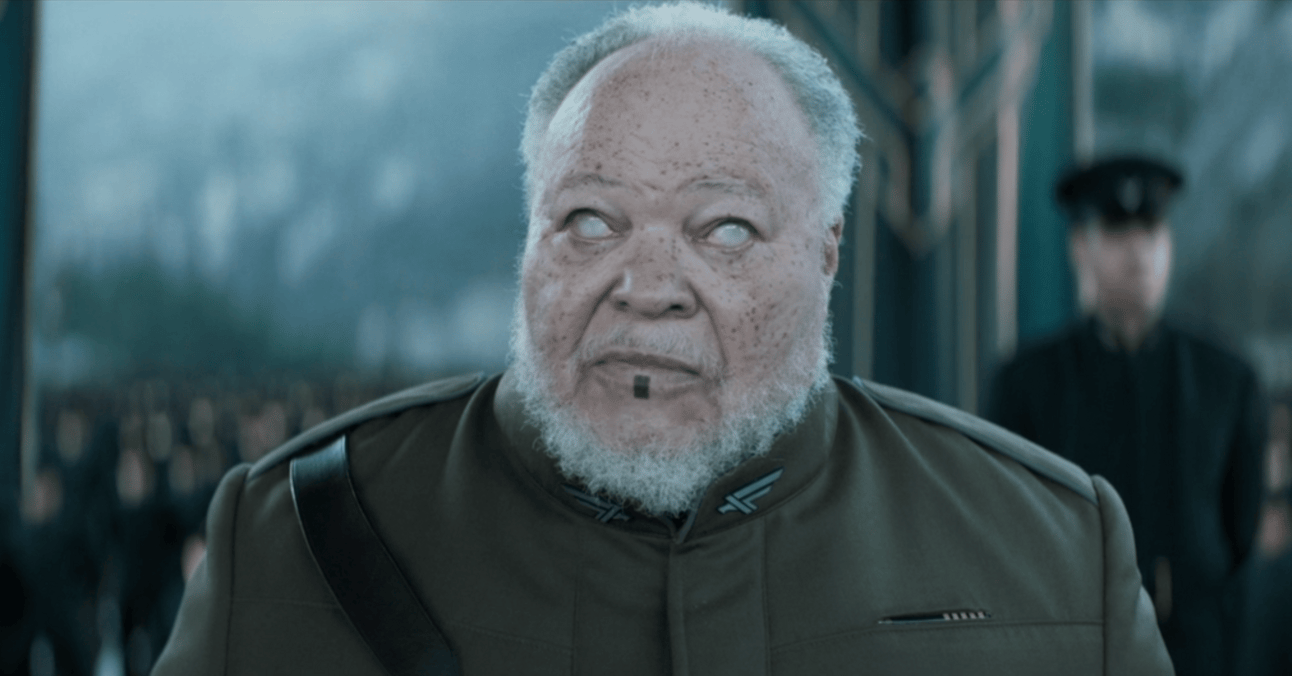
They develop what might be called the "Mentat stare" - a distinctive vacant expression that appears when they're doing their internal calculations:
"Teg did not prompt her with questions. His manner remained impeccable, curiously withdrawn. She reminded herself that this was a common trait of Mentats and nothing else should be read into it."
— Heretics of Dune (1984)
This withdrawn look is the external sign that the Mentat has shifted gears from normal conversation to probability-crunching mode.
Abruptly his mentat sensorium clicked into full awareness and his mind leaped into the frozen trance where Time did not exist; only the computation existed. Alia would recognize what had happened to him, but that could not be helped. He gave himself up to the computation.
— Duncan Idaho, Children of Dune (1976)
During particularly intense calculations, it becomes even more pronounced:
"Odrade saw Teg suddenly fall into Mentat mode, an unfocused stare in his eyes, his features placid."
— Heretics of Dune (1984)
It's a useful social cue for those dealing with Mentats - essentially a "processing; please wait" indicator.
It's not something you can learn from a weekend seminar or online course.
One of the strangest aspects of Mentat training is that it begins without the student's knowledge or consent. Talk about a career path chosen for you!
Paul Atreides got to know it from his father:
"Your mother wanted me to be the one to tell you, Son. You see, you may have Mentat capabilities."
Paul stared at his father, unable to speak for a moment, then: "A Mentat? Me? But I…."
"Hawat agrees, Son. It's true."
"But I thought Mentat training had to start during infancy and the subject couldn't be told because it might inhibit the early…." He broke off, all his past circumstances coming to focus in one flashing computation. "I see," he said.
"A day comes," the Duke said, "when the potential Mentat must learn what's being done. It may no longer be done to him. The Mentat has to share in the choice of whether to continue or abandon the training. Some can continue; some are incapable of it. Only the potential Mentat can tell this for sure about himself."
Paul rubbed his chin. All the special training from Hawat and his mother—the mnemonics, the focusing of awareness, the muscle control and sharpening of sensitivities, the study of languages and nuances of voices—all of it clicked into a new kind of understanding in his mind.
"You'll be the Duke someday, Son," his father said. "A Mentat Duke would be formidable indeed. Can you decide now … or do you need more time?"
There was no hesitation in his answer. "I'll go on with the training."
— Dune (1965)
The fact that they keep it secret from the child suggests consciousness itself might interfere with the process - as if certain neural pathways need to develop organically before the rational mind can be allowed to intervene.
Paul's reaction shows the components of early Mentat education: memory techniques, attention control, physical discipline, sensory enhancement, and linguistic study.
All that fun childhood stuff normal kids get to skip while they're busy playing with toys.
Although it was originally established as an order, Mentat training isn't centralized. There's no single "Mentat University" with a sports team and alumni newsletter - as mentioned in an earlier quote from Chapterhouse: Dune, the method "spread into uncounted 'seed schools'."
We know from the later books that during (and after) the rule of Leto II, the Bene Gesserit had a Mentat school on Wallach IX.
And we know of the Tleilaxu variant from the original Dune:
TLEILAX: lone planet of Thalim, noted as renegade training center for Mentats; source of 'twisted' Mentats.
— Terminology of the Imperium, Dune (1965)
These twisted Mentats have all the computational abilities but with a moral compass pointing directly to Hell.
The Tleilaxu displayed a disturbing lack of inhibitions in what they created. Unbridled curiosity might guide their actions. They boasted they could make anything from the proper human raw material—devils or saints. They sold killer-mentats.
— Dune: Messiah (1969)
This diversity of training approaches shows how adaptive Mentat education can be - it melds with other disciplines to create specialized variants for particular functions.
You might think it's all books and "mentating" but not everyone survives Mentat training with their faculties intact.
The "failures" serve as cautionary tales for students:
The Sisterhood reinforced his Mentat capacities to screen data and display what had not gone through. He sensed where this might lead and felt leaden fear.
"You clear the nerve passages. You block off distractions and useless mind-wanderings."
You redirected your responses into that dangerous mode every Mentat was warned to avoid. "You can lose yourself there."
Students were taken to see human vegetables, "failed Mentats," kept alive to demonstrate the peril.
How tempting, though. You could sense the power in that mode. Nothing hidden. All things known.
— Chapterhouse: Dune (1985)
Nothing says "take your studies seriously" quite like field trips to see the brain-fried failures of previous classes.
Another mental danger zone is called the "Hall of Mirrors," a state where self-reflection spirals into infinity:
"So you went deeper?" Caught by Teg's words, Idaho ignored tugs of warning at the edge of his awareness.
"Oh, yes. And I found myself in the famous 'Hall of Mirrors' they described and warned us to flee."
"So you remembered how to get out and ..."
"Remembered? You've obviously been there. Did memory get you out?"
"It helped."
"Despite the warnings, I lingered, seeing my 'self of selves' and infinite permutations. Reflections of reflections ad infinitum."
"Fascination of the 'ego core.' Damn few ever escape from that depth. You were lucky."
"I'm not sure it should be called luck. I knew there must be a First Awareness, an awakening ..."
"Which discovers it is not the first."
— Chapterhouse: Dune (1985)
These dangers illustrate that Mentat training isn't just learning new skills but rewiring consciousness itself. It's brain surgery performed by the brain on itself, with all the risks such a recursive operation entails.
Here's something that might surprise you—no one ever graduates from Mentat training. Even fully qualified Mentats are perpetual students:
"You are never truly a Mentat. That is why we call it 'The Endless Goal.' " The words of his teachers were burned into his awareness.
— Duncan Idaho, Chapterhouse: Dune (1985)
This perpetual development is another thing that distinguishes Mentats from mechanical computers.
Mentats constantly evolve, essentially rewriting their own programming through experience. No software updates needed.
What happens when a Mentat shifts into computational mode?
It's not just faster thinking - it's a fundamentally different state of consciousness, a radical reorganization of perception and processing.
When a Mentat needs to solve a difficult problem, they shift mental gears, even if they need to extrapolate from incomplete data.
He put his Mentat talents to the problem. There were missing pieces but that did not stop him. A Mentat could work without certain pieces if he had enough to create a pattern. Sometimes, the sketchiest outline was enough.
— Heretics of Dune (1984)
The transition into computational mode can be either deliberate or triggered by circumstances:
Abruptly his mentat sensorium clicked into full awareness and his mind leaped into the frozen trance where Time did not exist; only the computation existed.
— Children of Dune (1976)
Time perception alters dramatically, suspending normal experiential flow. The conscious experience of this state is wildly different from ordinary awareness:
"Slowly, marshaling his powers, shedding bits of inhibition, he sank into mentat awareness. He forced it—not the best way—but somehow necessary. Ghost shadows moved within him in place of people. He was a transshipping station for every datum he had ever encountered."
— Dune: Messiah (1969)
Sounds more like shamanic vision quest than spreadsheet analysis, if you ask me.
Once in this state, they not only connect the dots but do it at super-human speed.
On more than one occasion, we get pages and pages of analysis, concluded by a statement like:
"All of this Mentat sorting had taken only a few seconds."
— Heretics of Dune (1984)
"A Mentat's real skills lay in that mental construct they called 'the great synthesis.' It required a patience that non-Mentats did not even imagine possible. Mentat schools defined it as perseverance. You were a primitive tracker, able to read minuscule signs, tiny disturbances in the environment, and follow where these led. At the same time, you remained open to broad motions all around and within."
— Chapterhouse: Dune (1985)
This dual awareness - simultaneously tracking minute details and sweeping movements - allows Mentats to perceive multi-level patterns across seemingly unrelated data. It's like having microscopic focus and satellite view at the same time.
"A Mentat could work without certain pieces if he had enough to create a pattern. Sometimes, the sketchiest outline was enough. It supplied the hidden shape and then he could fit the missing pieces to complete a whole. Mentats seldom had all the data they might desire, but he was trained to sense patterns, to recognize systems and wholeness."
— Heretics of Dune (1984)
Their "great synthesis" integrates these observations into coherent projections but with an interesting twist.
"You are open to whatever the universe may do," his first instructor had said. "Your mind is not a computer; it is a response-tool keyed to whatever your senses display."
— Dunan Idaho, Chapterhouse: Dune (1985)
When a Mentat reaches a high-confidence conclusion, they label it a "Prime Computation."
"Prime computation," he said, indicating a heavily weighted assurance that he spoke of inductive fact.
— Children of Dune (1976)
This designation signals to listeners that what follows isn't mere speculation but a high-probability analysis based on thorough processing. It's the Mentat equivalent of a scientist publishing peer-reviewed research rather than just sharing a hypothesis.
Here's Paul saying the same thing a bit differently, talking to his mom about how he thinks the Fremen are bribing the Guild:
This is more than a second-approximation answer; it's the straight-line computation. Depend on it.
— Dune (1965)
If it's not a computation of a current situation, you might want a projection - forecasting future developments based on current data:
"He projected the mentat computation line forward, seeing what could develop out of his own actions."
— Dune: Messiah (1969)
And if you don't have enough data, you can always try a hypothesis:
A Prime Pattern development did not come into Teg's mind but he had enough for a Testing Projection.
— Heretics of Dune (1984)
Mentats aren't perfect - for all their computational brilliance, they have a few blind spots and weaknesses. The cool thing is that they mostly know about them.
While Mentats can work with incomplete data, they remain vulnerable to deliberate manipulation through false information.
Given a trail of logic, occam's razor laid out with impeccable detail, the Mentat may follow such logic to personal disaster.
— Heretics of Dune (1984)
The Baron Harkonnen exploits this weakness with Thufir Hawat:
"The way to control and direct a Mentat, Nefud, is through his information. False information—false results."
— Dune (1965)
By feeding Hawat carefully selected lies suggesting Jessica betrayed Duke Leto, the Baron manipulates Hawat's computations to serve Harkonnen interests.
And on that note.
Hawat's shocked fury had mounted until it threatened the smooth functioning of his Mentat capabilities.
— Dune (1965)
Even the most disciplined Mentats struggle with emotional interference. Thufir Hawat, despite decades of experience, finds his abilities compromised by grief and anger after House Atreides falls.
Imagine solving differential equations while having a panic attack - technically possible but drastically more difficult.
Jessica highlights this vulnerability when she confronts Hawat:
"Anything outside yourself, this you can see and apply your logic to it," she said. "But it's a human trait that when we encounter personal problems, those things most deeply personal are the most difficult to bring out for our logic to scan. We tend to flounder around, blaming everything but the actual, deep-seated thing that's really chewing on us."
— Dune (1965)
Mentats can become too enamored with their own logical frameworks, missing insights that fall outside established patterns:
"Once more, Odrade voiced the oft-repeated Bene Gesserit warning to limit their reliance on Mentats. 'Logic is blind and often knows only its own past.'"
— Chapterhouse: Dune (1985)
Taraza acknowledges the same when discussing the unpredictability of complex systems:
"Even the best of Mentat projections accumulated errors given enough time."
— Heretics of Dune (1984)
And speaking of errors, the Mentat Handbook warns about over-reliance on memories, too:
Memory never recaptures reality. Memory reconstructs. All reconstructions change the original, becoming external frames of reference that inevitably fall short.
— Heretics of Dune (1984)
"You know," Idaho said, "the mentat learns to look at every human as a series of relationships."
— Children of Dune (1976)
Just like the epigraphs attributed to Princess Irulan, the tidbits from various in-universe texts - like the Mentat Handbook - and flashbacks to Mentat teachers give us a peek behind the curtains.
Let's start with their most famous principle:
First Law of Mentat: A process cannot be understood by stopping it. Understanding must move with the flow of the process, must join it and flow with it.
— Dune (1965)
Knowledge as participation rather than dissection. It's essentially saying you can't truly understand a river by taking a bucket of water home to study; you have to get in and swim with the current.
The Mentat Handbook warns against the tunnel vision that can come from overly specialized training:
Above all else, the mentat must be a generalist, not a specialist. It is wise to have decisions of great moment monitored by generalists. Experts and specialists lead you quickly into chaos. They are a source of useless nit picking, the ferocious quibble over a comma. The mentat-generalist, on the other hand, should bring to decision-making a healthy common sense.
— Children of Dune (1976)
It's the difference between someone who knows absolutely everything about 15th-century Portuguese sailing knots but nothing about navigation, versus someone with sufficient knowledge of both to actually get a ship somewhere.
The ideal Mentat balances analytical precision with broader awareness:
"Be warned. Without mentat overlay integration, you can be immersed in the Babel Problem, which is the label we give to the omnipresent dangers of achieving wrong combinations from accurate information."
— Children of Dune (1976)
Or, to put it another way, specificity without context is just trivia.
"The mentat-generalist must understand that anything which we can identify as our universe is merely part of larger phenomena. But the expert looks backward; he looks into the narrow standards of his own specialty. The generalist looks outward; he looks for living principles, knowing full well that such principles change, that they develop."
— Children of Dune (1976)
Algorithms are fixed; Mentats evolve. The expert can tell you everything about how things have always been done; the generalist can spot when those methods no longer apply and adapt accordingly.
"Mentats cultivated naivete. Thinking you knew something was a sure way to blind yourself."
— Chapterhouse: Dune (1985)
It's the intellectual equivalent of maintaining a beginner's mind even after you've reached mastery.
The moment you think you fully understand something is precisely when you stop learning about it.
This humility keeps Mentats from becoming rigid and dogmatic in their thinking. It's much harder to manipulate someone who holds all conclusions as provisional.
The approach aligns with another core Mentat teaching about the dangers of quick comprehension:
"Ready comprehension is often a knee-jerk response and the most dangerous form of understanding. It blinks an opaque screen over your ability to learn. The judgmental precedents of law function that way, littering your path with dead ends. Be warned. Understand nothing. All comprehension is temporary."
— Chapterhouse: Dune (1985)
Look at that. Published a good 25 years before Daniel Kahneman's famous book: "Thinking Fast and Slow"
And how do you maintain a beginner's mindset? By asking a lot of questions.
"Uproot your questions from their ground and the dangling roots will be seen. More questions!"
— Chapterhouse: Dune (1985)
Questions open possibilities; answers close them. The moment you think you have the answer, you stop looking for alternatives.
"Mentats accumulated questions the way others accumulated answers. Questions created their own patterns and systems."
— Chapterhouse: Dune (1985)
Duncan Idaho exemplifies this approach:
"I seek the questions that form the best images."
— Chapterhouse: Dune (1985)
Anyone can ask, "What happened?" but it takes a Mentat to formulate the question that makes visible what others can't see.
Mentats maintain a surprisingly complex relationship with factual information:
"Facts are fragile. A Mentat can get tangled in them. Too much reliable data. It's like diplomacy. You need a few good lies to get at your projections."
— Chapterhouse: Dune (1985)
While a surprising approach, sometimes, entertaining hypotheticals - even known falsehoods - can reveal patterns otherwise hidden.
Another teaching reinforces this idea:
"Education is no substitute for intelligence. That elusive quality is defined only in part by puzzle-solving ability. It is in the creation of new puzzles reflecting what your senses report that you round out the definition."
— Chapterhouse: Dune (1985)
This emphasis on "creating new puzzles" highlights the creative dimension of Mentat thinking—not just solving problems but formulating new questions that better capture reality's complexity.
We talked about how Mentats had a bit of trouble getting established after the Butlerian Jihad - but they were almost extinct under Leto II's 3,500-year reign as God Emperor.
After serving as essential advisors to the Great Houses for millennia, Mentats suddenly faced outright prohibition. When Duncan Idaho asks if a particular person is a Mentat, he receives an almost shocked response:
"Are you a mentat?" Idaho asked.
"Oh, no!" Luli interrupted. "The Lord Leto does not permit the training of mentats."
— God Emperor of Dune (1981)
This ban wasn't casual or incidental. Leto actively eliminated Mentat schools wherever they appeared, even those hidden by powerful organizations like the Bene Gesserit. As we learn in Chapterhouse: Dune:
"I went to Wallach IX at the Tyrant's command," he said. "Oh, yes! I often thought of him as Tyrant. My orders were to suppress the Mentat school you thought you had hidden there."
— Chapterhouse: Dune (1985)
Think about that.
An essentially immortal being with near-perfect prescience allowed the Bene Gesserit to hang around… but he banned Mentats from the Imperium.
The reason is simple: Mentats represented a potential nucleus for opposition to his Golden Path. Their pattern-recognition abilities might help others identify weaknesses in his plans or organize effective resistance.
Of course, after Leto's death, Mentats experienced a remarkable renaissance.
"All Archivists were Mentats, of course, but this did not reassure Taraza."
— Heretics of Dune (1984)
As I mentioned in the beginning, I always found Mentats both intriguing and inspiring.
They represent not a rejection of technology but a transcendence of it - proving that the human mind, properly cultivated, remains the most sophisticated computer in existence.
That was the Mentat approach, giving no unalterable truths but a remarkable lever for decision-making: orderly assemblage of data in a non-discrete system.
— Chapterhouse: Dune (1985)
I hope you enjoyed this summary of the core canon.

.svg.png)
.png)

If you wanna chat, find me on BlueSky.
Even if you're not a supporter (yet), you can get new articles as an email as soon as they're published - full length for free stuff and a preview of the premium content.



_00038.jpg)