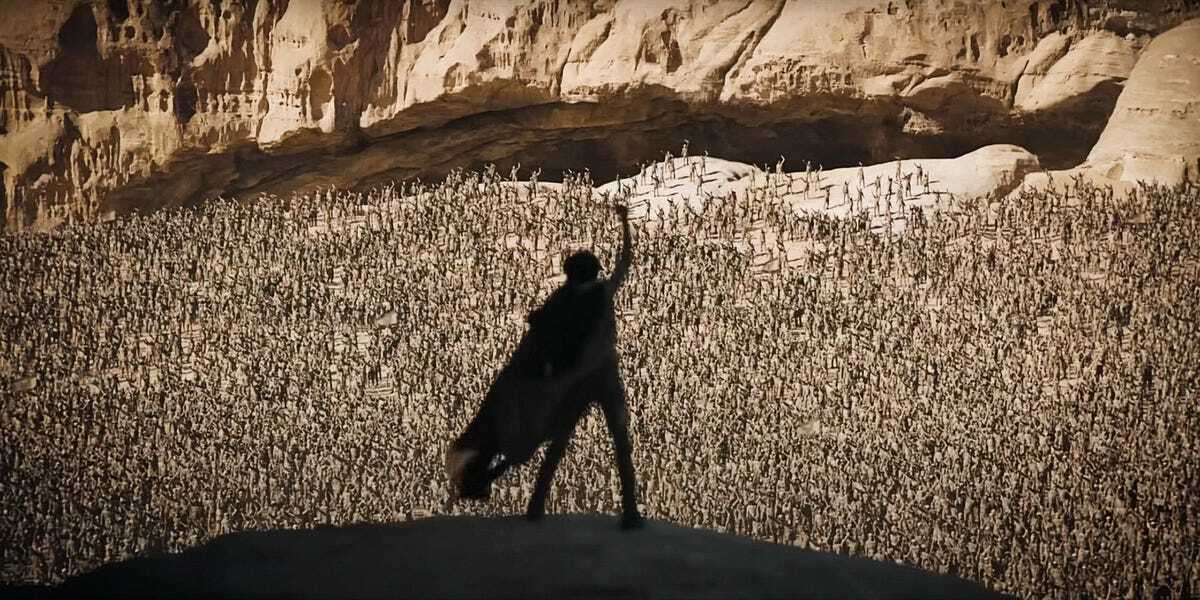
The Lisan al-Gaib is not of the desert.
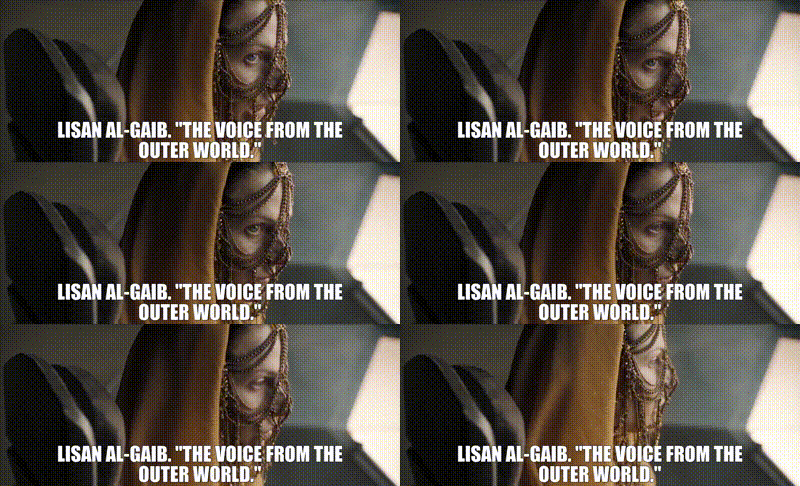
Long before Paul Atreides set foot on Arrakis, the Bene Gesserit planted prophecies in Fremen culture through their Missionaria Protectiva, their "department" of religious manipulation.
These prophecies were vague enough for any Sister to use in times of need.
A cosmic set of skeleton keys, if you will, designed to unlock doors of influence wherever they might be needed. After all, when you're playing a game spanning centuries and star systems, it pays to have a few aces up your sleeve.
And boy, did Paul Atreides know how to play the game.
In his hands, what was meant as a safety net for stranded Bene Gesserit became a ladder to unprecedented power.
The Bene Gesserit were nothing if not methodical in their planning.
Through their Missionaria Protectiva, they spent centuries seeding the known universe with prophecies and superstitions. It was like a galactic insurance policy, a safety net for when things went wrong.
And by all accounts, they outdid themselves on Arrakis.
The Fremen didn't just adopt a few mystical ideas; they went all in. We're talking about a complete religious framework with all the trimmings: Reverend Mothers, sacred rituals, and specific religious terminology.
The effectiveness of their work became clear the moment Lady Jessica first set foot in her new home.
When Paul and Jessica first arrived on Arrakis, the whispers had already begun.
The signs were almost too obvious: a Bene Gesserit and her son, arriving from off-world. The Fremen weren't exactly subtle about it either - some even shouted 'Mahdi!' in the streets of Arrakeen, though they were cautious enough to make it sound more like a question than a declaration.
Thufir Hawat had to brief Duke Leto about it: there was this pesky prophecy about a leader, born to a Bene Gesserit, who would lead the Fremen to freedom.
You know, your "typical messiah pattern" - nothing to worry about, surely.
And although the Fremen wanted to believe, they required proof.
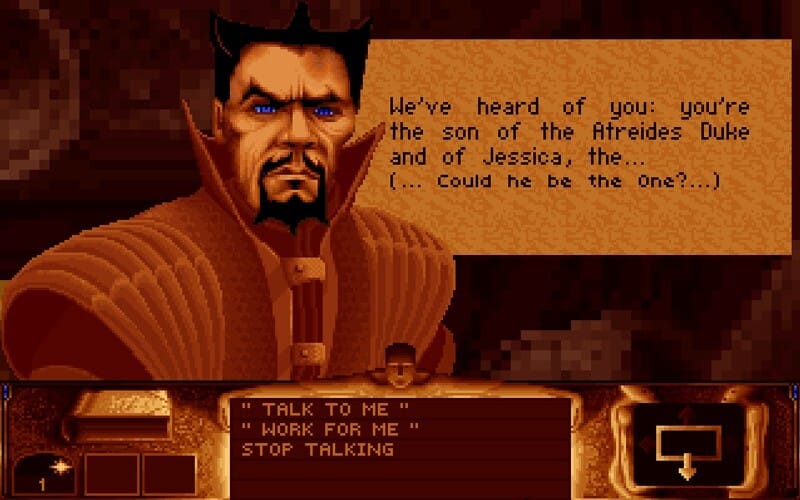
So, they sent the Shadout Mapes to put Jessica through the most intense job interview in history.
Knowledge of ancient tongues? Check. Recognizing a crysknife and stumbling over the word "Maker"? Double-check.
Mapes provided the rest of the Fremen with reports of the miracle and the inimitability of the prophecy.
But the Fremen weren't done testing. Stilgar's group would later put both mother and son through more trials.
When Jamis demanded combat, he wasn't just challenging Paul; he was demanding the right to test his part in the legend.
Even Dr. Kynes, who prided himself on being a scientist who saw legends as mere 'cultural clues,' found himself shaken.
Sure, the prophecy was vague enough to allow some wiggle room: would the Mother Goddess bring the Messiah or produce him on the scene?
But the "odd correspondence between prediction and persons" was getting harder to ignore.
When the Harkonnen attacked, some of the Fremen warriors coming to aid the Atreides were certain that "Paradise were sure for a man who died in the service of Lisan al-Gaib."
Paul and Jessica started to rise through the ranks as soon as they joined the Fremen.
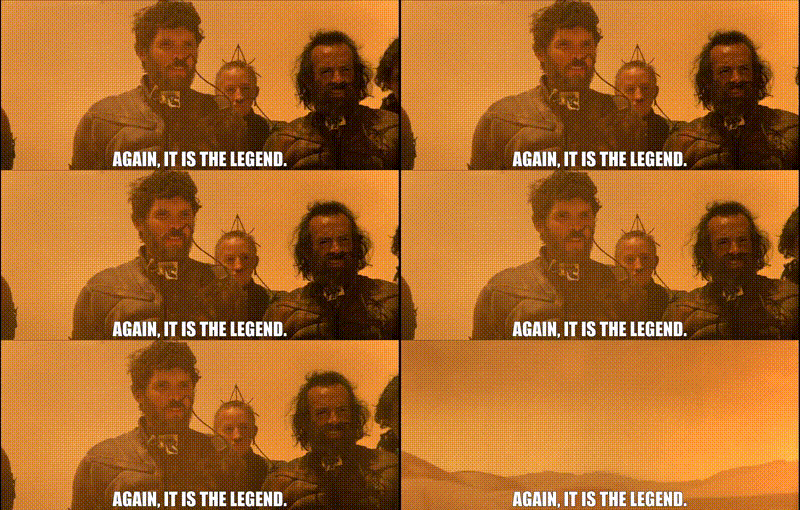
Every victory, every demonstration of their 'weirding ways,' and every bit of knowledge they displayed about Fremen customs reinforced their prophetic status.
Hopes became certainty by the time Jessica ascended to Sietch Tabr's Reverend Mother: "The prophecy - A Bene Gesserit shall show the way and a Reverend Mother shall see it." they whispered. "She shows us through her son!"
Here's every single prediction mentioned in the original book and how it came true.
The Bene Gesserit had meant these prophecies to be vague enough for any of their members to utilize.
Instead, they got Paul, who seems to have insisted on fulfilling them exactly as written.
The thing about becoming the stuff of legends is that everything you do gets woven into the tapestry of myth.
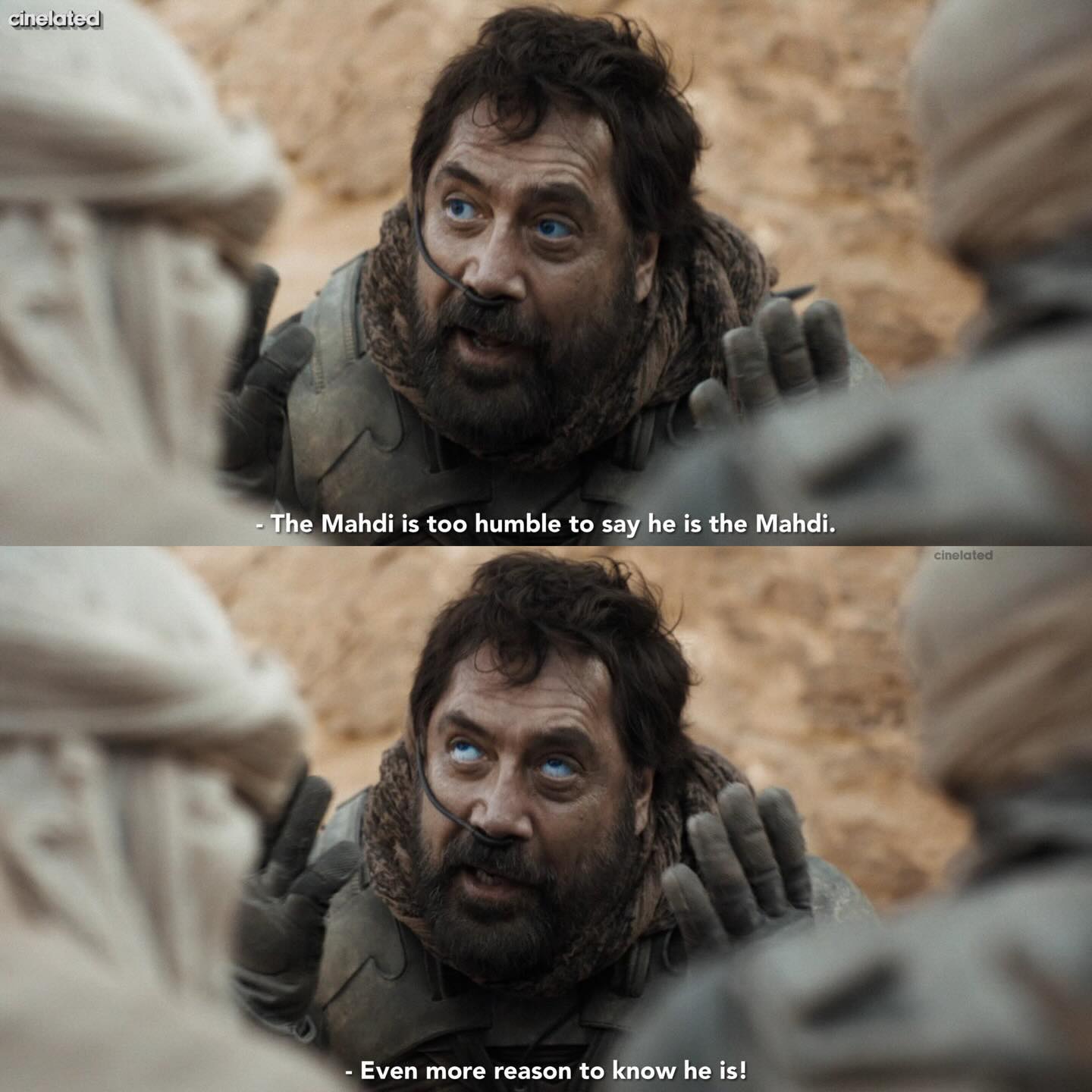
Paul realized this with a mix of pride and bitterness: "I cannot do the simplest thing without it becoming a legend. They will mark how I parted from Chani, how I greet Stilgar—every move I make this day."
Even the simplest objects around him became artifacts.
The truth started to matter less than the story.
When he rode a sandworm twice the distance any Fremen had managed before? That, too, became "the stuff of a new legend."
After a battle, Paul noted grimly: "I didn't even draw my knife, but it'll be said of this day that I slew twenty Sardaukar by my own hand."
Young men drew back from him not out of jealousy or ambition but from sheer religious awe.
Even Stilgar, himself "another figure of the new Fremen legends," was conflicted about how to treat Paul. Usul was his friend - but Muad'Dib was his Mahdi.
Thanks for reading Dune Navigator! This post is public, so feel free to share it.
Although he tried to control it at first, there was a point of no return where Paul's path led to the jihad of his visions. "If he fell in battle, they'd say he sacrificed himself for their salvation. If he triumphed, they'd declare him invincible."
In the struggle between prophecy and free will, between calculated plans and cosmic destiny, Paul Atreides found himself walking a knife's edge - trying to avoid a horrible future brought about by his Fremen fanatics but ultimately accepting it as the price of his vengeance and rise to power.
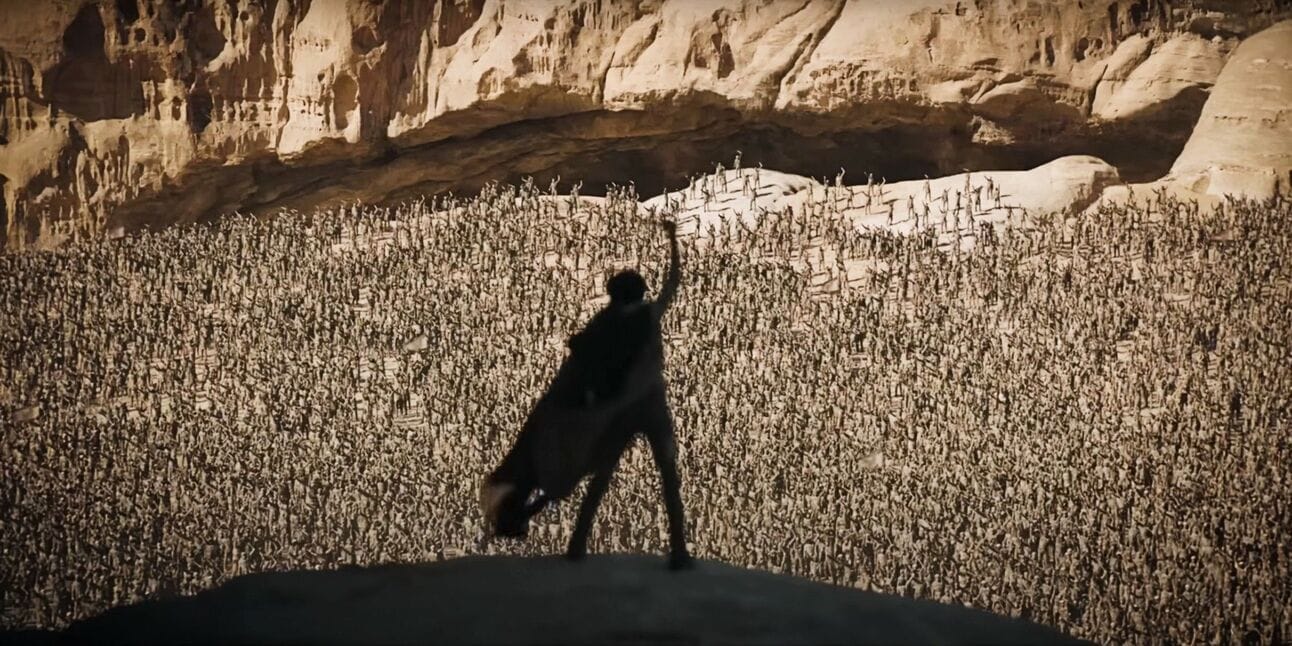
I wonder if Frank Herbert ever thought of Paul Muad'Dib when, in his last book, he wrote the following.
Power attracts pathological personalities.
It is not that power corrupts but that it is magnetic to the corruptible.
– Chapterhouse: Dune

.svg.png)
.png)

If you wanna chat, find me on BlueSky.
Even if you're not a supporter (yet), you can get new articles as an email as soon as they're published - full length for free stuff and a preview of the premium content.