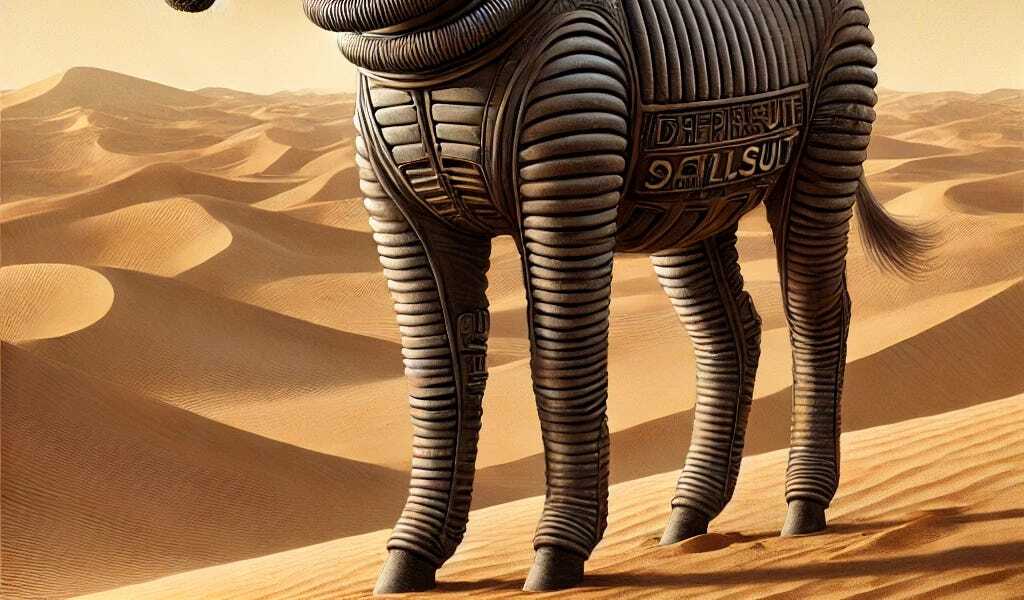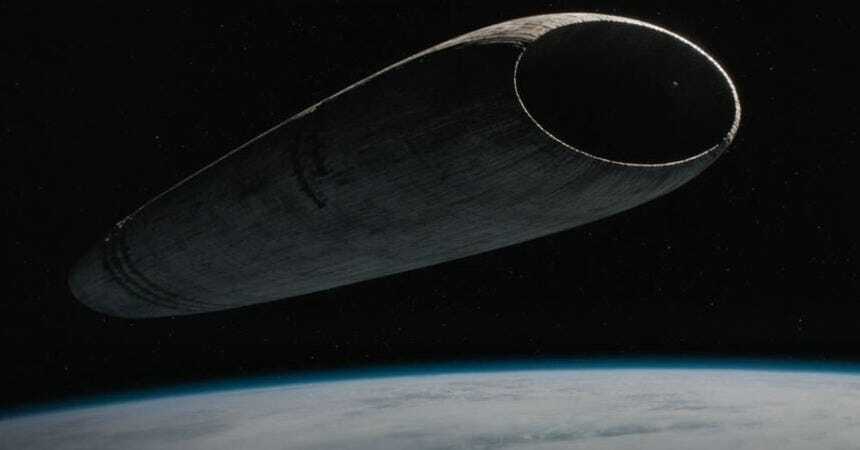
If there's one thing that Dune is certainly not known for, it's technical details.
While Star Trek fans can draw a warp core on the back of a napkin, and Star Wars fans debate the merits of different kyber crystals, we Dune fans are left with the likes of Mr. Holtzman and his field. The one that can power shields, fold space, and, I'm sure, toast bread if you have the right equipment.
And you know what? I wouldn't have it any other way.
When it comes to spaceships, we get no detailed schematics. No lengthy explanations of engine specifications or hull materials. No diagrams of control panels or engineering decks. Just enough information to understand their function and significance to the story.
Why? Because in Herbert's universe, technology is secondary to humanity.
The focus is on the people who use the technology, not the technology itself.
With that said, and admittedly, it's taken six books, but we got just enough details to piece together that Dune spaceships rely on (at least) three distinct propulsion technologies.
First, there's conventional rocket propulsion, evidenced by numerous references to burn marks and scorched earth where ships have landed or taken off.
The Guild lighter lifted in its noisy rumbling
— God Emperor of Dune (1981)
Teg's thoughts were in turmoil as he returned to Gammu from the Guildship. He stepped from the lighter at the black-charred edge of the Keep's private landing field and looked around him as though for the first time.
— Heretics of Dune (1984)
And yes, this even includes the highly advanced no-ships:
Charred ground, signs of a no-ship's lift-off.
— Heretics of Dune (1984)
And while Spice might remind you of cinnamon, apparently no-ship exhaust smells like garlic:
Something flashed overhead - trailing blue and red sparks. Another and another! The earth trembled. Teg inhaled through his nose: burned acid and a suggestion of garlic.
No-ships! Many of them!
— Heretics of Dune (1984)
Second, there's suspensor technology, which provides (limited) anti-gravity capabilities.
Hey, if it's good enough for the Baron Harkonnen to float around, it's good enough for spaceships.
The only problem is the energy requirements - they're huge. Not something smaller vessels could support.
On one occasion, Odrade notes that their ship was too small to perform a re-entry maneuver with suspensors:
It would use atmospherics to dampen its descent, she knew […] The pilot would be sparing of their suspensors on such a craft, saving energy.
— Heretics of Dune (1984)
Third, there's the Holtzman drive that enables space folding - the cornerstone of interstellar travel.
This technology is primarily used in Guild Heighliners and, in later books, no-ships, allowing instantaneous travel between star systems.
Speaking of which…
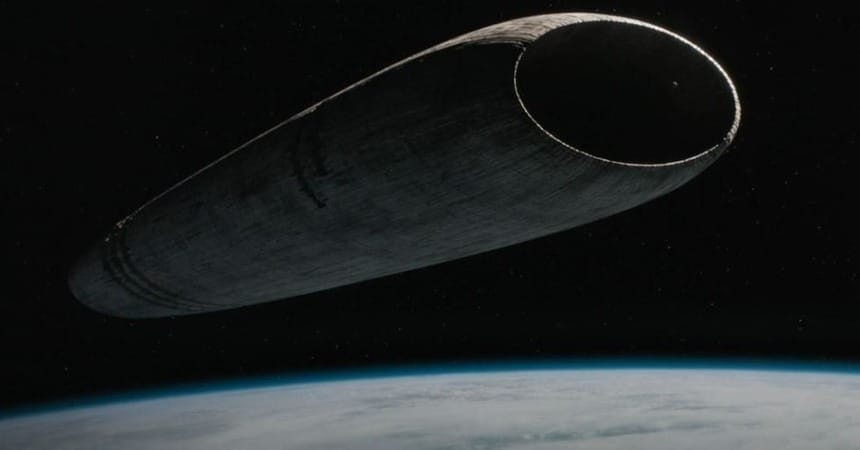
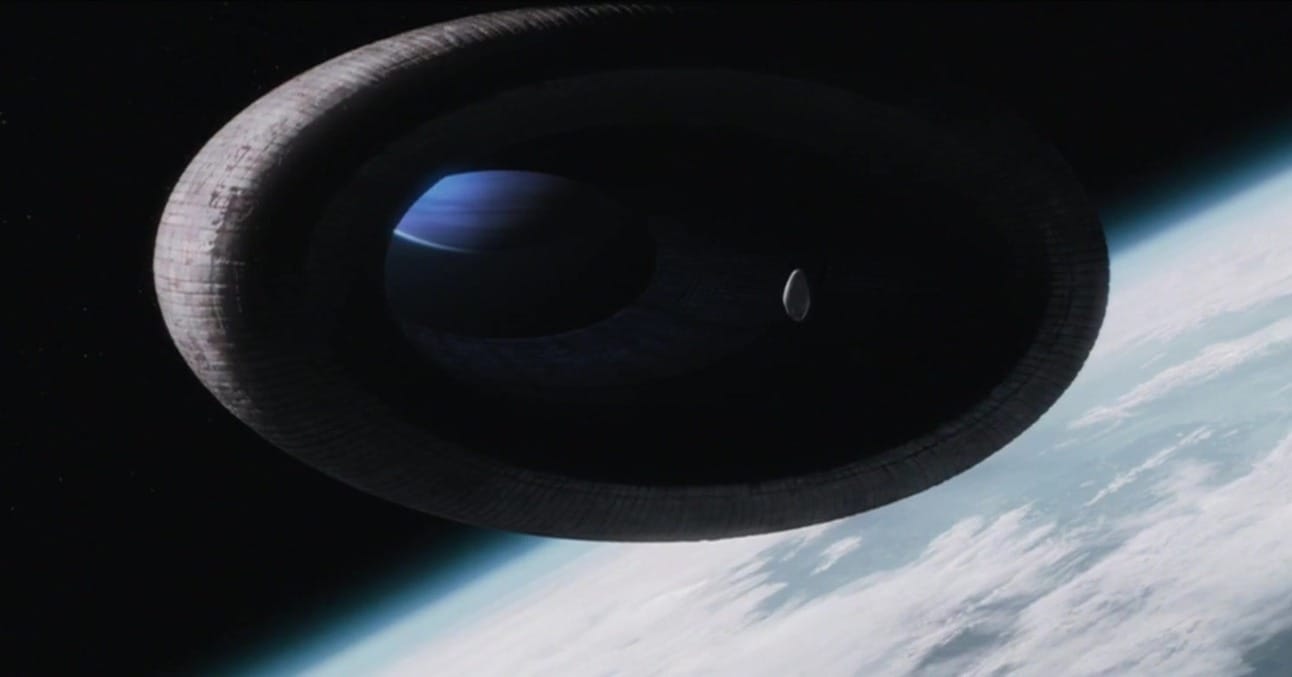
Undoubtedly the most iconic and most recognizable ship in all of Dune. The primary means of interstellar transportation, operated exclusively by the Spacing Guild.
They're massive. Ginormous. I mean, really, really huge. Their sheer scale is so staggering that I'm struggling for words.
Just like Duke Leto when he tried to explain them to a young Paul Atreides:
"A Heighliner is truly big. Its hold will tuck all our frigates and transports into a little corner—we'll be just a small part of the ship's manifest."
— Dune [1965]
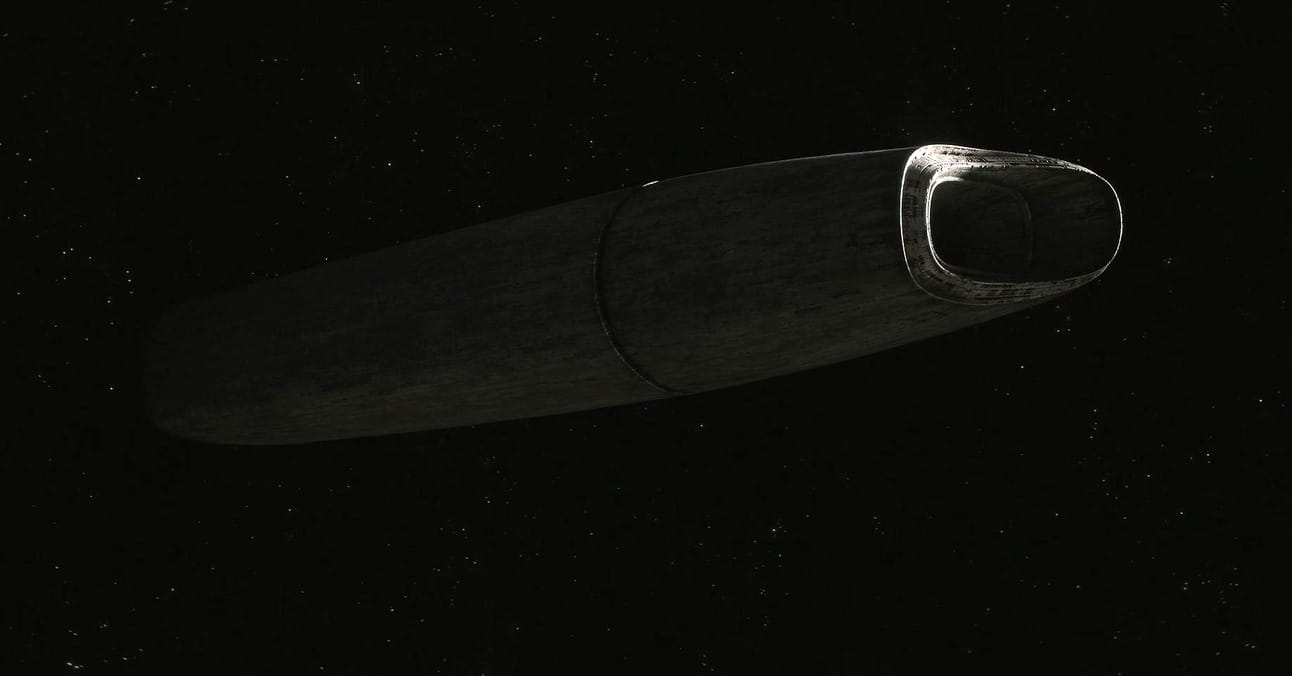
I think most people imagine them as cylindrical containers (all the movies did) to which other ships get attached, carrier ships of sorts.
But interestingly, Heighliners also have dedicated passenger facilities. So even if you don't have your own ship, you can just board the Heighliner directly.
In Dune Messiah, the Reverend Mother Mohiam awaits "on the heighliner's reception bridge" while being served spice-coffee by a steward.
Less surprising and more obvious: it also has to have a cockpit, occupied by the spice-mutated Guild Navigators who use their limited prescience to safely fold space.
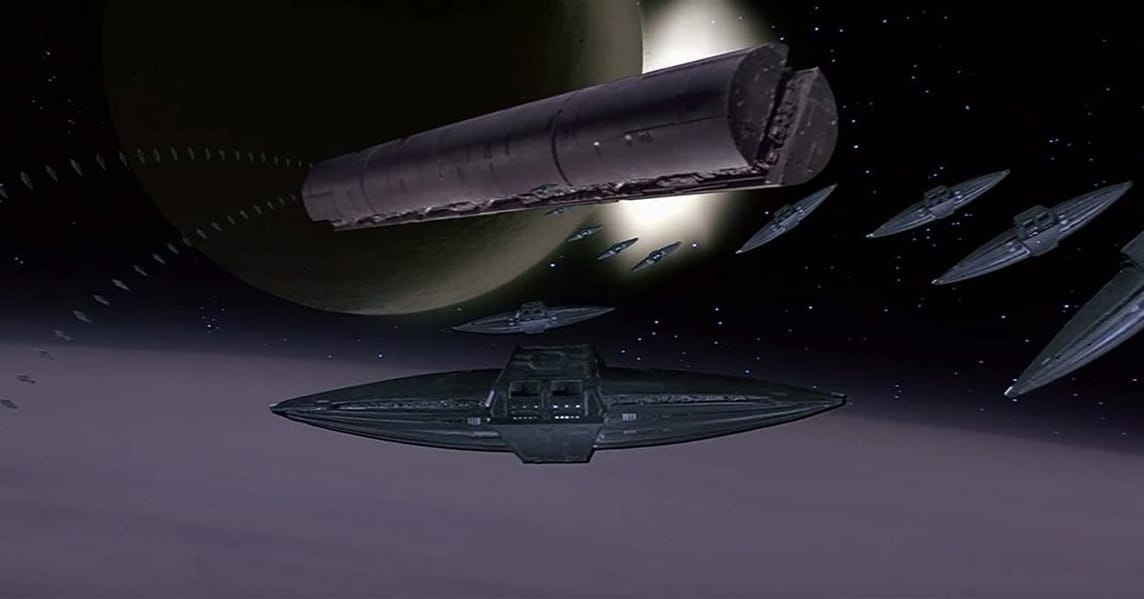
As we know, the monopoly on safe interstellar travel was the foundation of the Guild's power within the empire.
If you want to learn more about that, I can only recommend the Dune Minute Podcast's excellent episode from a few weeks ago.
According to the Terminology of the Imperium (one of the appendices of the original Dune book), a frigate is the "largest spaceship that can be grounded on a planet and taken off in one piece." These vessels are the backbone of House militaries and imperial forces throughout the series.
Duke Leto's frigates feature prominently in the early chapters of Dune, with five of them "posted around the rim [of the landing field] like monolithic sentries."
Later, when Paul and Jessica flee into the desert, they encounter a sandworm of staggering proportions, leading Paul to remark: "I've seen space frigates that were smaller."
Frigates appear to serve multiple roles - from military operations to personal transport for high-ranking nobility.
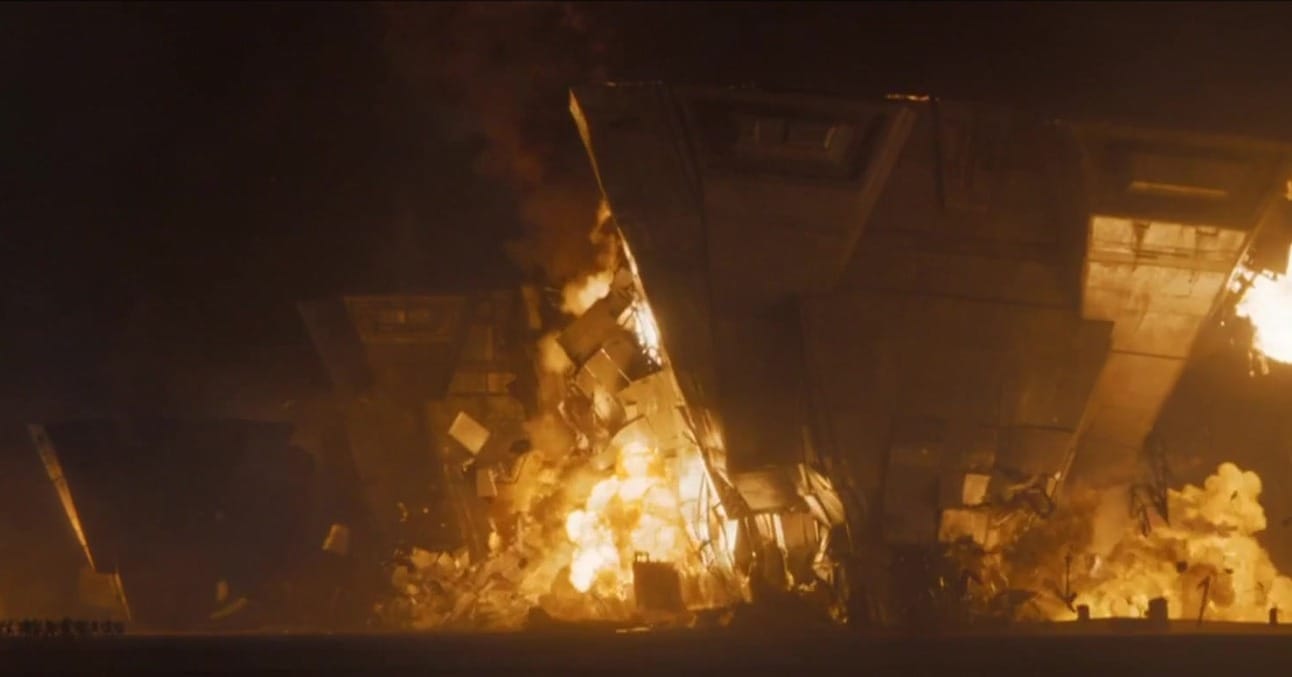
The Baron Harkonnen uses a space frigate as his command post during the attack on Arrakis (that's where Duke Leto dies btw), with his personal quarters described as disguising "the ship's harsh metal... with draperies, with fabric paddings and rare art objects."
Suggesting that frigates can be customized significantly for comfort and status.
In Children of Dune, Jessica reflects that her life on Caladan had been "something like that insulation provided by a really first-class frigate riding securely in the hold of a Guild heighliner. Only the most violent maneuvers could be felt, and those as mere softened movements."
Lighters appear to be a link between the surface and orbit, a specialized vessel transferring cargo and passengers to larger ships.
Lighters landed and took off on Arrakis regularly to transport the spice for House Atreides.
— Dune (1965)
In later books, lighters continue to play a role in spice transport and as utility craft. In God Emperor of Dune, we see "a Guild lighter which stood upright like a distorted miniature of the Little Citadel's tower," providing a rare glimpse at the vessel's orientation when landed.
Heretics of Dune offers more details about lighter operations. As mentioned before, a smaller one "would use atmospherics to dampen its descent" and describing the experience as "trembling sharply as it took its first bite of Gammu's atmosphere," followed by "severe buffeting" that made "conversation impossible while they clung to their seats and listened to the roaring, creaking around them."
The second most famous ship and perhaps the most revolutionary development in space tech across Herbert's six novels is the no-ship, which first appears in Heretics of Dune.
Their main feature isn't even space travel but their ability to remain hidden from prescient vision.
Talk about flying under the radar.
The technology builds on the concept of "no-chambers" developed during the God Emperor's reign, creating mobile units that cannot be tracked or observed through prescience.
[…] the no-chambers and no-ships which could not be traced, not even by the most powerful prescient minds in their universe. […] Not even a Guild Steersman deep in melange trance could detect such people.
— Heretics of Dune (1984)
If your mental image of a no-ship is big, silvery ball, you're absolutely right:
The no-ship sat there creaking, a glistening steely ball whose presence could be detected by the eyes and ears but not by any prescient or long-range instrument.
— Heretics of Dune (1984)
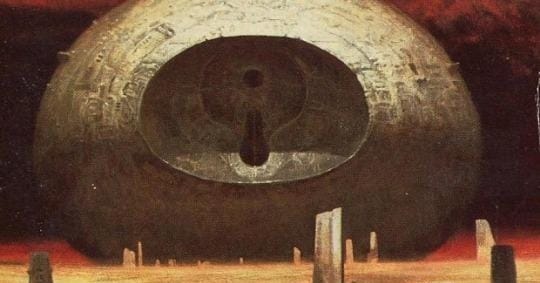
[…] the no-ship sitting on the ground at the Chapterhouse spacefield, a giant bump of mysterious machinery, separated from Time.
— Chapterhouse: Dune (1985)
But how big is was that giant bump, really?
Well, we know that the technology has some physical limitations - the smallest it can be is 140 meters across.
Tiny no-ships. How small could you make one of them? A gap in Odrade's knowledge. Archives corrected it: "Diameter, meters 140."
— Chapterhouse: Dune (1985)
And while we don't get such precise figures for the one at the Chapterhouse, from various scenes we know that it had a command center, guard chambers,an armory, a whole practice floor. Oh, and a quite spacious trunk.
Lastly, she thought about the worm in the no-ship's hold - a worm nearing the moment of its metamorphosis.
— Heretics of Dune (1984)
According to the Terminology of the Imperium, a monitor is "a ten-section space warcraft mounting heavy armor and shield protection. It is designed to be separated into its component sections for lift-off after planet-fall."
Monitors appear in Thufir Hawat's assessment of the forces arrayed against House Atreides:
But there were more than two thousand ships down on Arrakis at the last count—not just lighters, but frigates, scouts, monitors, crushers, troop-carriers, dump-boxes...
— Dune (1965)
The Terminology of the Imperium defines crushers as "military space vessels composed of many smaller vessels locked together and designed to fall on an enemy position, crushing it."
It's unclear if the smaller sections are piloted by actual people - and if so, what happens to them once they did the crushing.
Defined as "any Guild ship designed specifically for transport of troops between planets," troop carriers appear throughout the books during military operations.
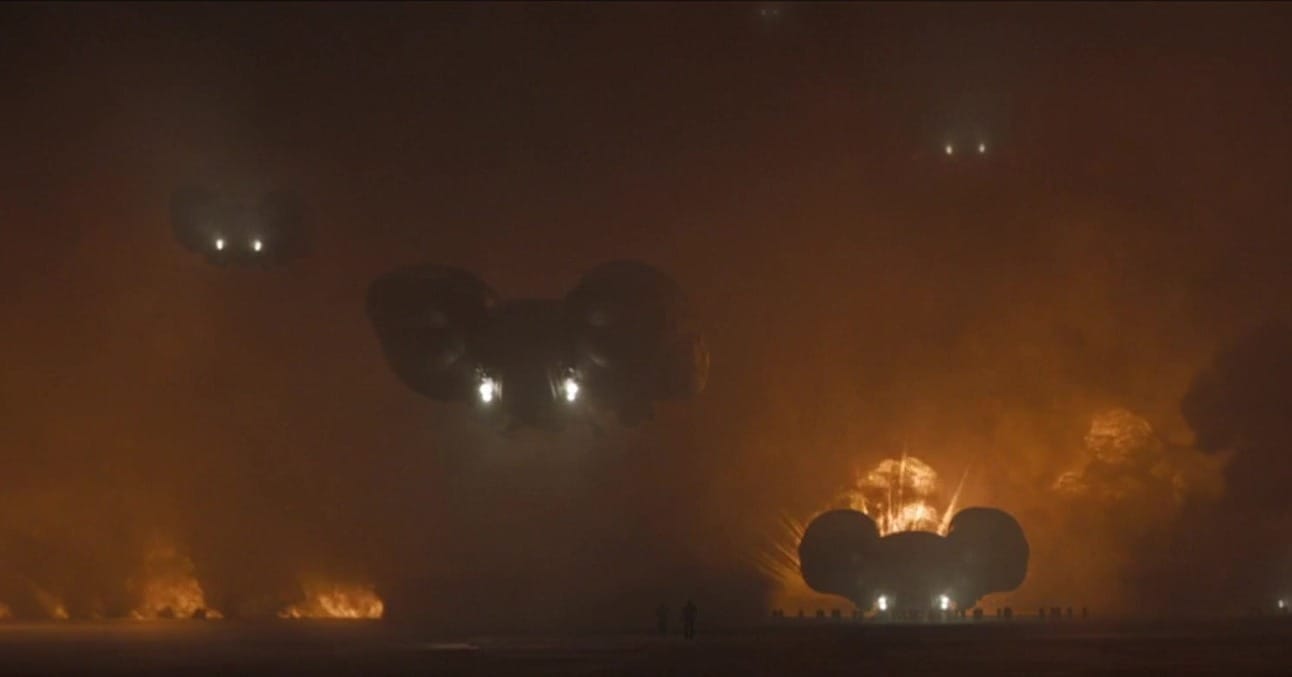
In Dune, we get a vivid description of one such vessel during Thufir Hawat's observation of a Harkonnen attack:
Another 'thopter glided in over the cliff wall above Hawat. He drew in a sharp breath as he saw it—a big troop-carrier. It flew with the slow, spread-wing heaviness of a full load—like a giant bird coming to its nest.
— Dune (1965)
I always imagined them as chunky ornithopters - although the other books only describe their function (carrying troops) and not how they look.
Scout ships are mentioned briefly in the Harkonnen invasion force in Dune and appear again in Chapterhouse: Dune as part of the attack formation: "The attack was taking its designed shape—scout ships laying down a decoy barrage and heavy carriers moving into strike position."
While not described in detail, scouts (as their name implies) are surely quick and small, serving reconnaissance and intelligence-gathering functions.
It's unclear what exactly the difference is between lighters and shuttles, as these too seem to serve as short-range transport vessels, particularly between planetary surfaces and orbit.
In Dune, we see cargo handlers "from the Guild shuttle depositing another load in the entry" of the Arrakeen great hall, and Duke Leto mentions returning to the landing field because "the second shuttle's due any minute with my staff reserves."
A scraping metal racket vibrated through the tower, shook the parapet beneath his arms. Blast shutters dropped in front of him, blocking the view.
— Dune (1965)
Like lighters, shuttles also play a role in spice transport, with the Duke noting that "about eight hundred trained hands expect to go out on the spice shuttle and there's a Guild cargo ship standing by."
The Terminology of the Imperium defines dump boxes as "the general term for any cargo container of irregular shape and equipped with ablation surfaces and suspensor damping system. They are used to dump material from space onto a planet's surface."
These specialized cargo containers appear to be designed for rough-and-ready delivery of supplies, perhaps in situations where a conventional landing is impractical or unnecessary.
Cargo ships are mentioned in conjunction with spice transport. In Dune, Duke Leto informs Gurney Halleck that "the Guild Heighliner that brought us is going on about its business, and the shuttle's supposed to make contact with a cargo ship taking up a load of spice."
This suggests a hierarchy of vessels involved in the spice trade: shuttles collect spice from the surface, cargo ships receive it in orbit, and Heighliners transport it between star systems.
The only book they appear in is the last one, and they are mentioned exactly three times, and basically within two pages:
Teg brought his voice-print coder from beneath his chin and barked quick orders. "Scramble a hammership over the Citadel."
[…]
Command bay projections showed his hammerships and troop carriers pouring from the holds. The shock force, an armored elite on suspensors, already had the perimeter secured.
[…]
Three of his giant hammerships came into view. "Clear the top of that thing!" he ordered. "Wipe it clean but do as little damage as possible to the structure."
— Chapterhouse: Dune (1985)
Not much in terms of description, but I'd imagine they're something like the hammerhead frigates from Star Wars (?) - like the crushers, their name suggests a brute-force approach.
I'll be honest, when I started my research into this topic, I assumed I'd find one or two ships next to the Heighliners and the No-ships.
I was certainly surprised about the variety I found - and mildly frustrated by the lack of details. Then again, when it comes to tech, Herbert always provides the amount that's required for the story.
And maybe that's the point.
In a universe where technology has both elevated and endangered humanity, the important details aren't the ships themselves - but the people who pilot them through the stars.

.svg.png)
.png)

If you wanna chat, find me on BlueSky.
Even if you're not a supporter (yet), you can get new articles as an email as soon as they're published - full length for free stuff and a preview of the premium content.