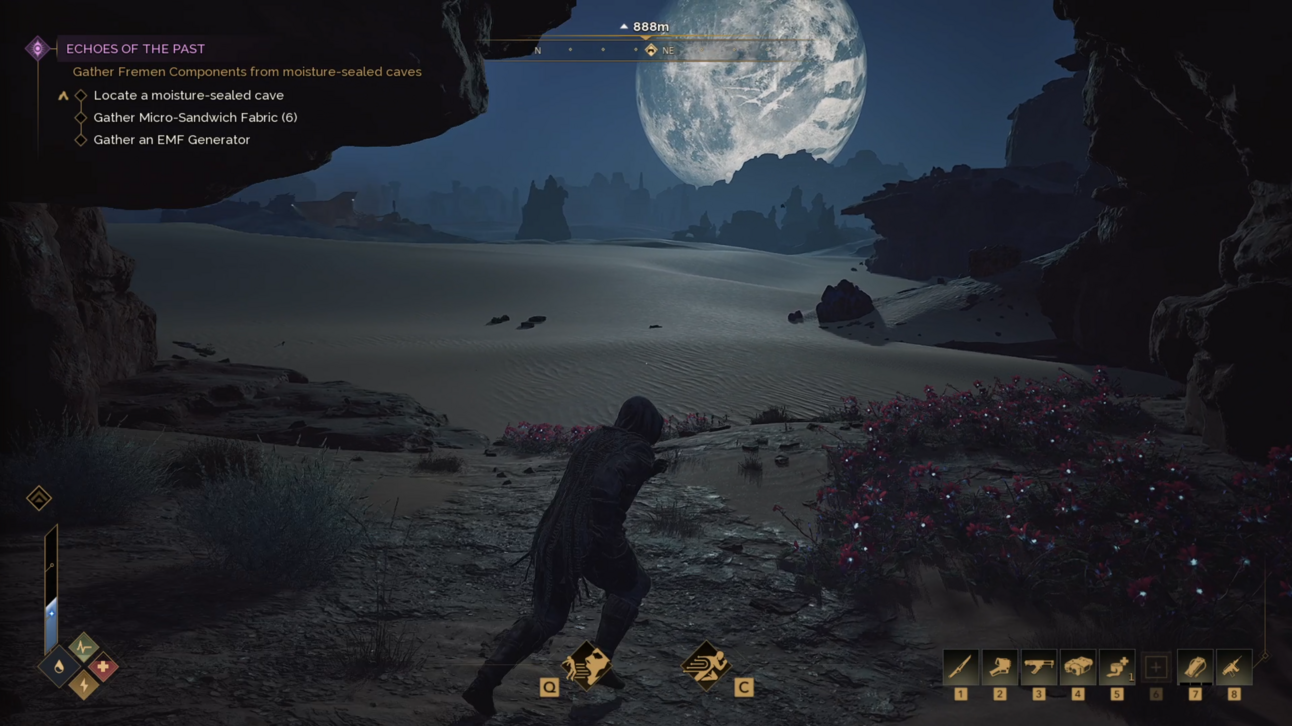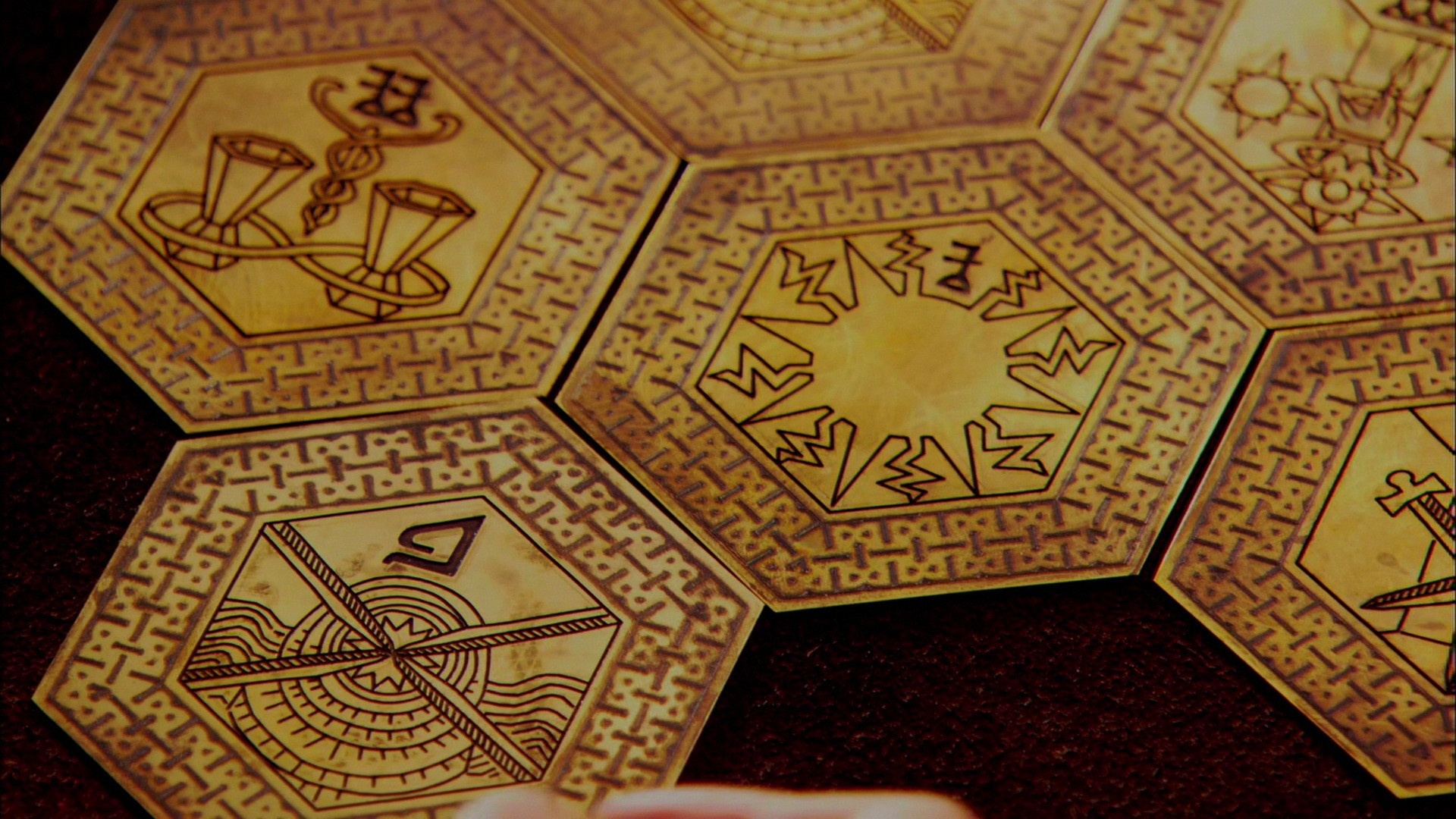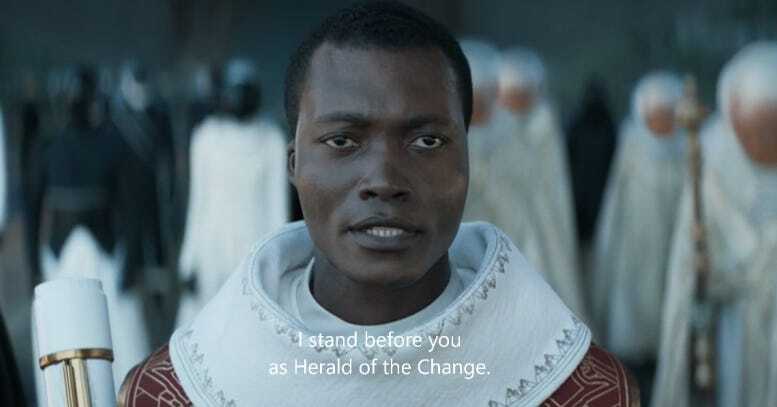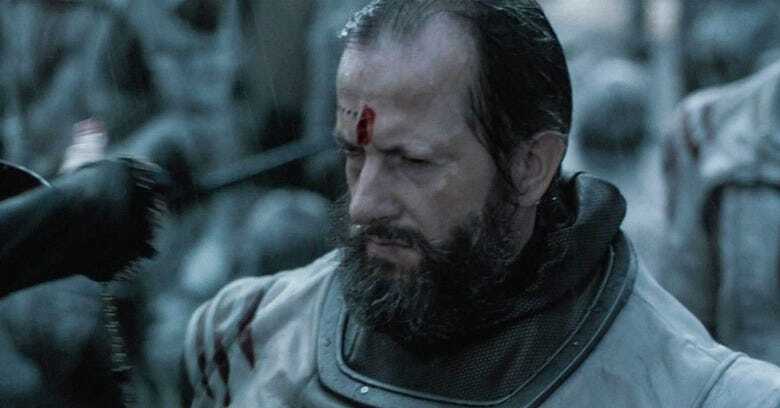
None of the Great Houses had armies like the Sardaukar.
Think of them as the Emperor's special forces - if special forces were raised on a prison planet and indoctrinated into a warrior cult.
Any one of them was rated a match for any ten ordinary Landsraad military conscripts. At the apex of their sway over the affairs of the Universe, their swordsmanship was said to match that of the Ginaz tenth level and their cunning abilities at in-fighting were reputed to approach those of a Bene Gesserit adept.
The Sardaukar came from Salusa Secundus, officially the Emperor's prison planet, but really more of an extreme boot camp where six out of thirteen people died before hitting puberty.
Talk about trauma bonding.
Nothing builds character quite like surviving a death world, as Duke Leto noted when he called it "the mystique of shared suffering."
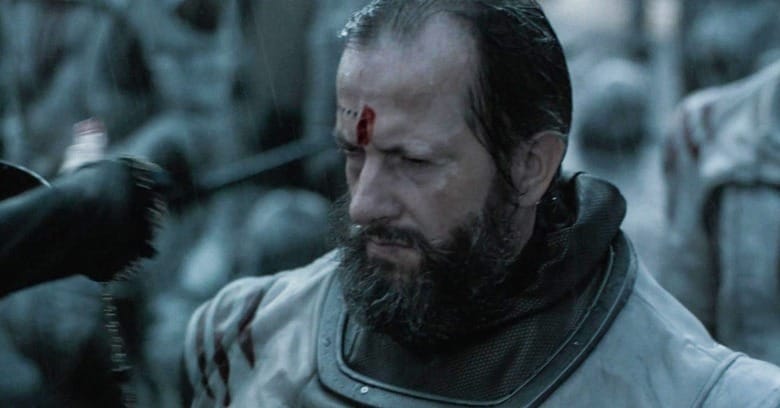
Being the most feared fighting force in the Known Universe came with one unexpected downside, however: overconfidence.
When they encountered the Fremen on Arrakis, they learned that they weren't the only ones shaped by a merciless environment.
"It was a good fight," the Fremen said. "We lost only two men and spilled the water from more than a hundred of theirs."
There were Sardaukar at every gun, Hawat thought. This desert madman speaks casually of losing only two men against Sardaukar!
"We would not have lost the two except for those others fighting beside the Harkonnens," the Fremen said. "Some of those are good fighters."
One of Hawat's men limped forward, looked down at the squatting Fremen. "Are you talking about Sardaukar?"
"He's talking about Sardaukar," Hawat said.
While various expanded universe materials offer different origin stories for the Sardaukar, this deep dive sticks to Frank Herbert's original six Dune novels.
There's plenty to unpack here - from their distinctive combat tactics to their eventual fate under Leto II's rule.
The Sardaukar were more than just elite soldiers - they were warrior-fanatics whose effectiveness came from a combination of extreme environmental conditioning, religious indoctrination, and absolute belief in their superiority.
By the time of Shaddam IV, "the sustaining mystique of their warrior religion had been deeply undermined by cynicism," but they remained formidable thanks to their training and fanatical devotion.
The foundation of their power came from their brutal upbringing on Salusa Secundus, the Emperor's prison planet.
This is common knowledge for us, the readers, but it was one of the most closely guarded secrets in the Imperium.
As Duke Leto said to Paul:
"Did Hawat talk to you about Salusa Secundus?"
"The Emperor's prison planet? No."
"What if it were more than a prison planet, Paul? There's a question you never hear asked about the Imperial Corps of Sardaukar: Where do they come from?"
The environmental conditions on Salusa Secundus were deliberately maintained at lethal levels, killing six out of thirteen people before the age of eleven.
This is how Hawat explained it to Paul:
"If you were going to raise tough, strong, ferocious men, what environmental conditions would you impose on them?"
"How could you win the loyalty of such men?"
"There are proven ways: play on the certain knowledge of their superiority, the mystique of secret covenant, the esprit of shared suffering. It can be done. It has been done on many worlds in many times."
The Sardaukar's religious beliefs reinforced their sense of superiority and special destiny. And they were taught from infancy to use cruelty as a weapon, weakening opponents with terror.
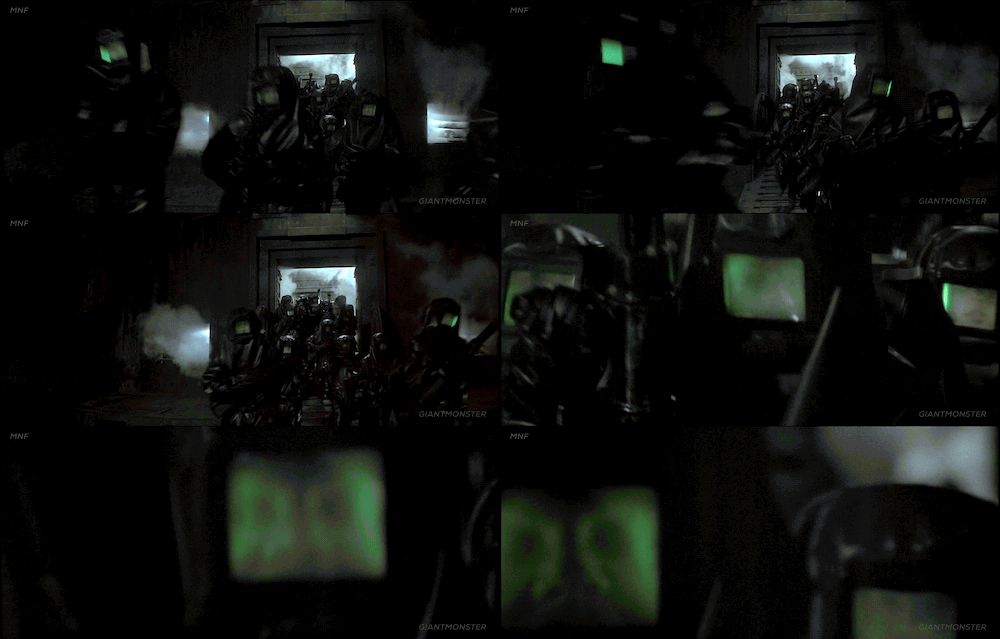
This combination of religious fervor and military training made them, as they were often referred to, "the soldier-fanatics of the Padishah Emperor" - warriors of unmatched capability.
The true nature of this training program was so secret that even the existence of people on Salusa Secundus before the Emperor's prison colony was questioned.
As Thufir Hawat noted to the Baron Harkonnen:
"Ah, yes: Where did House Corrino originate? Were there people on Salusa Secundus before the Emperor sent his first contingents of prisoners there? Even the Duke Leto, a cousin on the distaff side, never knew for sure. Such questions are not encouraged."
However, their greatest strength - their absolute belief in their superiority - eventually proved to be a critical weakness when they encountered the equally fanatical Fremen.
His imperial majesty's force came unprepared - but who can blame them? Fremen were made out to be nothing more than desert rats.
Five men swarmed from the 'thopter and Hawat saw the dust-repellent shimmering of shields and, in their motions, the hard competence of Sardaukar.
[…]
Abruptly, the sand around the two groups sprouted Fremen. They were at the ornithopter, then in it. Where the two groups had met at the dune crest, a dust cloud partly obscured violent motion. Presently, dust settled. Only Fremen remained standing.
"They left only three men in their 'thopter," the Fremen beside Hawat said. "That was fortunate. I don't believe we had to damage the craft in taking it."
Most shocking was the Fremen's ability to capture Sardaukar alive:
"We've sent three of them captive to be questioned by Liet's men."
Hawat's aide spoke slowly, disbelief in every word: 'You ... captured Sardaukar?'
"Only three of them," the Fremen said. "They fought well."
The scale of Sardaukar losses was unprecedented.
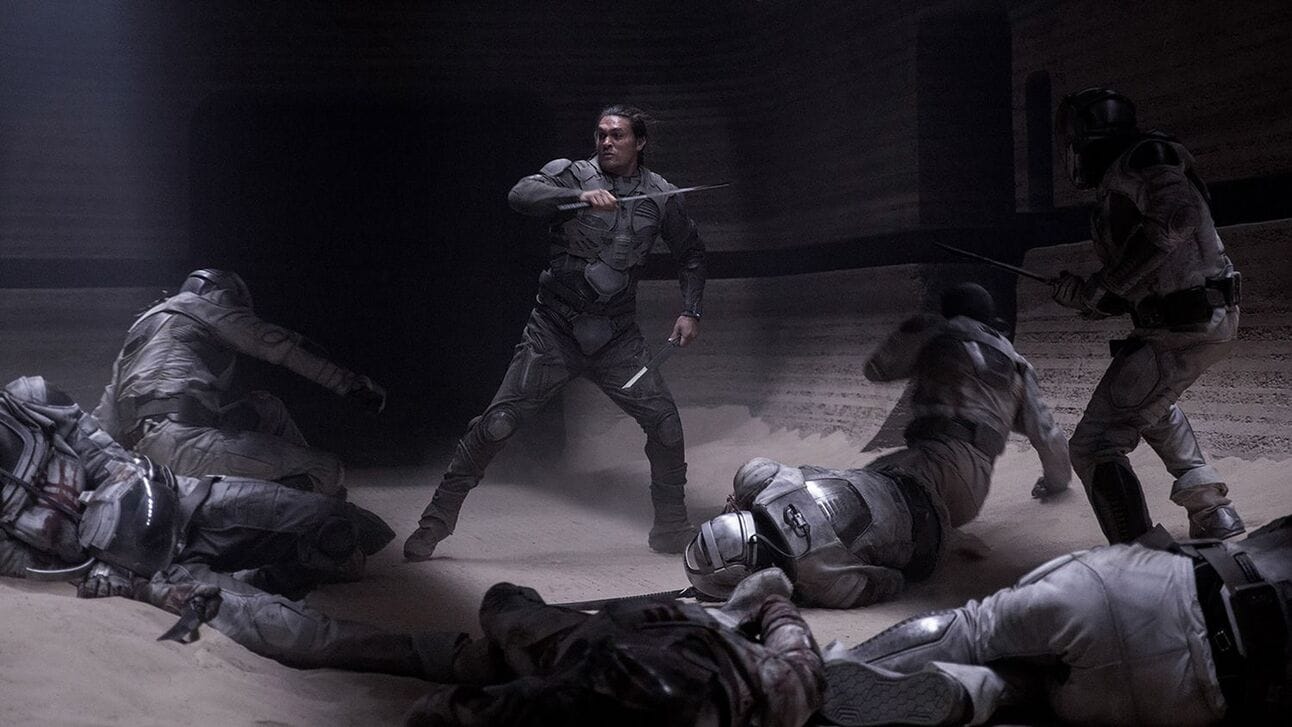
As Rabban reported to the Baron:
"The Fremen aren't worth considering!"
"Forgive me, m'Lord, but the Sardaukar believe otherwise."
The Baron hesitated, staring at his nephew. "You know something?"
"M'Lord had retired when I arrived last night. I …ah, took the liberty of contacting some of my lieutenants from… ah, before. They've been acting as guides to the Sardaukar. They report that a Fremen band ambushed a Sardaukar force somewhere southeast of here and wiped it out."
"Wiped out a Sardaukar force?"
"Yes, m'Lord."
"Impossible!"
Rabban shrugged.
"Fremen defeating Sardaukar," the Baron sneered.
Unlike some fiction writers, Herbert didn't stop to do an info dump on the entire structure and modus operandi of the Sardaukar. He added details as the story demanded - here are the things we know:
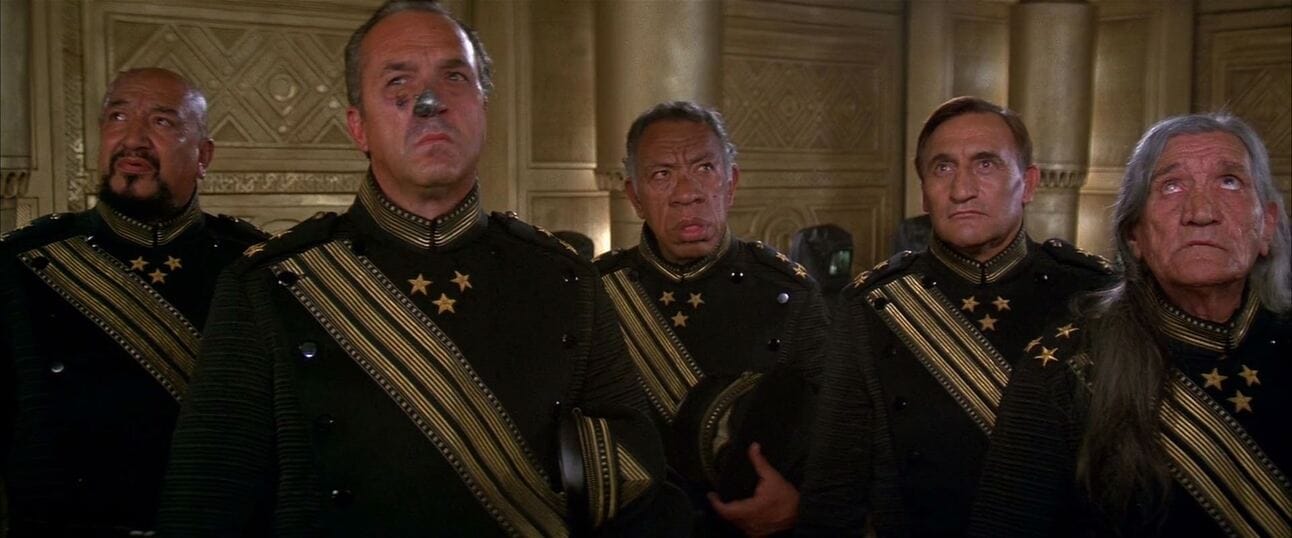
Their equipment combined standard Imperial military gear with specialized tools for covert operations.
Paul's warning about searching captured Sardaukar reveals the extent of their preparedness:
"Remember, too, that each has a false toenail or two that can be combined with other items secreted about their bodies to make an effective transmitter. They'll have more than one false tooth. They carry coils of shigawire in their hair—so fine you can barely detect it, yet strong enough to garrote a man and cut off his head in the process. With Sardaukar, you must scan them, scope them—both reflex and hard ray—cut off every scrap of body hair. And when you're through, be certain you haven't discovered everything."
A Sardaukar Bashar could be recognized by their bearing alone, as Dr. Yueh observed:
A man in Harkonnen uniform skidded to a stop at the end of the hall, stared in at Yueh, taking in at a single glance Mapes' body, the sprawled form of the Duke, Yueh standing there. The man held a lasgun in his right hand. There was a casual air of brutality about him, a sense of toughness and poise that sent a shiver through Yueh.
Sardaukar, Yueh thought. A Bashar by the look of him. Probably one of the Emperor's own sent here to keep an eye on things. No matter what the uniform, there's no disguising them.
And the air of superiority that was bred into them did not respect any authority but the Emperor's, as demonstrated in an encounter between the same Colonel Bashar and Baron Harkonnen:
"Get your hands off me, you pack of carrion-eaters!" the man roared, and he dashed the guards aside.
Ah-h-h, one of the Sardaukar, the Baron thought.
The colonel bashar came striding toward the Baron, whose eyes went to slits of apprehension. The Sardaukar officers filled him with unease. They all seemed to look like relatives of the Duke...
The Baron noted the absence of salute, the disdain in the Sardaukar's manner, and his unease grew. There was only the one legion of them locally—ten brigades—reinforcing the Harkonnen legions, but the Baron did not fool himself. That one legion was perfectly capable of turning on the Harkonnens and overcoming them.
After their defeat by the Fremen, the Sardaukar retreated with Shaddam IV to Salusa Secundus. They were reduced to a single legion - still dangerous, but no longer the dominant military power in the Imperium.
His Sardaukar legions remained small, but once more they were a man-to-man match for the Fremen. That served little purpose as long as the limits imposed by the Treaty of Arrakeen governed the relative size of the forces.
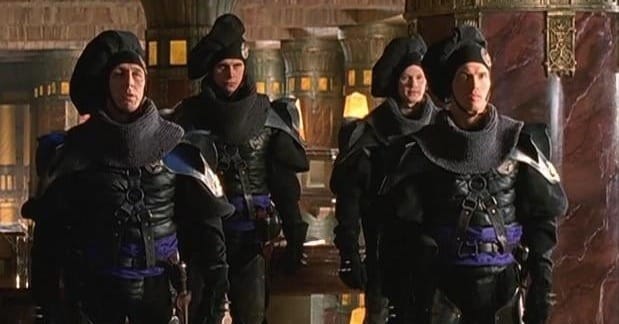
The first attempts at restoration came under Princess Wensicia, who maintained the Sardaukar's strict standards while plotting House Corrino's return to power. Her approach emphasized the old ways - absolute loyalty, rigid discipline, and ruthless efficiency.
"Tyekanik! This is the planet Salusa Secundus. Do not fall into the lazy ways which spread through our Imperium. Full name, complete title -- attention to every detail."
Her son, Farad'n, had a more enlightened approach. Unlike his predecessors who clung to traditional Sardaukar methods, he understood that the force needed to evolve:
"To defeat the Atreides, we must understand not only Caladan but Arrakis: one planet soft and the other a training ground for hard decisions. That was a unique event, that marriage of Atreides and Fremen. We must know how it worked or we won't be able to match it, let alone defeat it."
But ultimately, the plans within plans failed, and Farad'n had to surrender his forces to Leto II:
"Give me your Sardaukar."
"Give them," Ghanima echoed. "He'll have them one way or another."
Farad'n heard fear for himself in her voice. Love, then? Leto asked not for reason, but for an intuitive leap. "Take them," Farad'n said.
Under Leto II, they were eventually disbanded. However, their military heritage would persist - the title of Bashar, for instance, would continue to be used by both the Fish Speakers and later the Bene Gesserit military.
But their greatest legacy might be as a lesson in the limitations of pure military power, as The Preacher noted:
"This is the fallacy of power: ultimately it is effective only in an absolute, a limited universe. But the basic lesson of our relativistic universe is that things change. Any power must always meet a greater power. Paul Muad'Dib taught this lesson to the Sardaukar on the Plains of Arrakeen. His descendants have yet to learn the lesson for themselves."

.svg.png)
.png)

If you wanna chat, find me on BlueSky.
Even if you're not a supporter (yet), you can get new articles as an email as soon as they're published - full length for free stuff and a preview of the premium content.