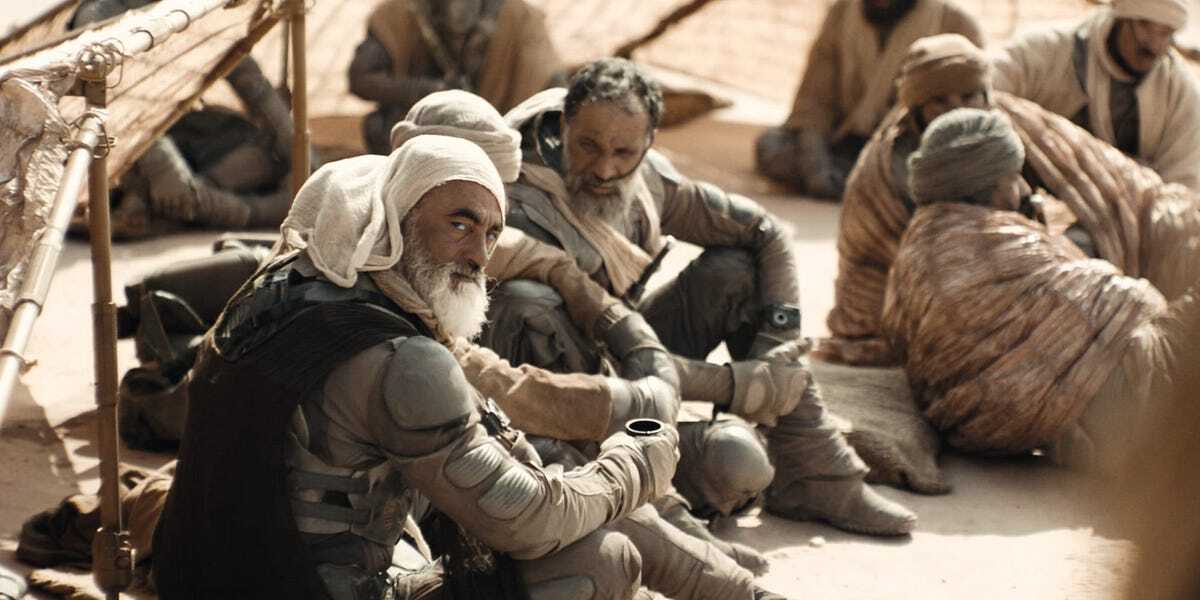
Muad’Dib: “Reach forth thy hand and eat what God has provided thee; and when thou are replenished, praise the Lord.”
— Dune [1965]
Fremen are mostly known as fierce warriors hitching giant sandworm rides, doing stabby things with giant sandworm teeth - but they're also semi-nomadic people who had to figure out sustenance and nutrition on a desert planet.
With Frank Herbert's focus on ecology, or if you prefer, planetology, he obviously took inspiration from the climate and people who occupy desert(-adjacent) areas here on Earth.
There's dates and nuts and food packed in leaves. And there are also things where he just used Spice as a prefix: spice coffee, spicebread, and spice honey. (Surely not made by spice bees, though.)
And while the Dune Encyclopedia offers a whole article on Fremen cooking (and I'll get to that in the end), for this piece, I wanted to stick to the core canon.
I wanted to see Herbert's thinking on how to feed millions of people on what's ostensibly a barren world. Are we hunting for desert creatures or are we breeding them? Is half the sietch a hydroponics bay? How do you get your calories?
We know there are food processing areas in a sietch.
[Harah] gestured at a tunnel branching to their left. "Through there and beyond, that's food processing and stillsuit maintenance."
— Dune [1965]
But there's less talk about how the ingredients get there in the first place. Especially en masse.
One thing worth remembering, though: the Fremen had so much Spice they could bribe the Spacing Guild into pretending their planet was empty.
So much, in fact, that the Guild wouldn't even look at bribes from Great Houses.
Halleck said: "Wouldn't it be cheaper to reopen negotiations with the Guild for permission to orbit a frigate as a weather satellite?"
The Duke looked at Hawat. "Nothing new there, eh, Thufir?"
"We must pursue other avenues for now," Hawat said. "The Guild agent wasn't really negotiating with us. He was merely making it plain—one Mentat to another—that the price was out of our reach and would remain so no matter how long a reach we develop. Our task is to find out why before we approach him again."
— Dune [1965]
With that kind of wealth, one would assume that they could import what they were missing.
Now, this is only my headcanon, as Herbert is frustratingly quiet on the topic. Even when talking about meals, he kept it vague with "spice-laced foods" and "spice-laden diets" and rarely mentioned actual foodstuffs.
But what he did mention is in this article.
So grab your spice coffee and let's look at what kept the Fremen fueled.
The first time we encounter Fremen food is when Chani hands Paul what might be the local version of an energy bar:
"Find a place to rest and stay out of the way, child-man," Chani said. "Here's food." She pressed two leaf-wrapped morsels into his hand. They reeked of spice.
[...]
Paul stood beside Chani in the shadows of the inner cave. He could still taste the morsel she had fed him—bird flesh and grain bound with spice honey and encased in a leaf. In tasting it he had realized he never before had eaten such a concentration of spice essence and there had been a moment of fear. He knew what this essence could do to him—the spice change that pushed his mind into prescient awareness."
— Dune [1965]
This leaf-wrapped snack tells us a lot: they have bird meat somehow; they grow grain somewhere (probably hidden gardens in the sietches); and whatever it might actually be, they use spice honey as a binding agent. And they wrap it all in leaves, showing they don't waste a single bit of plant material.
And while it might be the normal amount for Fremen, Paul is taken aback by the amount of Spice in it. No surprise, either. Imagine if your trail mix came with a side effect of "might make you see the future."
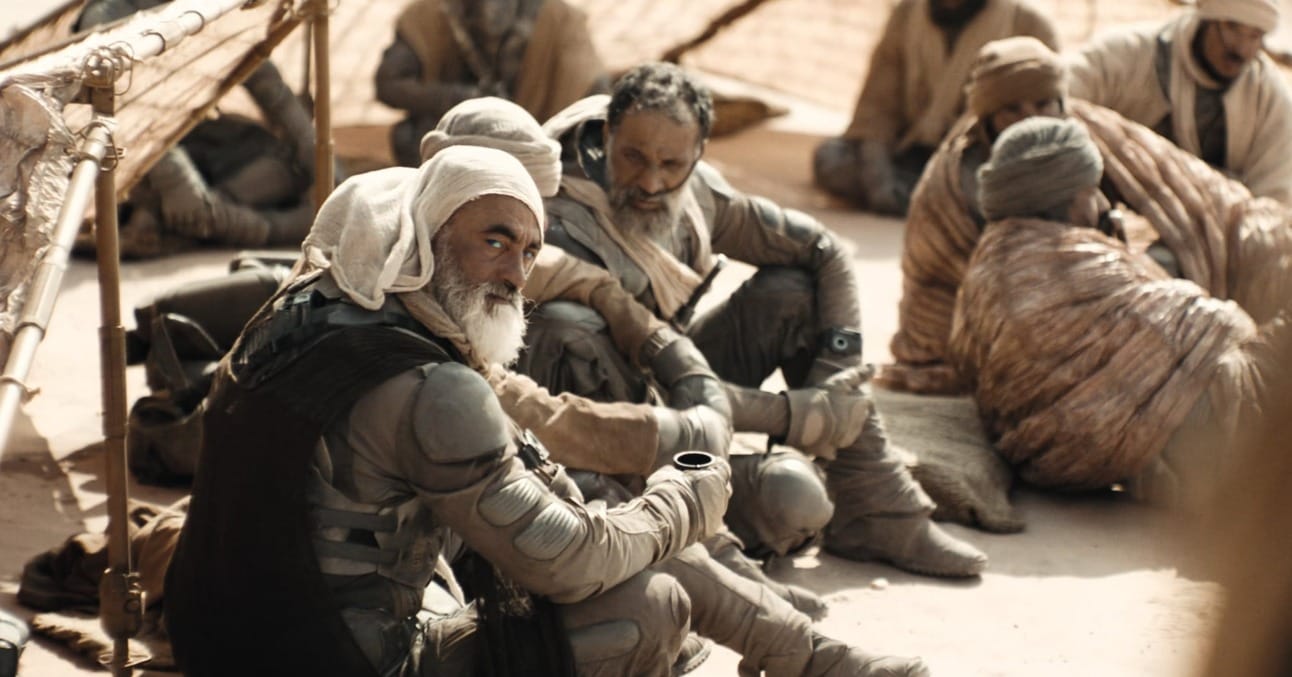
I'm relieved to know that coffee remains a serious business across the known universe. But of course, on Arrakis, coffee isn't just coffee – it comes with an extra dose of stimulant in the form of Spice.
Spice coffee is everywhere in Fremen society. It's what you offer guests, what you drink to start your day, and apparently important enough that when you kill a guy in ritual combat, you inherit his coffee maker.
"The marker for Jamis' coffee service," Stilgar said, and he lifted a flat disc of green metal. "That it shall be given to Usul in suitable ceremony when we return to the sietch."
— Dune [1965]
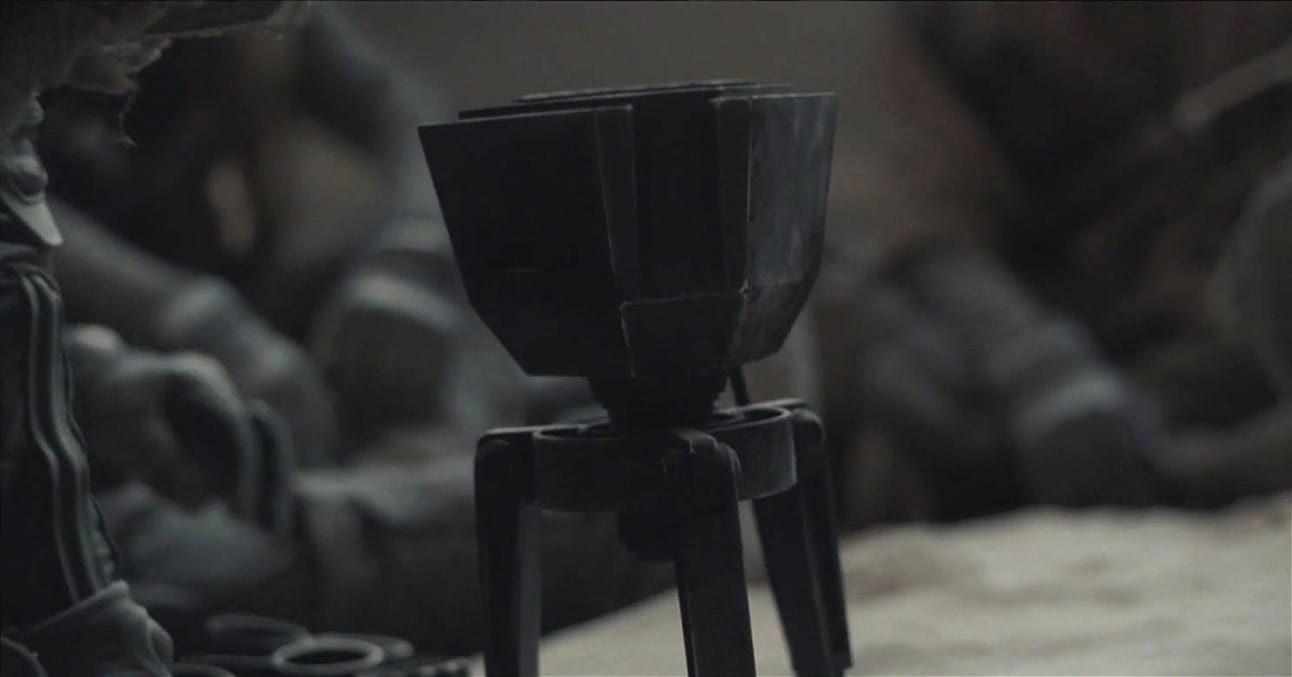
Steam wafted from the pot as she lifted the lid by its Hagar emerald knob. He could tell the coffee wasn't yet ready by the way she replaced the lid. The pot -- fluting silver female shape, pregnant -- had come to him as a ghanima, a spoil of battle won when he'd slain the former owner in single combat.
The coffee pot itself - described in Dune: Messiah as "a fluting silver female shape, pregnant" - isn't just kitchenware; it's a symbol that you belong to the tribe. Paul getting Jamis's coffee service means more than any verbal oath that he's now a real Fremen.
— Dune: Messiah [1969]
And for those who need more than a coffee to get their day going, we get a glimpse of Fremen breakfast in the third book:
As was the Fremen custom, the Atreides twins arose an hour before dawn. They yawned and stretched in secret unison in their adjoining chambers, feeling the activity of the cave-warren around them. They could hear attendants in the antechamber preparing breakfast, a simple gruel with dates and nuts blended in liquid skimmed from partially fermented spice.
— Children of Dune [1976]
Yumm, partially fermented spice juice. While we're reaching for our coffee or orange juice, the Fremen are knocking back what's essentially hallucinogenic kombucha before the sun even rises. No wonder they can ride giant worms.
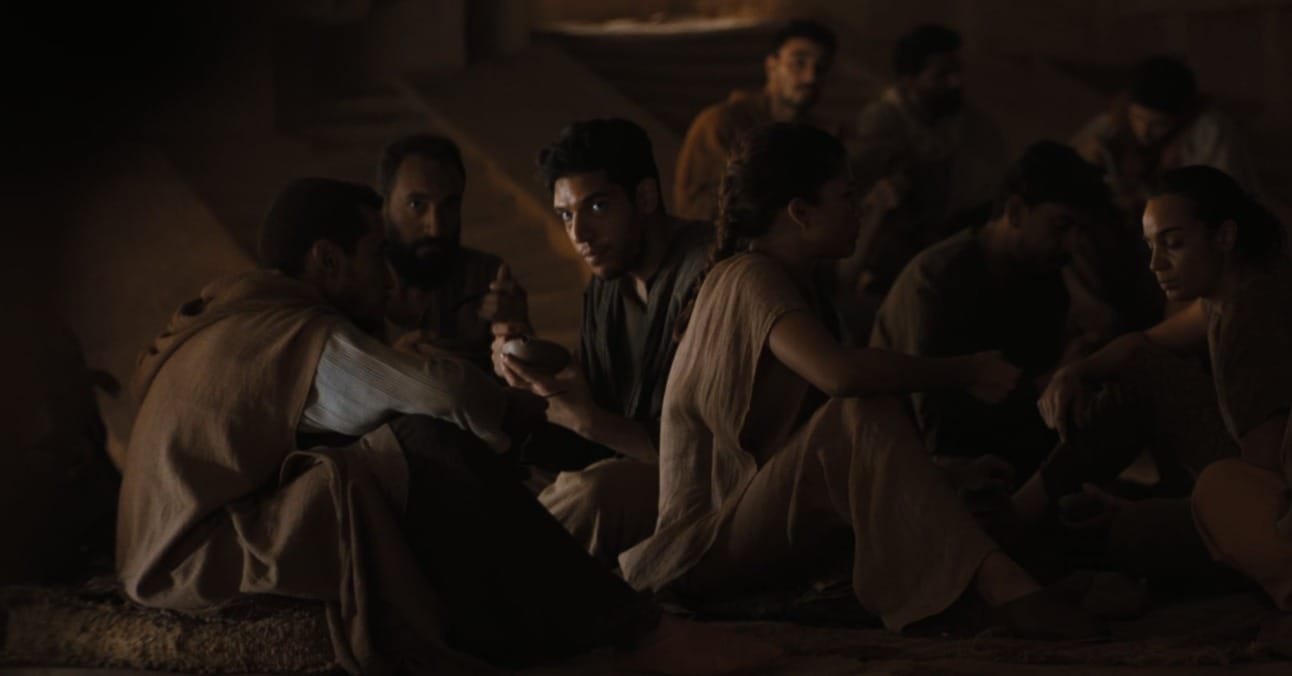
Having said that, the dates and nuts make sense for desert people. Dates store well and provide quick energy. Nuts deliver protein and fats to keep you going.
I won't belabor the point, as everybody already knows that the blue-within-blue eyes are a direct result of a diet saturated with Spice.
IBAD, EYES OF: characteristic effect of a diet high in melange wherein the whites and pupils of the eyes turn a deep blue (indicative of deep melange addiction).
— Terminology of the Imperium, Dune [1965]
So, going forward, we can just assume that when the Fremen sit down on their spice rugs and take out their spice plates, there's gonna be some Spice in their spice food.
Leto felt the music move him through a marvelous ancient cavern. He saw women trampling spice residue for fuel, curding the spice for fermentation, forming spice-fabrics. Melange was everywhere in the sietch.
— Children of Dune [1976]
We've already mentioned the Dune equivalent of oatmeal, "a simple gruel with dates and nuts blended in liquid skimmed from partially fermented spice."
Bread's counterpart is… you guessed it: spicebread.
Ravenous hunger seized her as she sat up. She fed on the food kept by the bedside -- spicebread, a heavy cheese.
— Dune: Messiah [1969]
The presence of spicebread suggests the Fremen cultivated (or had access to) some grain crops. For this type of agriculture, they must've had moisture-controlled environments within their sietches.
This spicebread itself was likely a dense, hearty loaf infused with melange, providing both sustenance and a stimulant.
In the famous banquet scene of the original Dune, Herbert describes a "roast desert hare in sauce cepeda" and "a thick soup with morsels of bird meat," - and while neither of the dishes is necessarily Fremen, the ingredients are local. Meaning that small game animals and birds from the desert must have constituted important meat sources.
Again, whether the Fremen hunted these animals (while doing a sandwalk to avoid becoming prey themselves) or managed to breed them in-sietch is unknown.
The "heavy cheese" mentioned in Chani's meal reveals something even more interesting - the Fremen would've needed dairy animals. We know that kulons (desert donkeys) were present, but they could have had goats or some desert-adapted variation, hidden away in their sietch communities.
Alas, that leads to even more questions: if they had dairy animals, what did they feed them?
Dates appear frequently in the texts; the "spice honey" binding Paul's first Fremen meal indicates they also had access to sweeteners, either harvested from desert plants or perhaps… sandtrout?
Fremen had lived with the strange creatures for generations, knowing that if you risked a bit of water as bait, you could lure them into reach. Many a Fremen dying of thirst had risked his last few drops of water in this gamble, knowing that the sweet green syrup teased from a sandtrout might yield a small profit in energy.
— Children of Dune [1976]
They also had Baklawa, described in line with our understanding as a heavy pastry made with date syrup.
And while it's unsure whether they had direct access to it, they knew about apricots, which they called mish-mish, and about oranges, which by this time went by the name of portyguls.
"My family sat in their pool courtyard," Harah said, "in air bathed by the moisture that arose from the spray of a fountain. There was a tree of portyguls, round and deep in color, near at hand. There was a basket with mish mish and baklawa and mugs of liban—all manner of good things to eat. In our gardens and in our flocks, there was peace … peace in all the land."
— description of "Ramadhan on Bela Tegeuse", Dune [1965]
We've already covered spice coffee, but Fremen had something else to wake you up.
Described as "a caffeine-type stimulant from the yellow berries of akarso" plant.
AKARSO: a plant native to Sikun (of 70 Ophiuchi A) characterized by almost oblong leaves. Its green and white stripes indicate the constant multiple condition of parallel active and dormant chlorophyll regions.
— Terminology of the Imperium, Dune [1965]
The drink that can reduce the most elite swordsman of the known universe to the equivalent of a frat boy after a kegger.
Bes' damn stuff ever tas'ed
— Duncan Idaho, Dune [1965]
Given the Fremen's obsession with water conservation, I'd assume that spice beer was either found only in the city (and not the sietch) or would have been consumed primarily for special occasions rather than casual drinking. Because nothing says "responsible resource management" like fermenting your precious water supply into alcohol that makes you slur your words.
And again, more questions: did the Fremen have brewmasters?
Mentioned by Harah in a previous quote, the Terminology of the Imperium describes Liban as "spice water infused with yucca flour. Originally a sour milk drink."
Sounds absolutely refreshing.
The Water of Life might be the most hardcore drink in the known universe.
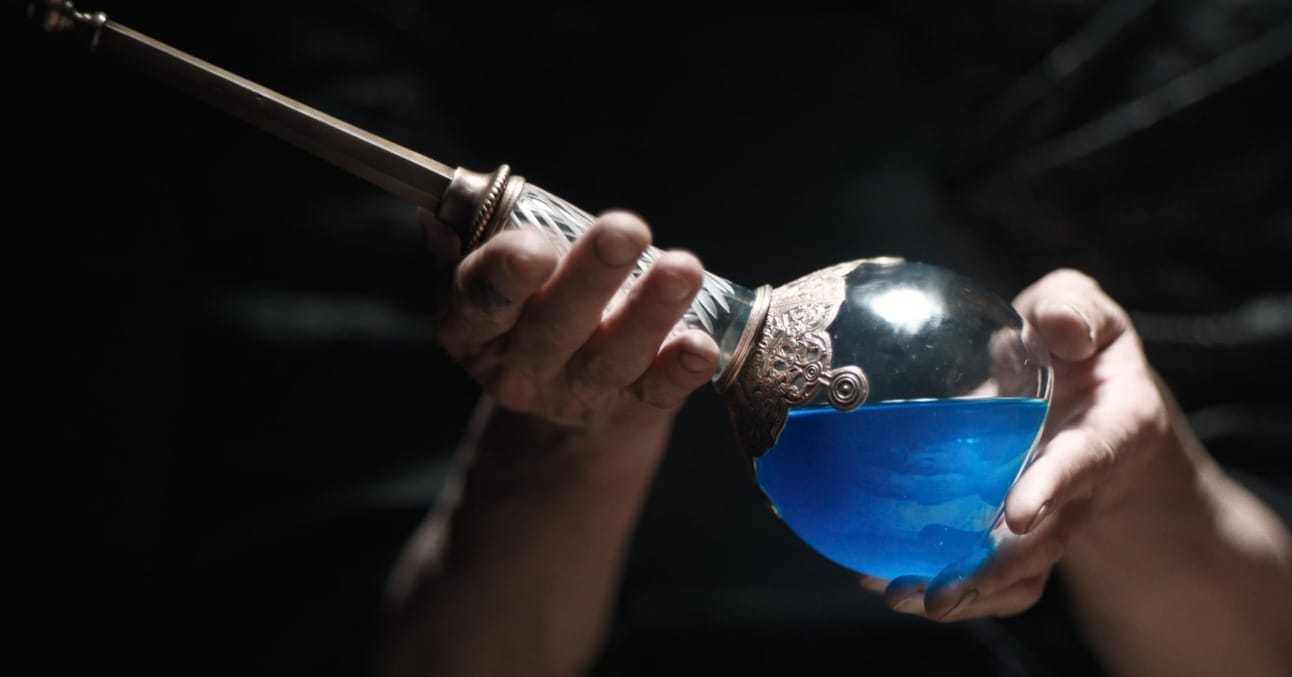
Created by drowning a small sandworm (seriously, who thought of this?), this toxic bile is basically poison. But when a Reverend Mother transmutes it in her body, the changed liquid allows the sietch to have a "tau orgy."
TAU, THE: in Fremen terminology, that oneness of a sietch community enhanced by spice diet and especially the tau orgy of oneness elicited by drinking the Water of Life.
— Terminology of the Imperium, Dune [1965]
The Fremen, not content with merely fighting together or breaking bread together, decided that truly knowing your neighbors meant getting high on transformed worm poison while sharing a psychedelic experience.
And if you think this is intense, wait until you hear about their baby showers.
Keeping with water discipline, one of the oldest and most persistent Fremen customs was a ritual where they collected a newborn's amniotic fluid, distilled it, and then fed it to the child as their first water.
The traditional form required a godmother to serve the water, saying: "Here is the water of thy conception." Even the young Fremen still followed this tradition with their own newborn.
— Children of Dune [1976]
Welcome to Arrakis, kid!
Chani had fastened upon an ancient Fremen diet supposed to promote fertility and the diet eliminated all opportunity for administering the contraceptive drugs.
— Dune: Messiah [1969]
Again, there's sadly little detail about what kinds of food the diet consisted of - the only thing we know is that it was extraordinarily melange-rich.
As Pardot Kynes began the ecological transformation of Arrakis, only decades before Paul's arrival, the potential Fremen diet expanded dramatically.
Herbert details the introduction of numerous plants with food potential:
"Now came the crucial test: date palms, cotton, melons, coffee, medicinals—more than 200 selected food plant types to test and adapt."
— Dune [1965]
This planting program promised to diversify the Fremen diet substantially over time, increasing their access to fresh produce and expanding their culinary possibilities.
This ecological transformation would have profound implications for Fremen cuisine, gradually shifting them from desert survival foods to a more varied agricultural diet.
As always, wherever Frank Herbert was light with the details, the authors of the Dune Encyclopedia had space to cook. (Pun intended.)
And while it's not strictly canon, they did have Herbert's blessing, so as a coda, here's what the Encyclopedia has to say.
"Fremen usually ate two meals a day, a lighter one eaten on rising at sunset — usually consisting of bread, cheese, kvetch, and some fruit or juice. No more food was eaten during the night, except for a drink of juice or coffee after arising from a nap. A heavier supper was served at dawn."
— Dune Encyclopedia [1985]
This meal structure reflects their nocturnal lifestyle, with the primary caloric intake coming at dawn before the heat of the day forced them into relative inactivity.
The Encyclopedia also describes specific foods not mentioned in the novels:
Fruits were mostly dates, figs, and apricots grown in the palmaries, and the occasional portygul or melon imported from Caladan, especially the pink-fleshed, weet, and fragrant paradan melon. Fruits were eaten fresh, made into conserves, ickled, or dried. Leafy vegetables were very scarce on Arrakis. Instead, a large number of root crops, like tabaroot, available most of the year, were grown in the ardens tended by the children of the tribes.
— Dune Encyclopedia [1985]
It also provides detailed recipes, including one for Fremen Flat Bread - apparently eaten with roasted meats.
15 ml yeast, dissolved in
120 ml tepid water
Add 450 gm flour
5 ml salt
15 ml oil
240 ml warm water, added in drops as needed
— Dune Encyclopedia [1985]
Let me know if you try it.

.svg.png)
.png)

If you wanna chat, find me on BlueSky.
Even if you're not a supporter (yet), you can get new articles as an email as soon as they're published - full length for free stuff and a preview of the premium content.