A couple of months ago we looked at what the Fremen ate, and a couple of weeks back we explored Fremen tech.
And while it's not a nifty little personal device, the latter piece should've included the real pinnacle of Fremen technology: the sietch.
So I decided to correct that oversight by talking about what they are and also trying to do a comprehensive list of all the named sietches on Arrakis.
SIETCH: Fremen: "Place of assembly in time of danger." Because the Fremen lived so long in peril, the term came by general usage to designate any cave warren inhabited by one of their tribal communities.
— Terminology of the Imperium, Dune [1965]
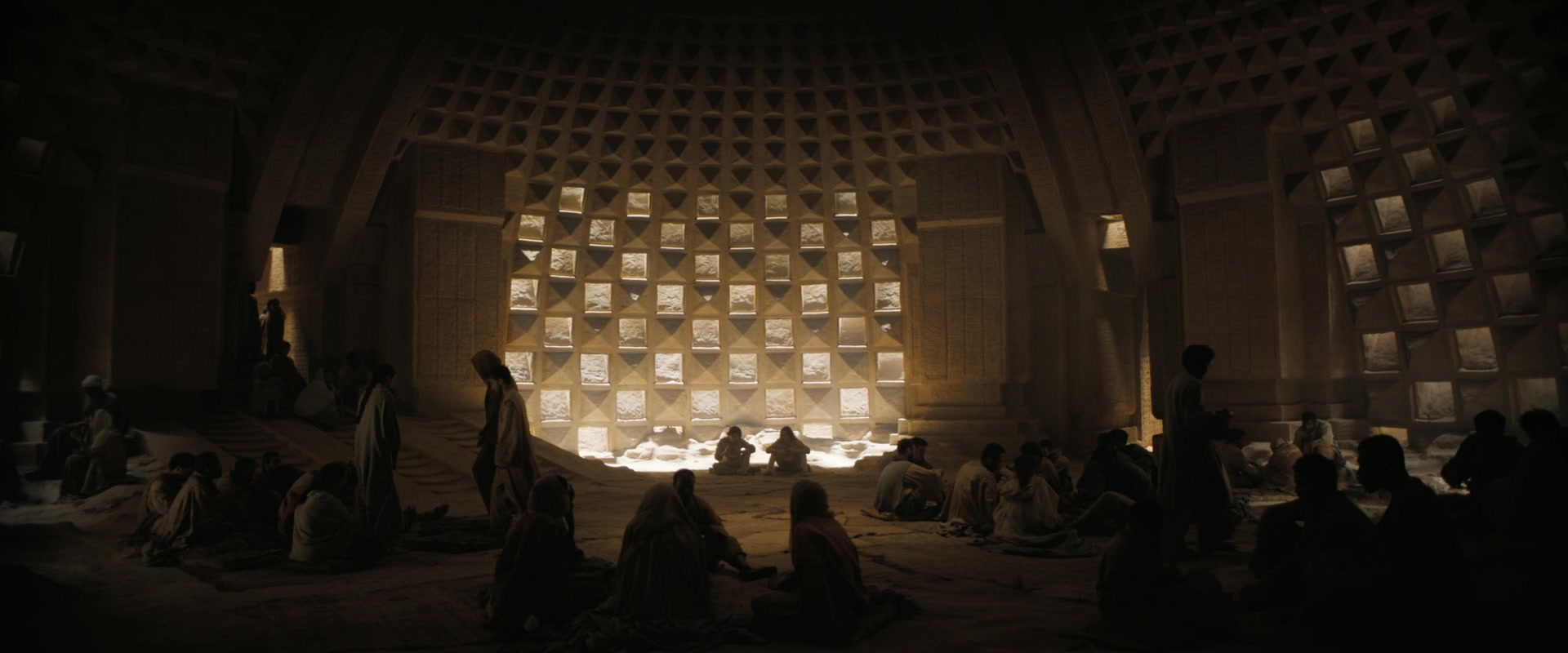
In short, a sietch is a moisture-sealed cave complex that can shelter literal thousands while staying completely invisible from the outside; an entire city of people hidden inside a mountain, producing everything the community might need.
A sietch operates simultaneously as fortress, factory, and family unit.
Ideally, a sietch entrance is a narrow, defensible passage.
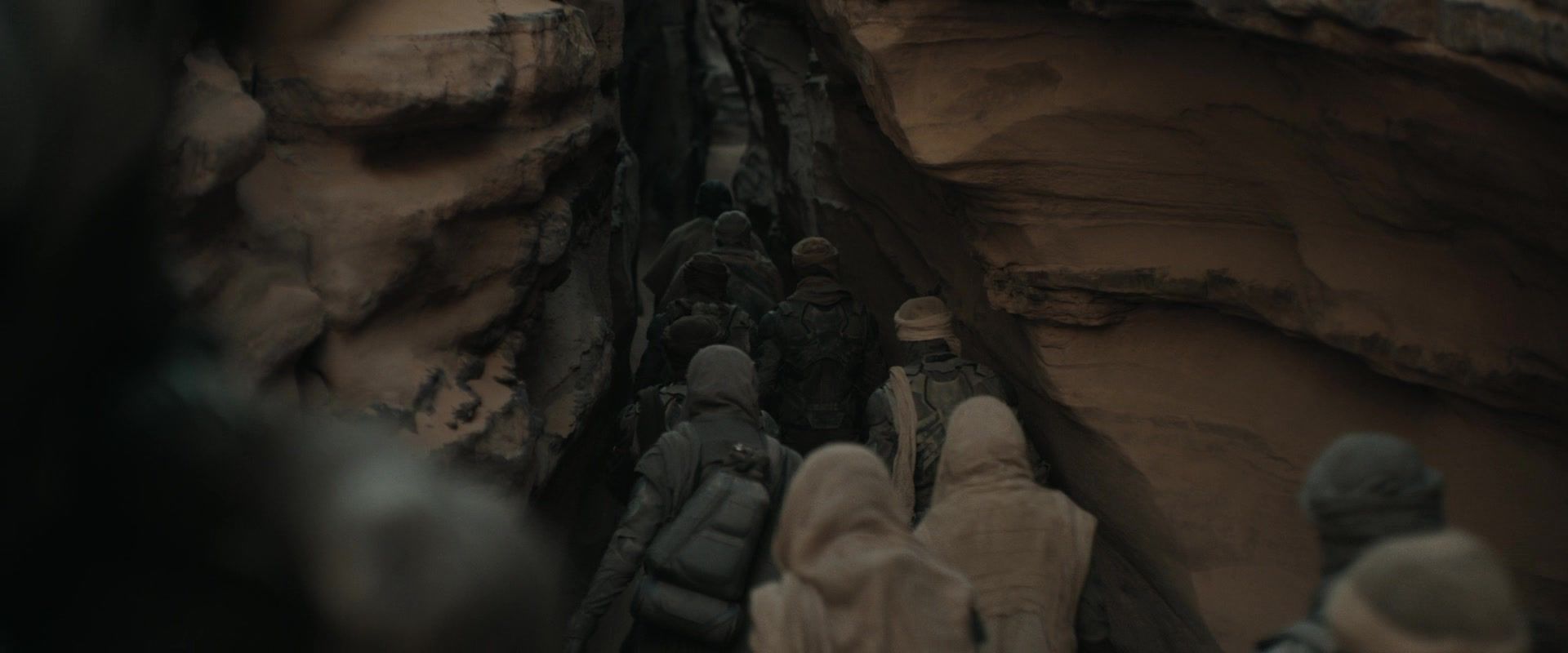
It's deliberately designed to be held by a few defenders against much larger forces, while the internal layout provides multiple escape routes so inhabitants never get trapped in a siege.
"Any man who retreats into a cave which has only one opening deserves to die," the Fremen said.
— Dune [1965]
The cave systems themselves are usually carved from living rock using cutterays. Natural caverns are expanded and connected by hand-carved tunnels, creating long, labyrinthine complexes that can shelter not just the population of a sietch but the production the community requires to survive.
Sietches function as complete industrial centers - while being buried underground.
Manufacturing floors produce stillsuits and fremkits, and maula pistols, while textile operations weave fabric from desert cotton and whatever else is available - including human hair.
"They repair the weaving machinery," [Harah] said. "But it must be dismantled by tonight." She gestured at a tunnel branching to their left. "Through there and beyond, that's food processing and stillsuit maintenance." She looked at Paul. "Your suit looks new. But if it needs work, I'm good with suits. I work in the factory in season."
— Dune [1965]
Food processing centers handle everything from underground plantations to whatever protein sources the desert provides.
Hawat looked at Paul. "From food processing and other evidence, Idaho estimates the cave complex he visited consisted of some ten thousand people, all told."
— Dune [1965]
But Spice doesn't only end up in food. Its residue is turned into substrates for fabrics, plastics, and even explosives.
[Paul] heard his mother cough then, and her voice came back to him through the press of the troop: "How rich the odors of your sietch, Stilgar. I see you do much working with the spice … you make paper … plastics … and isn't that chemical explosives?"
— Dune [1965]
The production facilities, like human life, require a lot of water. Deathstills handle the grim but necessary business of water recovery from human remains, while windtraps capture what minimal humidity there is in Arrakis's dry air.
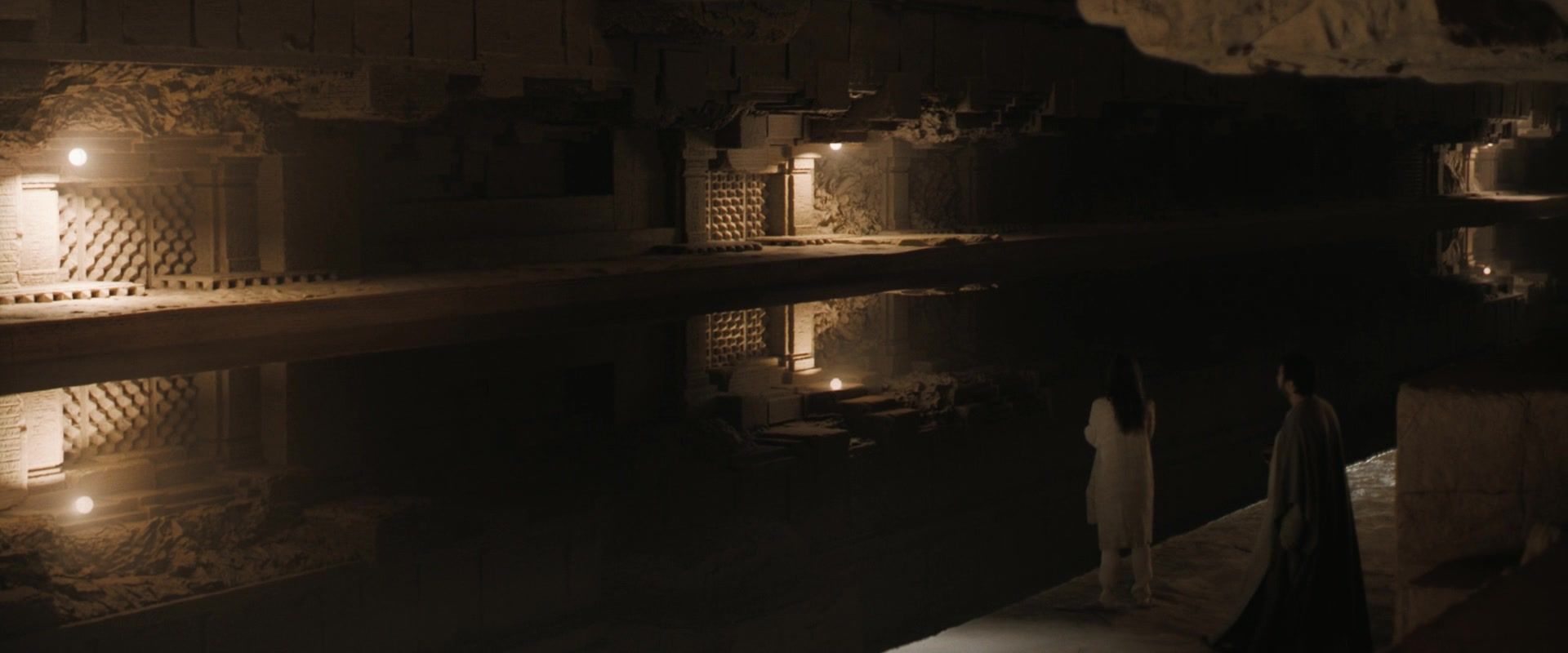
All of this results in the sietch being a self-sufficient community. Self-sufficient and moisture-sealed - which means it has a distinct odor.
Paul slipped out his nose plugs, swung the mouth baffle aside. The odor of the place assailed him: unwashed bodies, distillate esthers of reclaimed wastes, everywhere the sour effluvia of humanity with, over it all, a turbulence of spice and spicelike harmonics.
— Dune [1965]
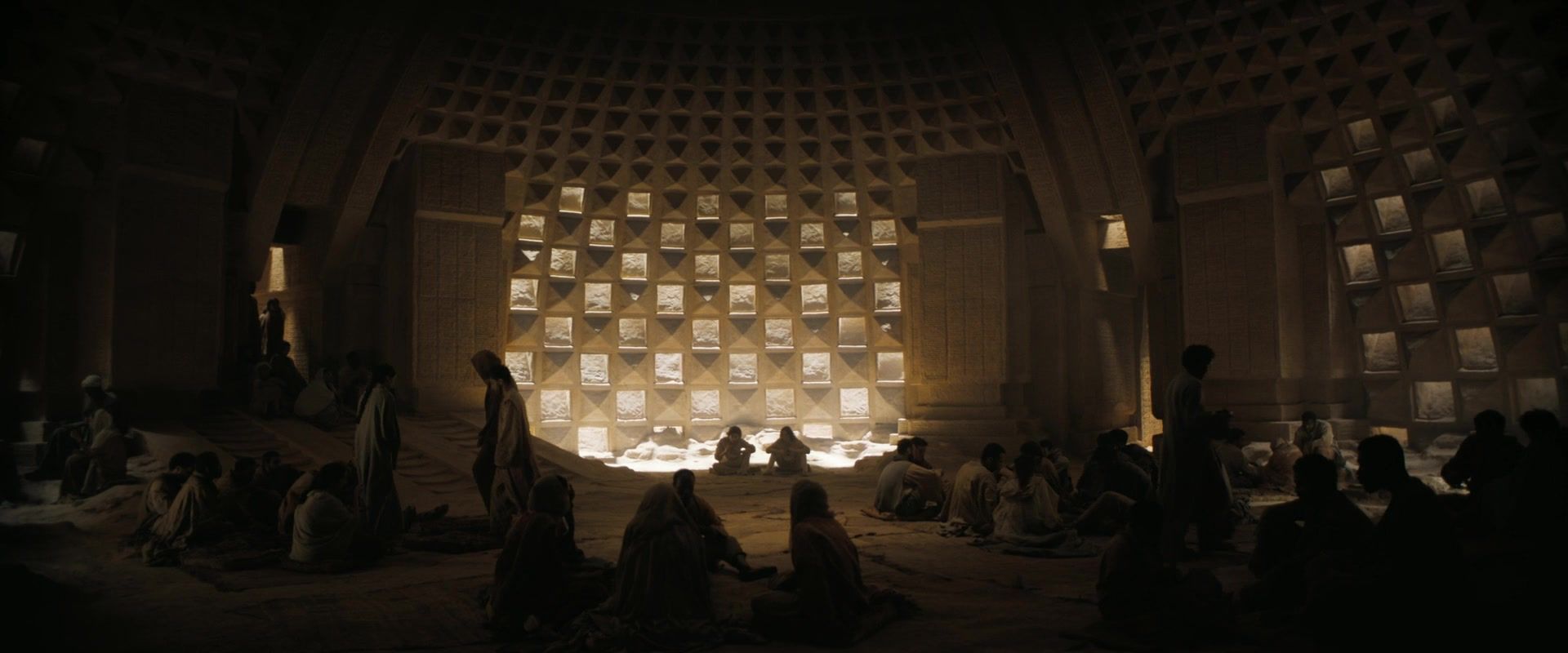
While we'd usually think of a place, the sietch also signifies a fundamental social unit in Fremen society. We know this from how every member of the tribe has an internal and external name: Paul is known to everyone in Sietch Tabr as Usul but as soon as outsiders are present, he'd be called Muad'Dib.
The sietch as a tribe is counted not in individuals, but hearths.
Their leader said he ruled a sietch of two thousand hearths. We've reason to believe there are a great many such sietch communities
— Thufir to Paul, Dune [1965]
But just like with the names, internally the Fremen referred to their private spaces differently.
"This is your yali," Harah said. "Why do you hesitate?"
Paul nodded, joined her on the ledge. He lifted the hangings across from her, feeling metal fibers in the fabric, followed her into a short entrance way and then into a larger room, square, about six meters to a side—thick blue carpets on the floor, blue and green fabrics hiding the rock walls, glowglobes tuned to yellow overhead bobbing against draped yellow ceiling fabrics.
The effect was that of an ancient tent.
[…]
Paul masked his unease beneath a quick scanning of the room. Thin hangings to the right, he saw, partly concealed a larger room with cushions piled around the walls. He felt a soft breeze from an air duct, saw the outlet cunningly hidden in a pattern of hangings directly ahead of him.
[…]
"There is a reclamation chamber off the other room." She gestured. "For your comfort and convenience when you're out of your stillsuit."
— Dune [1965]
Sietches also have organized education. Not only that, they have classrooms with chalkboards.
They came to another side opening wider than any of the others Paul had seen. He slowed his pace, staring in at a room crowded with children sitting cross-legged on a maroon-carpeted floor.
At a chalkboard against the far wall stood a woman in a yellow wraparound, a projecto-stylus in one hand. The board was filled with designs—circles, wedges and curves, snake tracks and squares, flowing arcs split by parallel lines. The woman pointed to the designs one after the other as fast as she could move the stylus, and the children chanted in rhythm with her moving hand.
— Dune [1965]
Most of the things we know about how sietches operate come from descriptions of the most famous of all sietches: Sietch Tabr.
It was considered one of the bigger and more prosperous communities and was one of the many sietches that had a hidden cache of water reserves - at the time of Paul's arrival it contained 38 million decaliters, to be precise.
While the Harkonnen's return after the battle of Arrakeen and Rabban's pogrom forced an evacuation of the place, it seems the name travelled with the people because Stilgar's new sietch in the south was still referred to as Tabr by the end of Dune.
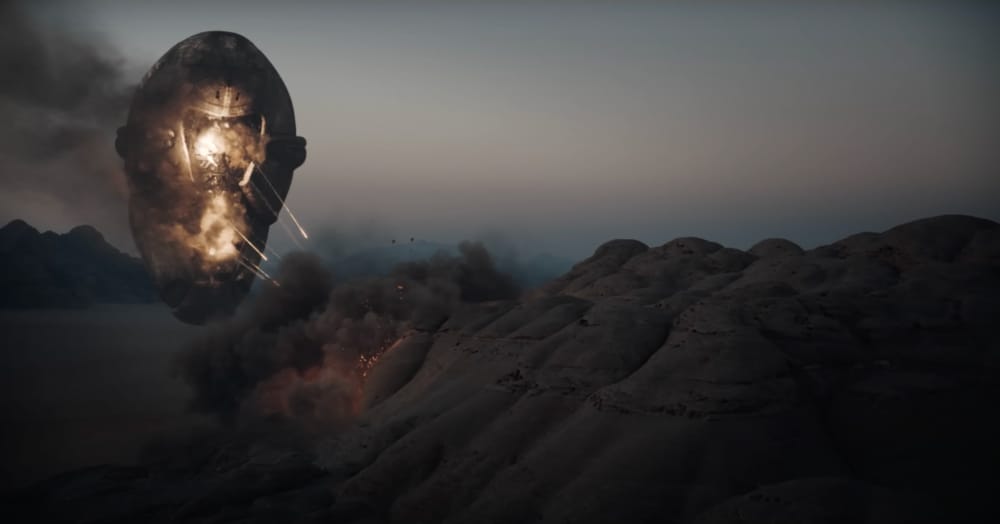
By the time of Children of Dune, (the original) Sietch Tabr had undergone major modifications. Traditional moisture-sealed construction was supplemented with new buildings made of mud brick and transparent windows.
Stilgar considered these changes an offense against traditional design, but they showed the sietch's evolution from hidden refuge to administrative center. The sietch now worked as part of the royal household where Stilgar served as guardian of Paul's orphaned twins, Leto and Ghanima.
And speaking of Leto II, once the Fremen were all but part of a museum exhibit, he used Sietch Tabr as the hiding place for his massive spice hoard. The God Emperor concealed melange throughout the entire great chamber and surrounding passages, creating a reserve worth more than most planetary economies. By this time, the location was called "Tabur," with its outlines still visible but transformed by a water-rich environment.
When Darwi Odrade explored the ruins in Heretics of Dune, she found ninety thousand long tons of spice - equivalent to half a year's harvest from the planet then called Rakis - and Leto's secret diaries.
If you can name only two sietches, I bet Jacurutu is the second.
Jacurutu was the original name, used by Fremen as a ghost story about the legendary "water-stealers" who violated the most fundamental desert taboo. According to the oral history, the Iduali (literally meaning water insects) of Jacurutu stole water from other tribes, leading to their complete extermination by united Fremen forces.
By Children of Dune, the same location is known as Fondak, a smuggler stronghold in the Inner Desert.
Jacurutu/Fondak -- they had to be the same place. It was the only way the legendary place could have been hidden. Smugglers had done it, of course. How easy for them to convert one label into another, acting under the cover of the unspoken convention by which they were allowed to exist. The ruling family of a planet must always have a back door for escape in extremis. And a small share in smuggling profits kept the channels open. In Fondak/Jacurutu, the smugglers had taken over a completely operative sietch untroubled by a resident population. And they had hidden Jacurutu right out in the open, secure in the taboo which kept Fremen from it.
— Children of Dune [1976]
Leto II calls it a "worm's lair," and it's run by the Cast Out - descendants of Fremen oathbreakers who engage in off-planet spice trading.
The reason it's so famous is that it's here that Leto II began his transformation from a nine-year-old boy to a human-sandworm hybrid.
Another legendary place, the new home of the Cast Out, was Shuloch.
The butte of Shuloch was impressive in this desert. Its unmarked presence here spoke of many bribes and many deaths, of many friends in high places. Leto could see at Shuloch's heart a cliff-walled pan with interfringing blind canyons leading down into it. A thick growth of shadescale and salt bushes lined the lower edges of these canyons with an inner ring of fan palms, indicating the water riches of this place. Crude buildings of greenbush and spice-fiber had been built out from the fan palms. The buildings were green buttons scattered on the sand. There would live the cast out of the Cast Out, those who could go no lower except into death.
— Children of Dune [1976]
Although by the time of God Emperor of Dune, Shuloch was only remembered as a "haunted place" where "great crimes were committed before all of the inhabitants were wiped out."
In its place, there was a small village called Goygoa, described as "not like the old Shuloch at all. Very peaceful" now. The village was built of black stones with orchards and terraced gardens, featuring a central square with a low-walled pool.
An old Fremen settlement described in Children of Dune as one of the original sietches that "refused to profit from Muad'Dib's religion."
Located below the rim of Red Chasm and sheltered from winds, it's characterized as old and poor compared to more prosperous locations.
The sietch serves as a refuge for Jessica and her Fedaykin allies during their opposition to Alia's corrupt administration. Its inhabitants' refusal to embrace the new Muad'Dib-centered religion led to conflict with Alia's Priesthood, making it a natural gathering point for traditionalist resistance.
Tuek's Sietch: Named after the Esmar Tuek, this sietch is run and used by a smuggler community.
Wind Pass Sietch: This unnamed sietch appears in the Pardot Kynes backstory in the original book. Located overlooking Wind Pass, it was where the first planetologist was taken after saving three Fremen youths. The sietch became the testing ground for Kynes's terraforming theories.
Sietch Makab: Dune Messiah mentions this sietch as the destination for Fremen Naibs planning a Grand Council. Later, Alia and Stilgar travel there and Alia consolidates her power.
Tomorrow I'll raid Gara Rulen, [Leto] thought. I'll smash their qanat and loose its water into the sand. Then I'll go on to Windsack, Old Gap, and Harg. In a month the ecological transformation will have been set back a full generation. That'll give us space to develop the new timetable.
— Children of Dune [1976]
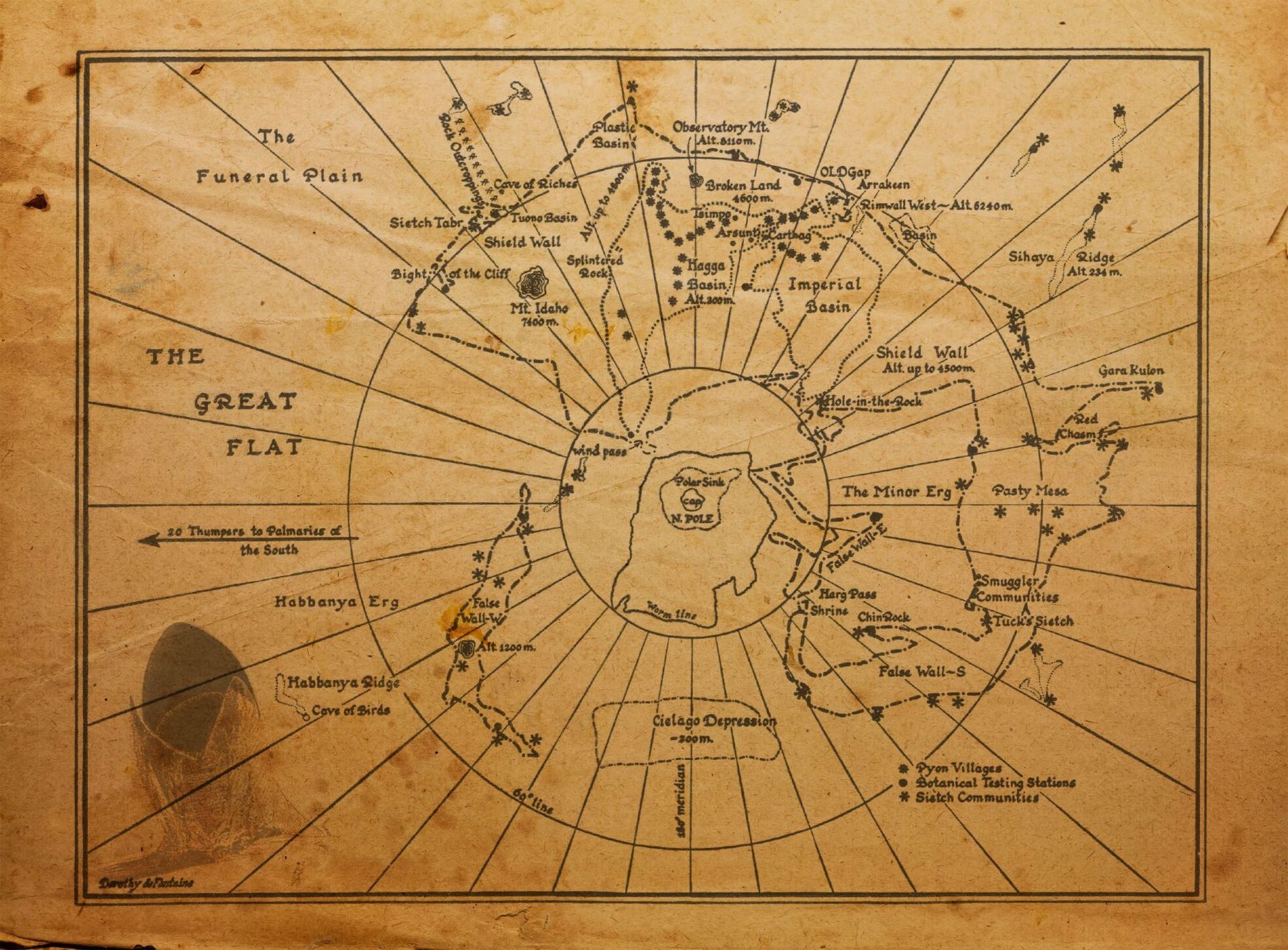
And for all the sietches that were noted on the map of Arrakis Dune but didn't get any screentime (and then some), the Dune Encyclopedia has us covered.
The Encyclopedia also notes sietch warrens (although we don't get any of their names) in the regions of Sihaya Ridge, Hole-in-the-Rock, Pasty Mesa, Chin Rock, and the False Wall-South, as well as the Plastic Basin and Observatory Mountains, the Rock Outcroppings on the Funeral Plain, and Bight of the Cliff. Differentiating them as using the Western and Eastern dialects of the Fremen language. (As opposed to Villeneuve's movie, differentiating northern and southern speakers.)
Red Wall Sietch functioned as Naib Heinar's headquarters during the pre-Atreides period. The complex features a walled-off grotto with extensive side caves and lava tube networks extending throughout the mountain.
The physical setup included luxurious woven carpets, side rooms with cushions and low tables of metal and polished stone, and precious off-planet wood artifacts including a carved sandworm and board game pieces. Ancient machinery recirculated air to prevent moisture loss, while the large meeting hall served as a natural vault with balconies zigzagging up reddish walls.
Red Wall Sietch operated as both community and military training center. Fremen engaged in spice processing (trampling residue to extract fuel, curdling spice for fermentation), textile production using human hair, mutated rat fur, desert cotton, and wild creature skin strips. Schools taught desert survival skills and combat techniques.
The sietch hosted the great Fremen convocation where Pardot Kynes presented his terraforming vision, making it a crucial location in the development of Fremen ecological consciousness.
The Prelude novels identify this as an ancient, sacred sietch that was abandoned by Stilgar's time but revered as having been the "greatest of all hidden settlements." The name derives from the Islamic term for collections of prophetic sayings.
Harkonnens desecrated Hadith Sietch by using its caves to conceal illegal spice hoards, providing motivation for a young Stilgar to lead a raid reclaiming both the spice and the location's honor.
Located in southern polar regions, featuring solar mirrors that melt permafrost for water extraction and allowing cultivation of plants and orchards.
Though not explicitly named in the core canon, this is widely understood to be the proper name for the "Southern Sietch" stronghold associated with the Habbanya Erg geographical features.
Just like the Core Canon and the Dune Encyclopedia, the EU contains plenty of sietches that might get mentioned, might even be important to the story, but are not specifically named.
Examples include but are not limited to Mapes's sietch community in Sands of Dune; or Naib Sharnak's sietch where Vorian Atreides had a visit and that was ultimately sold by Naib Modoc to Venport in the Schools of Dune trilogy. That money bought a lot of good tech that enabled Modoc to set up an even better place further south with moisture seals and essential infrastructure.
This is to say that while I aimed at having all the named sietches in one place, if you find one that I missed, please let me know.

.svg.png)
.png)

If you wanna chat, find me on BlueSky.
Even if you're not a supporter (yet), you can get new articles as an email as soon as they're published - full length for free stuff and a preview of the premium content.