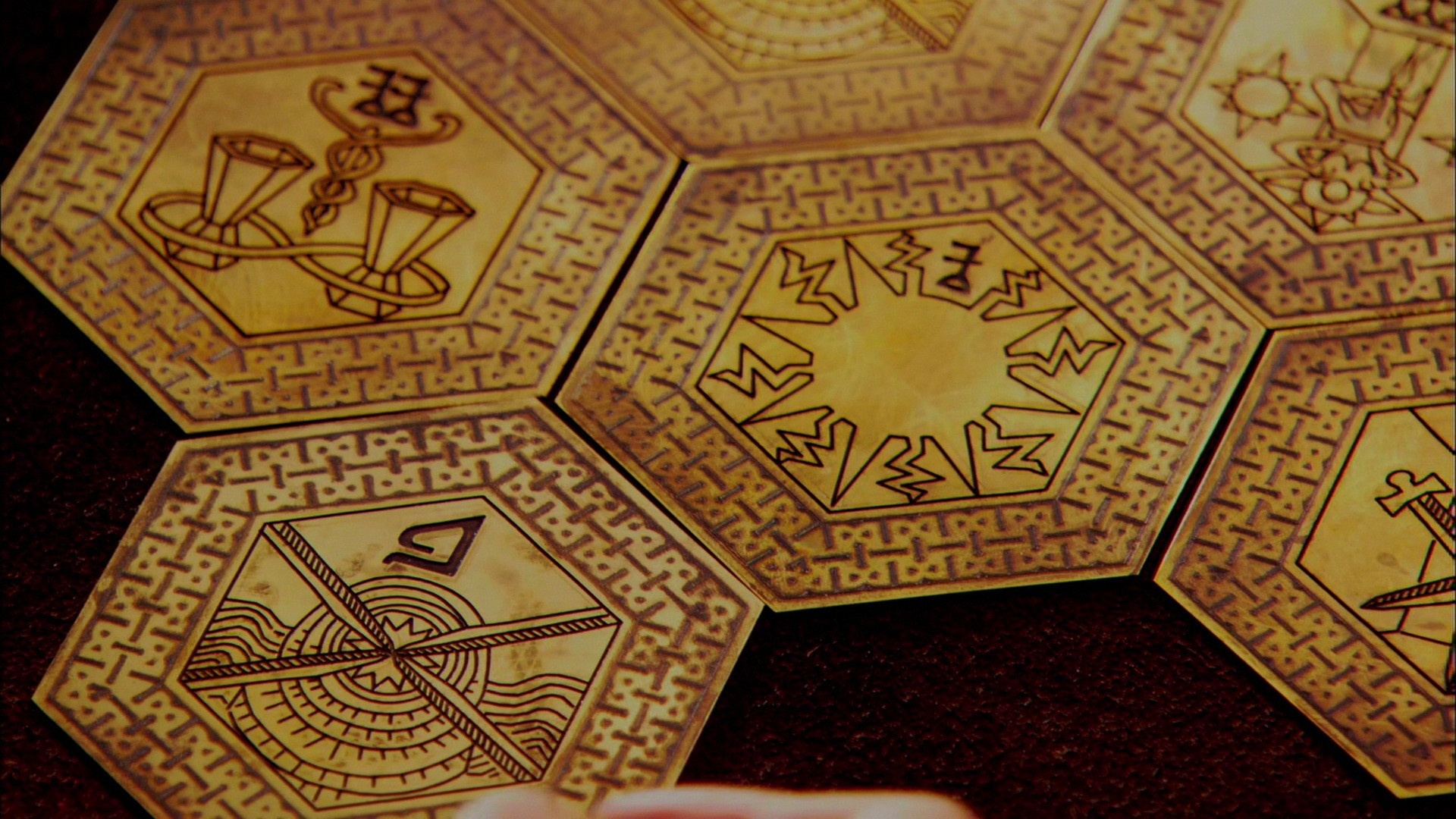
It’s now less than a year until the theatrical release of Dune: Part Three - Denis Villeneuve’s adaptation of Dune: Messiah -, so I thought it would be the perfect time to talk about the Dune Tarot.
Let’s start with a quick recap. Despite millennia of planning, the Bene Gesserit breeding program, which has run for the past 90 generations, has backfired. The Kwisatz Haderach doesn’t really want to work for the Sisterhood - he’d rather rule over the Known Universe. And what’s worse, Paul’s many superhuman abilities make him virtually untouchable.
So how do you get to someone who sees the past, the present, and the future?
It’s obvious, isn’t it? You drop a new deck of cards.
Don’t forget, Dune doesn’t do supernatural, so despite having godlike abilities, Muad’Dib isn’t magic - and that’s why I think the Dune Tarot is such a genius device. Its effects are logical, and it works as a plot device, a political weapon, and a believable social phenomenon.
Let’s get into it.
Fun fact: the official Dune: Bene Gesserit Tarot Deck and Guide was just released a few weeks ago.
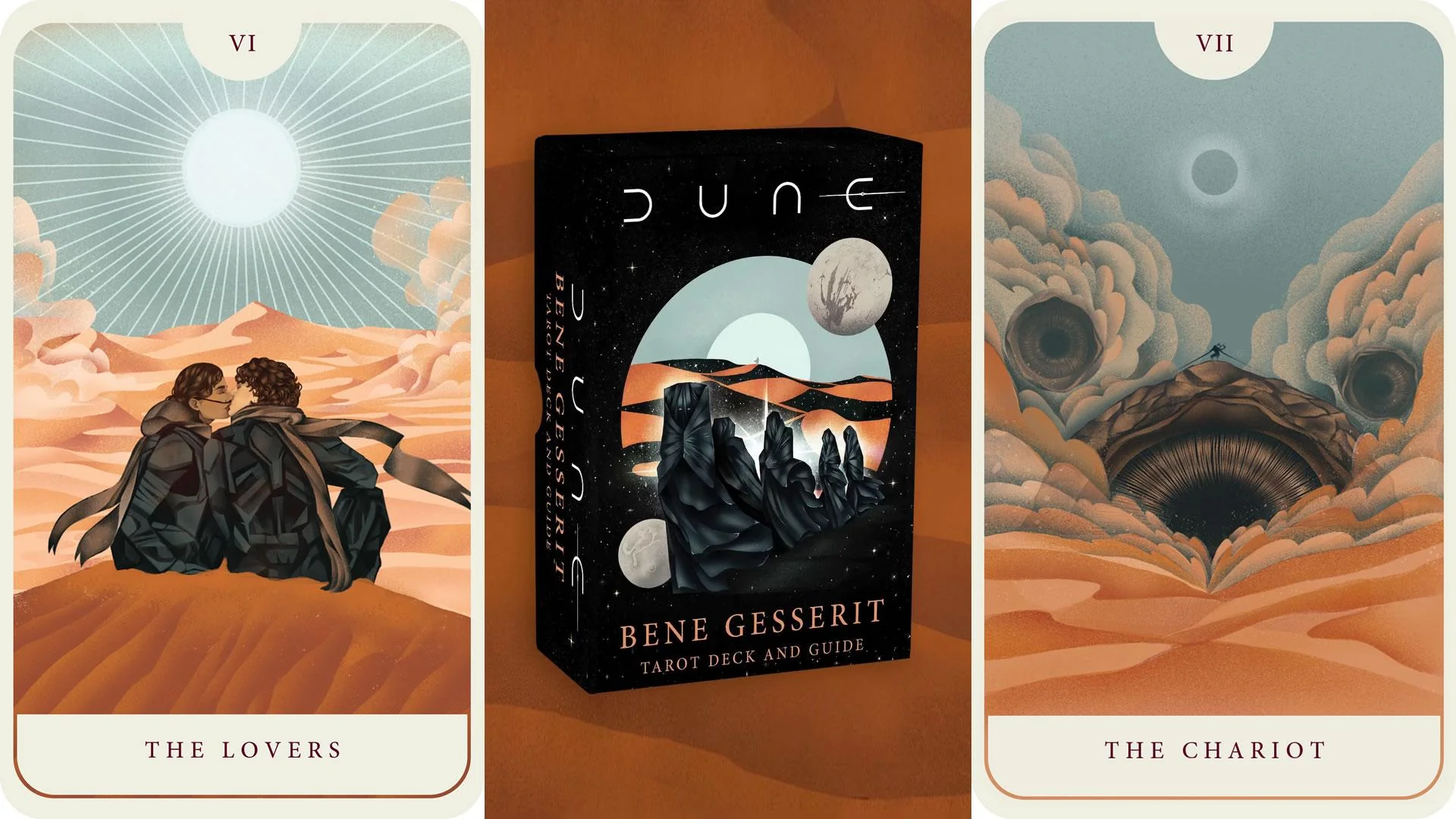
Each of the 78 cards in this deck applies the themes and motifs of Dune to tarot reading, and it includes a comprehensive guide to explain card meanings.
We know from Irulan’s descriptions that Paul’s prescience is similar to regular sight: he can see far when he’s atop a metaphorical hill, but he can see much less when he’s down in a valley.
What isn’t made explicit is that these temporal hills and valleys are representative of certainties and uncertainties in human behaviour, and that Paul can not only “see,” but because he’s a Mentat, can enhance his “vision” by calculating probabilities.
The Dune Tarot poisons his data pool.
Instead of making whatever decisions they would’ve made otherwise, millions of people now rely on reading the cards - which are drawn at random.
Instead of data, we get noise.
The damnable tarot! It muddied the waters of Time until the prescient strained to detect moments but an hour off. Many a fish took the bait and escaped, he reminded himself. And the tarot worked for him as well as against him. What he could not see, others might not detect as well.
— Muad’Dib, Dune: Messiah [1969]
There’s a secondary effect as well, maybe a tiny bit more handwavy than the first.
The premise here is that prescient beings cannot “see” each other.
And Irulan, hiding a smile behind her hand, thought: It's true then. Our Emperor cannot see a Steersman. They are mutually blind. The conspiracy is hidden.
— Dune: Messiah [1969]
And while those who dabble in the Tarot on Dune are of course nowhere near a Guild Navigator’s, let alone Paul Muad’Dib’s level, it’s confirmed by Alia that the Spice grants a smidge of prescience.
Spice addiction always conveyed some sensitivity to prediction. Fremen were notoriously fey. Was it an accident that so many of them dabbled in portents and omens here and now?
— Alia, Dune: Messiah [1969]
So one could argue that thousands of micro-oracles on Arrakis could create a bit of prescient static.
This worked so well that even dangerous amounts of Spice wouldn’t help provide more clarity - both Paul and Alia tried in vain.
It had taken a massive dose of the spice essence to penetrate the mud thrown up by the tarot. All it had shown him was a falling moon and the hateful way he'd known from the beginning. To buy an end for the Jihad, to silence the volcano of butchery, he must discredit himself.
— Muad’Dib, Dune: Messiah [1969]
First of all: brand recognition.
Red and green packages containing the new Dune Tarot were prominent among the vendors' wares.
— Dune: Messiah [1969]
Thanks to his legend and the religion that sprang up in his name, the cards were still popular even after Paul walked into the desert.
The landing was a noisy place: there were Mahdi Spirit Cultists in green robes and carrying live hawks trained to screech a "call to heaven." Food was being sold by shouting vendors. Many things were being offered for sale, the voices shouting in competitive stridence: there was the Dune Tarot with its booklets of commentaries imprinted on shigawire.
— Children of Dune [1976]
But more importantly, they indeed helped those with limited prescience to focus their abilities.
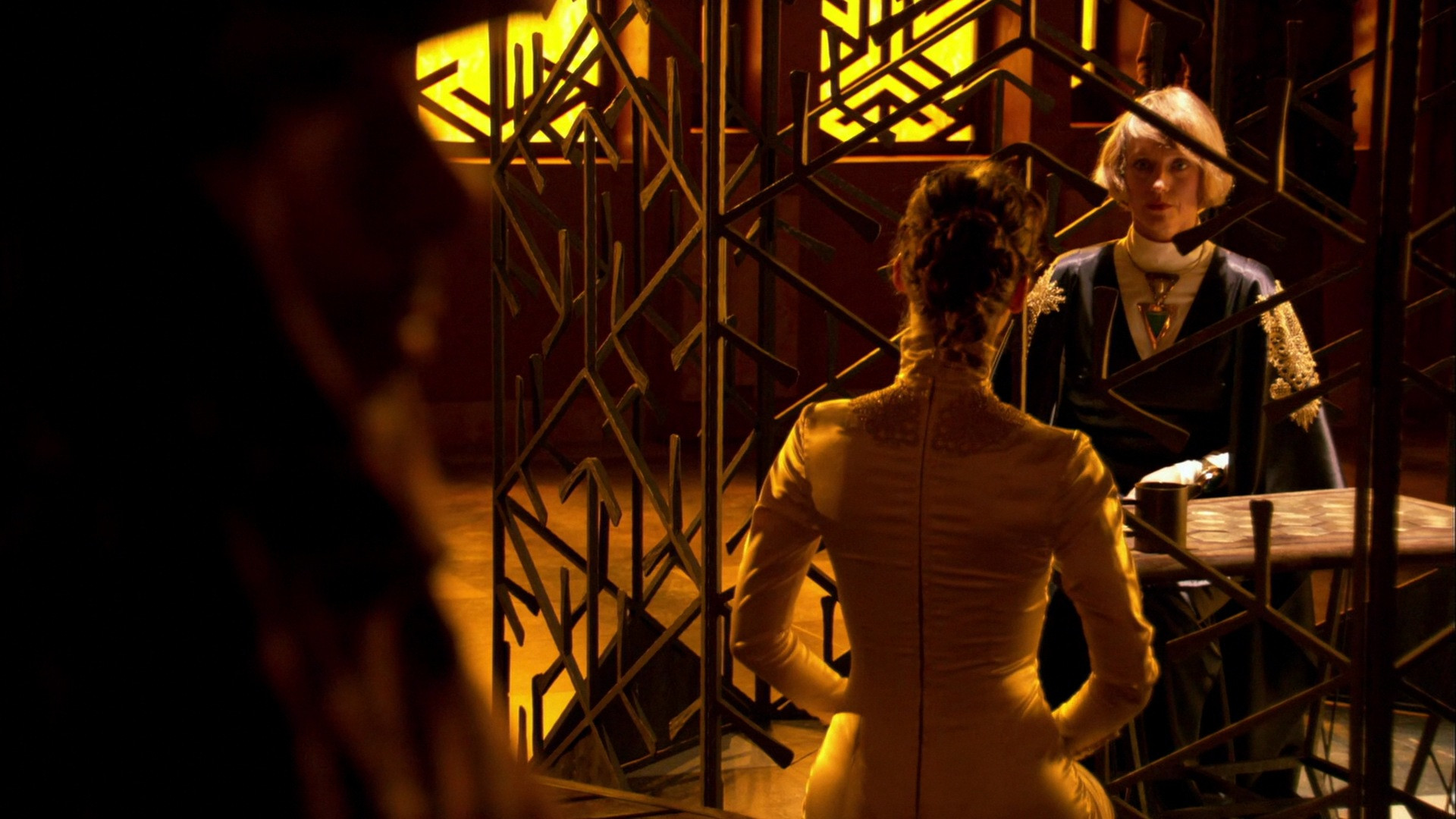
We know that there are two groups of people hopelessly addicted to Spice: the Fremen and the Bene Gesserit, so it comes as no surprise that the Reverend Mothers would use the cards.
[Reverend Mother Gaius Helen Mohiam] begrudged the burdens age had imposed on her: the aching joints, responses not as quick as once they'd been, muscles not as elastic as the whipcords of her youth. A long day lay behind her and a long life. She'd spent this day with the Dune Tarot in a fruitless search for some clue to her own fate. But the cards were sluggish.
— Dune: Messiah [1969]
Of course, this isn’t magic either - the prescient ability is present, the card only helps focus. The Dune Encyclopedia makes this even more explicit.
"Meaning resides not in the cards but in the mind of the reader; the cards provide only a focus and a symbology for the channeling of the energy, for the clearing of the vision, for the opening of the eyes of the seeker."
— Dune Encyclopedia [1984]
As it is so often the case with Herbert, we only get a glimpse.
A total of four cards are confirmed in the core canon: Great Worm, Desolate Sand, Kwisatz Haderach, and the Eight of Ships.
The card of the Great Worm lay beneath Desolate Sand. Patience was counseled. Did one require the tarot to see this? [the Reverend Mother] asked herself.
[…]
When [Irulan] had gone, the Reverend Mother returned to her tarot cards, laying them out in the fire-eddy pattern. Immediately, she got the Kwisatz Haderach of the Major Arcana and the card lay coupled with the Eight of Ships: the sibyl hoodwinked and betrayed. These were not cards of good omen: they spoke of concealed resources for her enemies.
— Dune: Messiah [1969]
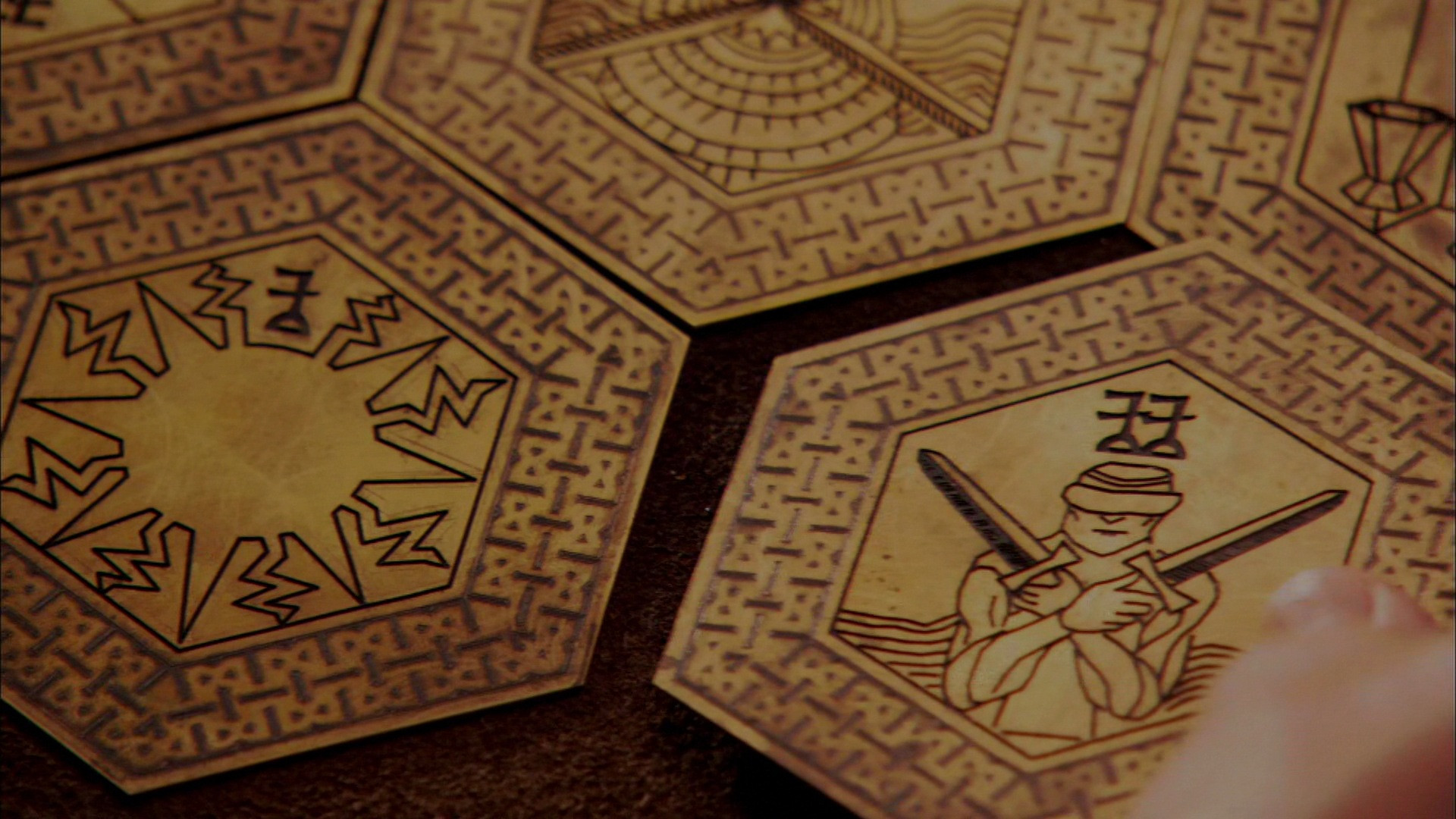
If you want to have more, the Dune Encyclopedia created the full deck, listing all 22 cards of the Major Arcana - including the three above. Interestingly, it breaks canon by omitting Ships from its Minor Arcana suits and listing Knives, Globes, Staves, and Basins instead.
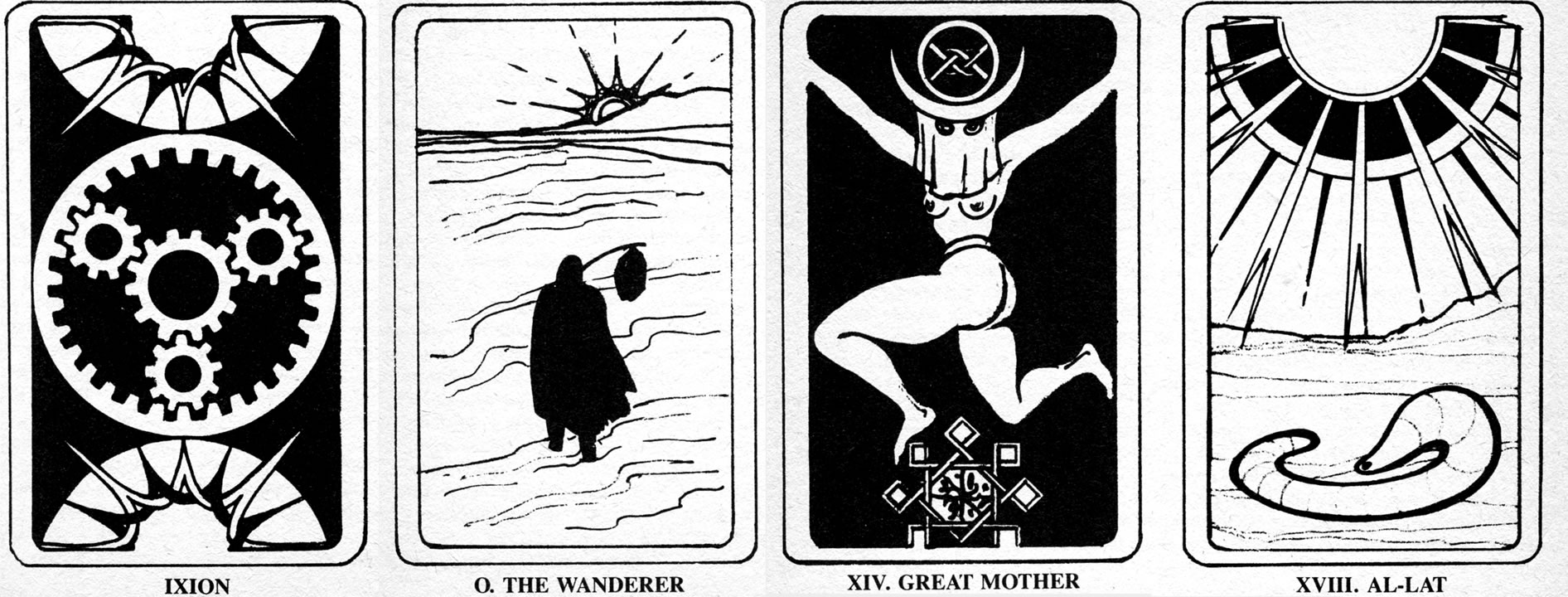
And if you’re ok with the Expanded Universe, you get a different set, one that is much closer to our real-world cards.
[…] a panoply of ancient icons modified to have relevance to Dune—a Coriolis storm of sand, an Emperor resembling Paul, a goblet overflowing with spice, a sandworm instead of a dragon, and an eerie Blind Man, rather than Death
— The Winds of Dune [2009]
Its beginnings are at least hinted at, but its end is complete headcanon territory.
If you read the EU, you could potentially argue that Alia had something to do with it.
“Similar men did this on Caladan while Paul was alive, during the worst years of his Jihad. When I could no longer tolerate it, Gurney and I evicted them.”
“Then I should do the same here. The Dune Tarot has always made me uneasy.” Wheels seemed to be turning in Alia’s mind, and she brooded for a moment. “Might you offer me your advice about how to accomplish it?”
— The Winds of Dune [2009]
But if you ask me, the cards outlived their usefulness after Leto II tried his hand at sandtrout godhood.
Unlike his father, he had a set path in mind, the Golden Path. He knew what he needed to become and how he needed to oppress the people of his Empire; how he needed to change Arrakis and keep everyone on a short (spice) leash.
And there was no amount of card tricks that could stop him.

.svg.png)
.png)

If you wanna chat, find me on BlueSky.
Even if you're not a supporter (yet), you can get new articles as an email as soon as they're published - full length for free stuff and a preview of the premium content.


_06201.jpg)