_06201.jpg)
Ask anyone to name a musical instrument from Dune, and they’ll say baliset.
Now ask them to name another, and they’ll probably struggle.
No wonder: it’s the single most referenced musical instrument. In the original Dune it’s mentioned 2.5x more often than Shaddam IV, and out of the six books of the core canon, it’s only missing from Heretics.
And I’m not saying I found too many more, either. Because just like with guns and spaceships, Herbert doesn’t exactly go out of his way to provide us with details.
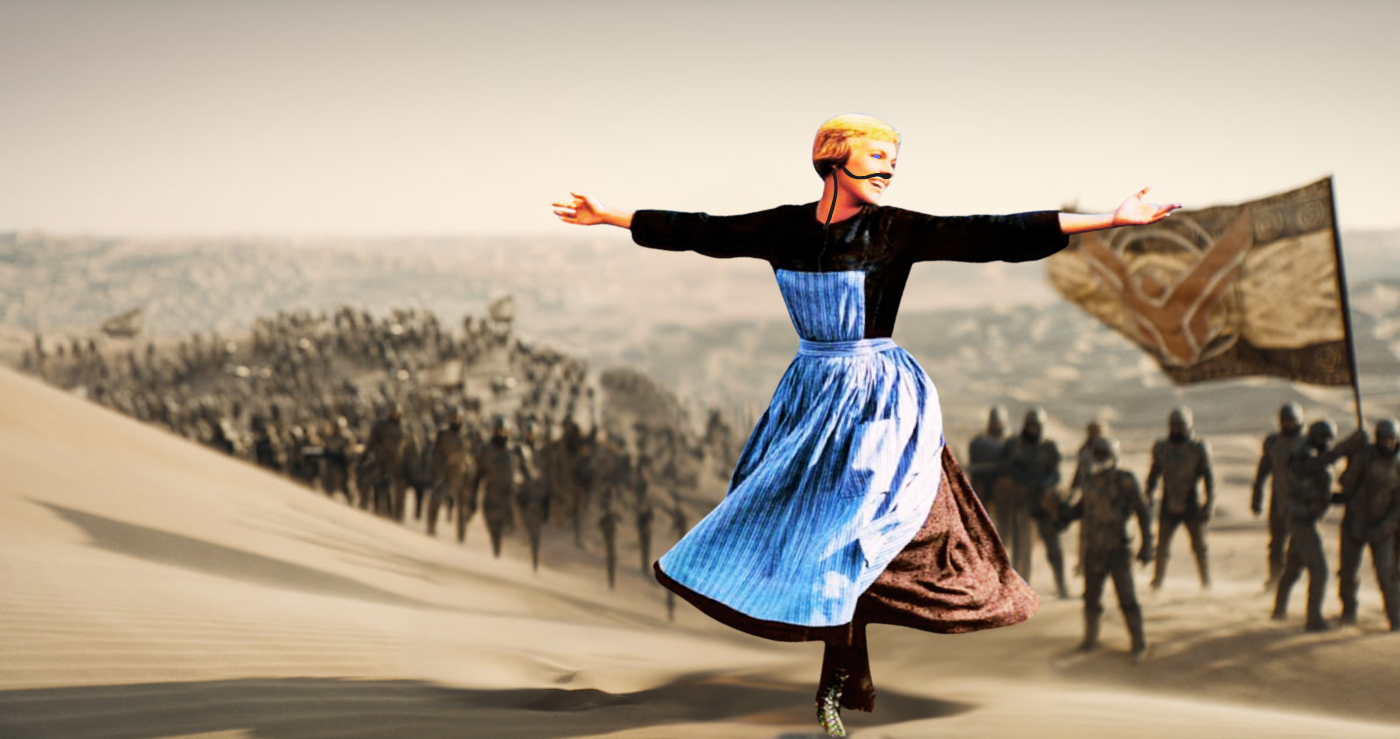
The dunes are alive with the sound of music, but it’s usually described by its effect rather than its source - and even if the source is mentioned, it’s usually something generic.
As [Leto and Ghanima] neared the qanat they heard music from a high entrance of the sietch. It was an old-style Fremen group — two-holed flutes, tambourines, tympani made on spice-plastic drums with skins stretched taut across one end.
— Children of Dune [1976]
What’s interesting is that the few instruments that are named, all seem to have a medieval, sometimes even ancient origin.
Let’s start with the big one.
BALISET: a nine-stringed musical instrument, lineal descendant of the zithra, tuned to the Chusuk scale and played by strumming. Favorite instrument of Imperial troubadors.
— Terminology of the Imperium, Dune [1965]
There's much to unpack in that definition, so let's take it piece by piece.
In the original Dune, Paul observes "the nine-string baliset slung over Gurney's shoulder with the multipick woven through the strings near the head of the fingerboard." The multipick - whatever exactly it is - seems to be the standard playing implement, as it has a holder on the instrument itself.
Halleck took the baliset, flicked the multipick out of its catch on the fingerboard. He drew a soft chord from the instrument, found that someone had already tuned it.
— Dune [1965]
And as for those tuned strings, we also know that two are separate from the other seven and are specifically there to provide some bass.
In four years of practice, Leto had achieved a certain fluency, although the two bass side strings still gave him trouble.
— Children of Dune [1976]
Along with the side placement of the bass strings, my argument against a baliset being a guitar is that its named ancestor is the zithra - I make an assumption here but that sounds an awful lot like zither, which is a class of instruments that have flat bodies and no necks.
_001.jpg)
As for the other, in-universe details: Chusuk is known as the ‘Music Planet’, noted for the quality of its musical instruments. But if it has a scale named after it, it seems fair to assume they set the standard not only for the hardware but also for how it should be used.
Aside from Gurney Halleck (and his impressive opus of songs), we know of the troubadour Tagir Mohandis, who improvises a cheeky song in Children of Dune before flying off to Salusa Secundus.
And, of course, if an instrument is used by the pop stars of the era, it'll be popular with everyone else. Jamis had a baliset - before Paul “inherited” it. Leto II got one from Gurney for his fifth birthday. We know that Chatt the Leaper, captain of the Fedaykin, enjoyed playing. And Farok's blind son played both the baliset and the rebec. Speaking of which…
It appears in Messiah and Children, and it's tied directly to semuta.
It’s introduced to us in the scene where the Tleilaxu Face Dancer Scytale visits the old Fremen warrior Farok. Before Scytale even sits down, he hears "the sound of a rebec wailing through the atonal dissonance of semuta music."
The youth took up his rebec, drew the bow across it. Semuta music wailed from the strings. As though drawn by the sound, a young woman in a blue robe emerged from a doorway behind the musician. Narcotic dullness filled her eyes which were the total blue of the Ibad. She was a Fremen, addicted to the spice, and now caught by an offworld vice. Her awareness lay deep within the semuta, lost somewhere and riding the ecstasy of the music.
— Dune: Messiah [1969]
Unlike the baliset, the rebec is not made up; it's a bowed string instrument from medieval Europe, small and pear-shaped, typically with three strings.
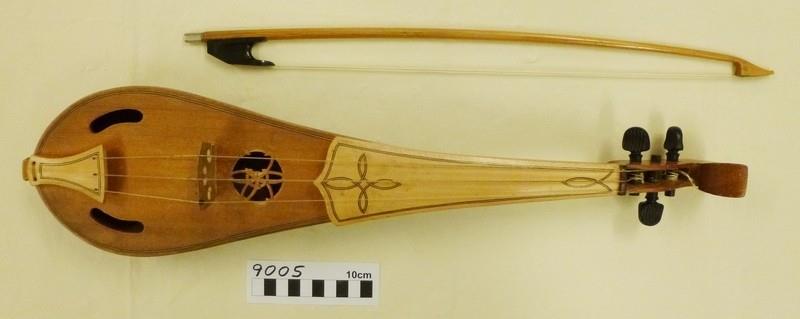
The instrument shows up once more, enhancing a vision experienced by a young Leto II.
The voice of a rebeck echoed from somewhere behind him. The music echoed and echoed until it entered his head, still echoing. It suffused his body and he felt himself to be large, very large, not a child at all. And his skin was not his own.
— Children of Dune [1976]
Herbert spells it "rebeck" this time, but it's clearly the same instrument.
The rebaba shows up twice, and only in Messiah.
The first is a scene deep inside Paul's citadel, where a ten-string rebaba "tinkled with a song of the Jihad, a lament for a woman left behind on Arrakis." The second appearance is during a public ceremony for Alia: a "wailing rebaba" cuts through the acolytes' chanting, silencing them.
The rebaba has real-world ancestors - although here it feels like Herbert did a bit of a mix and match. The instrument we know as rebab usually has only two or three strings and couldn’t possibly accommodate ten, while the lute-like rubab (depending on what variant we’re talking about) can do as many as twenty-one.
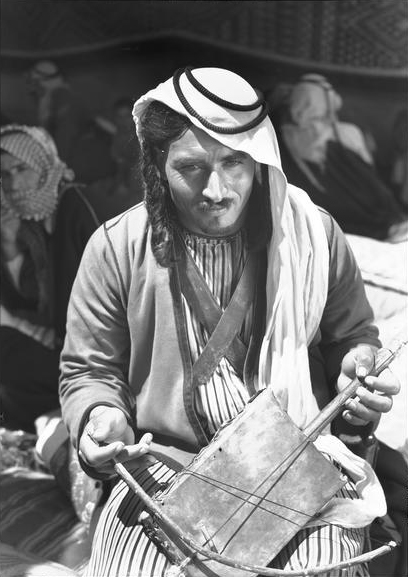
Bediun playing rebab by Frank Hurley via Wikipedia
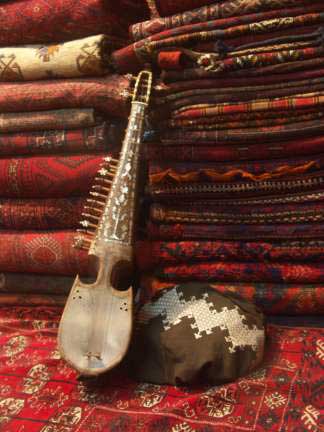
Rubab by Cicrane via Wikipedia
The biwa is introduced as a stepping stone to learning the baliset, and mentioned only once across the core canon.
Presently, he heard the sounds of a biwa lute in the outer office. Yes, that young acolyte had a talent. The bass strings were like rain drumming on a rooftop, a whisper of middle strings underneath. Perhaps she could move up to the baliset someday.
— God Emperor of Dune [1981]
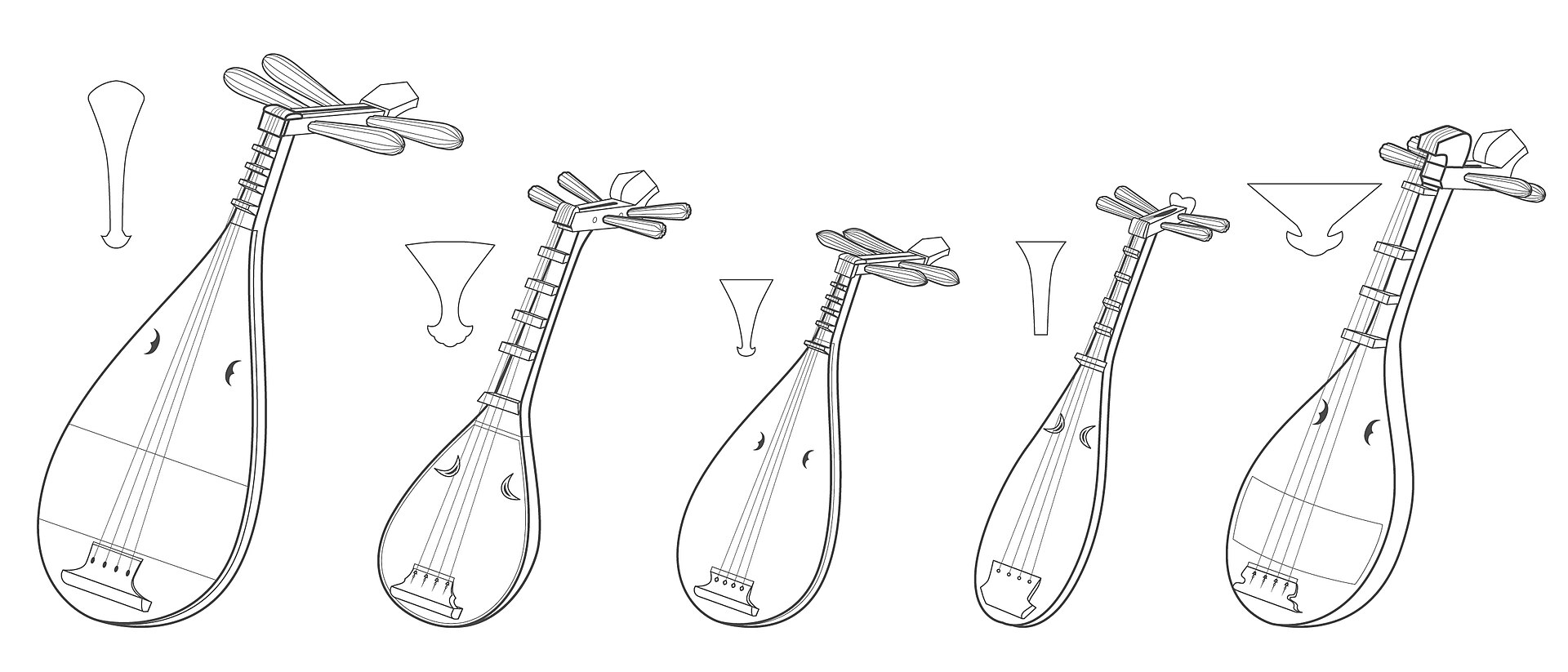
Like the rebec, it’s a real-world instrument: a Japanese short-necked wooden lute traditionally used in narrative storytelling. It’s a plucked string instrument that first gained popularity in China before spreading throughout East Asia, eventually reaching Japan sometime during the 8th century.
Last but not least, when Mohaim is being escorted through the passages of the citadel in Messiah, we get the timbur.
They passed an open doorway from which emerged the sound of timbur and flute playing soft, elder music.
— Dune: Messiah [1969]
With no further details, and Herbert’s proven propensity to include a lute-type instrument, my best guess is the tambura - but in a quiz, I would also accept the tanbur as an answer. Both are long-necked, stringed instruments.
With all these medieval (and ancient) instruments back in fashion, it might come as a surprise that the ebony-and-ivory keys of the piano have long been forgotten.
"I've never heard of this ... this ... piano, did you say? Is it like the baliset?"
"Distant cousins. But it could only be tuned to an approximate key. An idiosyncracy of the instrument."
"Why do you single out this ... this piano?"
"Because I sometimes think it too bad we no longer have it. Producing perfection from imperfection is, after all, the highest of art forms."
— Scytale and Odrade, Chapterhouse: Dune [1985]
Which is a pity, because Reverend Mother Odrade would love to bring back some jazz.
She liked the idea of jazz although the music distracted her with its antique flavors and the dips into wildness. Jazz spoke about life, though. No two performances ever identical. Players reacted to what was received from the others: jazz.
Feed us with jazz.
— Chapterhouse: Dune [1985]

.svg.png)
.png)

If you wanna chat, find me on BlueSky.
Even if you're not a supporter (yet), you can get new articles as an email as soon as they're published - full length for free stuff and a preview of the premium content.