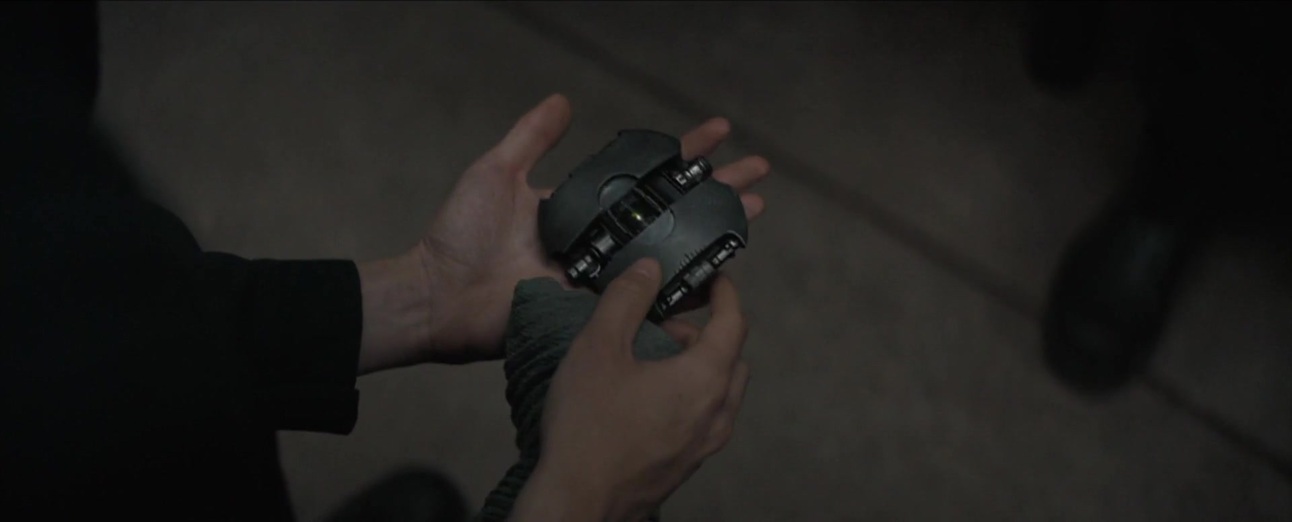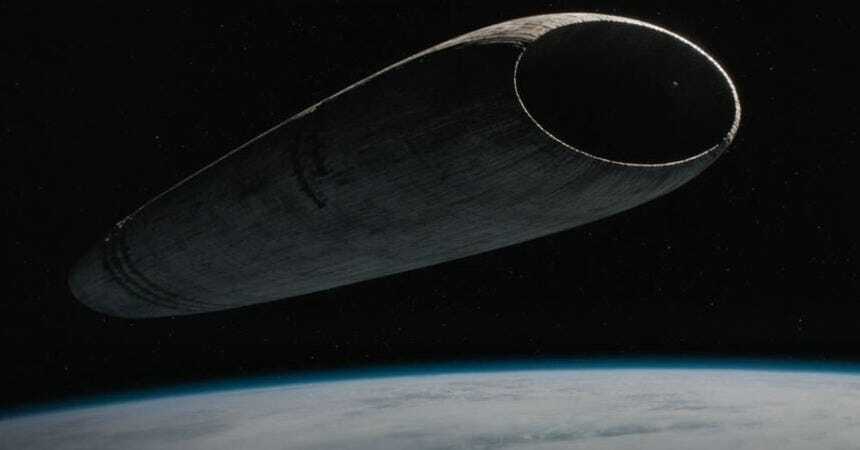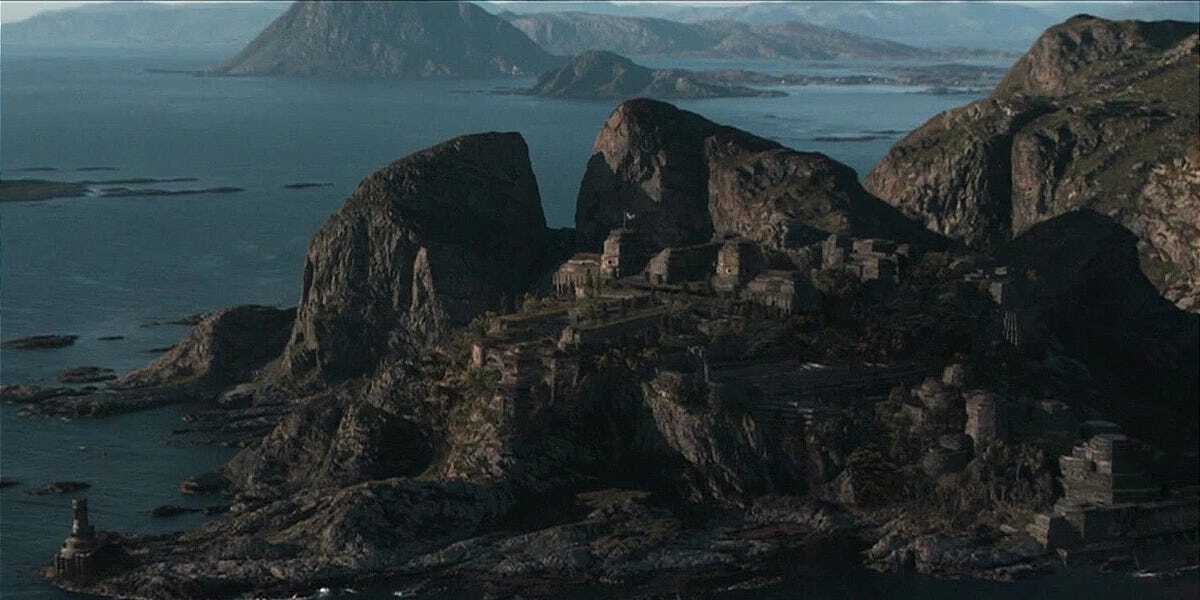
By the time of Paul Muad'Dib, Earth (or as it's more commonly known, Old Terra) barely existed. It was a faded memory, the stuff of legends and myths - a planet most people didn't even know existed.
The original six books don't talk about what exactly happened to Earth - whether it was destroyed or abandoned, the only thing that's clear is that it's no longer relevant.
The imperial seat is on the planet Kaitain, and the most precious substance can be found only on Arrakis.
Yet, Frank Herbert scattered plenty of references to our pale blue dot, providing us with a good understanding of how its influence continues into the far future.
Its languages form the basis of Imperial speech, its religious traditions merge into the Orange Catholic Bible, and its plants and animals spread across the known universe.
Names flitted through Paul's mind, each with its picture imprinted by the book's mnemonic pulse: saguaro, burro bush, date palm, sand verbena, evening primrose, barrel cactus, incense bush, smoke tree, creosote bush … kit fox, desert hawk, kangaroo mouse….
Names and pictures, names and pictures from man's terranic past—and many to be found now nowhere else in the universe except here on Arrakis.
— Dune [1965]
But the planet itself is rarely discussed, with regular characters showing almost no knowledge about humanity's origins.
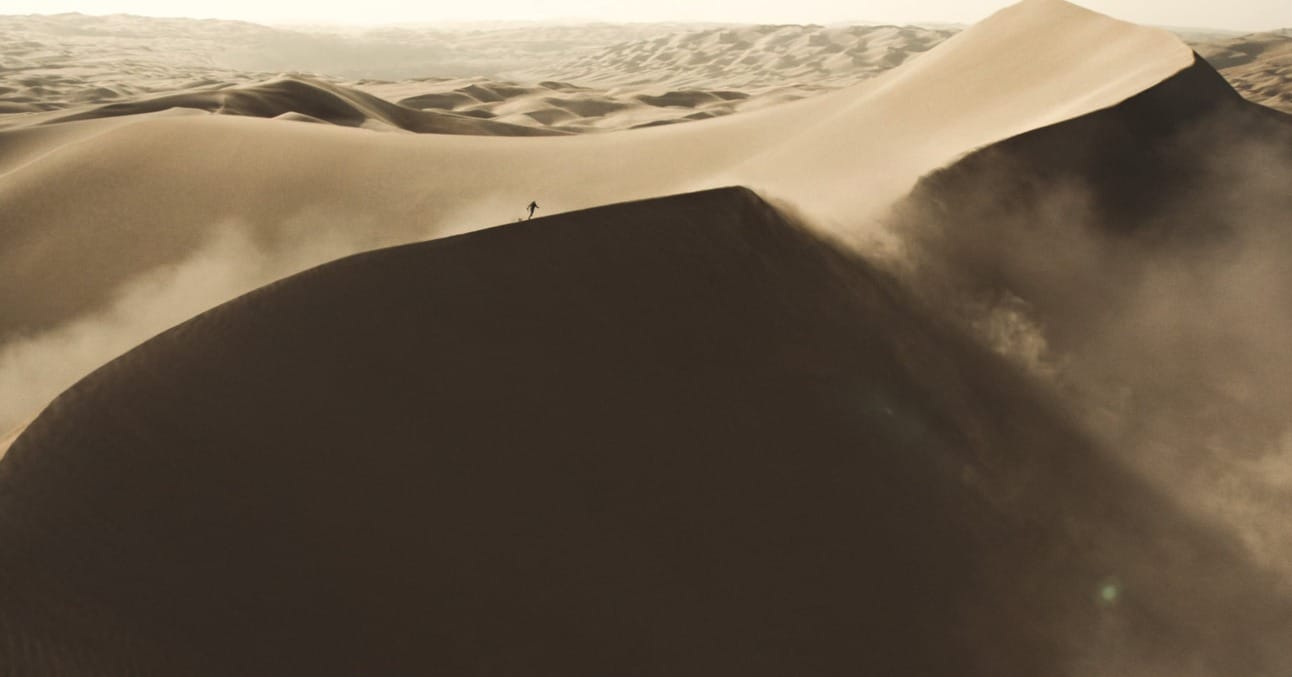
One of the most prominent exceptions to this is when Paul uses Earth history to put his own Jihad in perspective.
"How much history do you know?" Paul mused aloud, studying the shadowy figure beside him.
"M'Lord, I can name every world our people touched in their migrations. I know the reaches of Imperial . . ."
"The Golden Age of Earth, have you ever studied that?"
"Earth? Golden Age?" Stilgar was irritated and puzzled. Why would Paul wish to discuss myths from the dawn of time?
[…]
"There's another emperor I want you to note in passing -- a Hitler. He killed more than six million. Pretty good for those days.
[…]
at a conservative estimate, I've killed sixty-one billion, sterilized ninety planets, completely demoralized five hundred others. I've wiped out the followers of forty religions.
— Dune: Messiah [1969]
If, at this point in the story, you still haven't figured out that Paul isn't the hero, Herbert tells you point-blank that Muad'Dib is literally 10,000 times worse than Hitler, who is universally known as the worst person in human history.
And while Leto II's Other Memory provides us with glimpses of Earth's music, philosophy, and history, with references to Mozart, Bach, and Torquemada, we never actually learn how Earth became irrelevant.
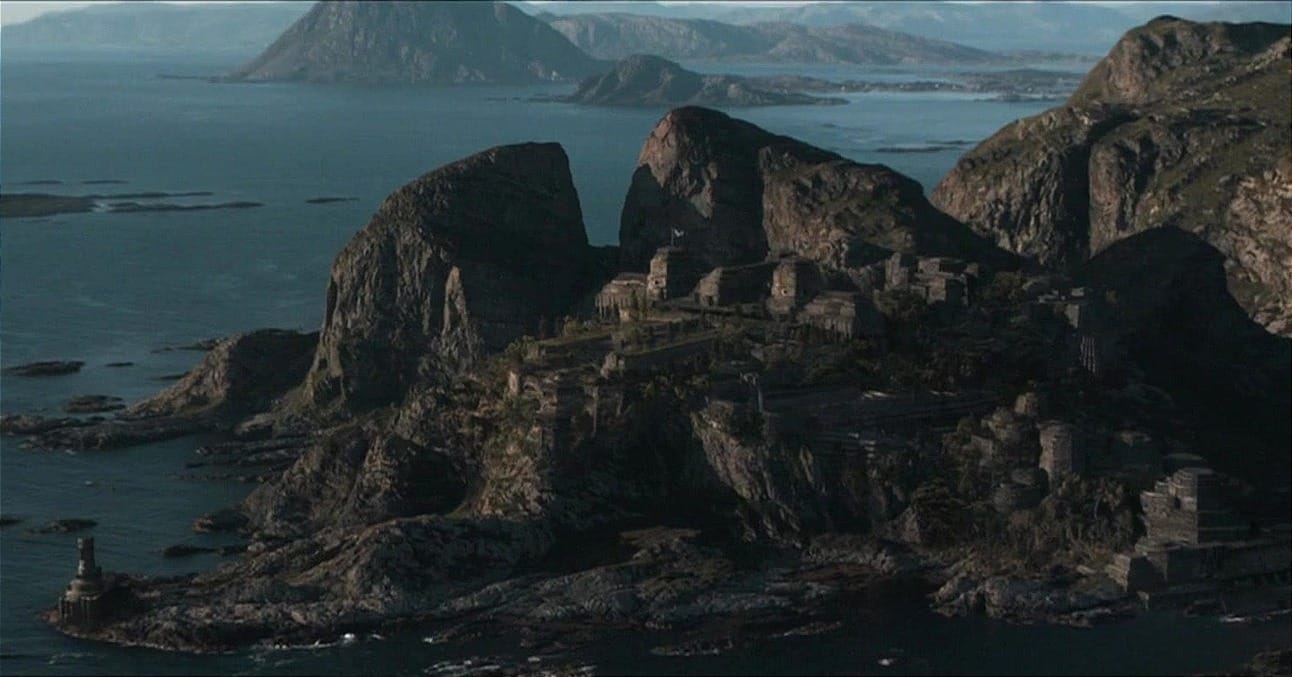
That's where both the Dune Encyclopedia and the Expanded Universe of Brian Herbert's books fill in the gaps in a big way.
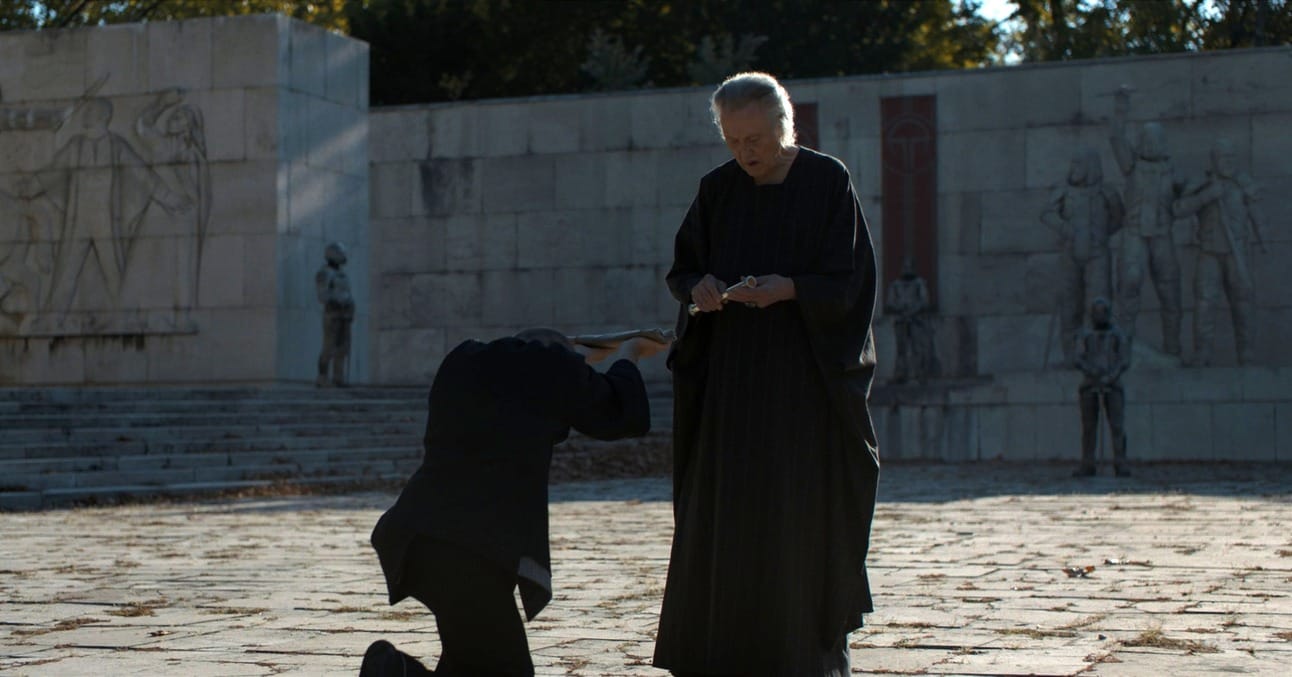
In the second appendix to Dune, we learn that Earth played a key role in the formation of the Orange Catholic Bible:
C.E.T. convened on a neutral island of Old Earth, spawning ground of the mother religions. They met "in the common belief that there exists a Divine Essence in the universe." Every faith with more than a million followers was represented, and they reached a surprisingly immediate agreement on the statement of their common goal:
"We are here to remove a primary weapon from the hands of disputant religions. That weapon—the claim to possession of the one and only revelation."
— Dune [1965]
While Herbert didn't keep a timeline as neat as the one in the Dune Encyclopedia, we know that the C.E.T. convened not long after the Butlerian Jihad - so about ten thousand years before Paul's time, Earth was still relevant. And made only more so by the creation of the OC Bible.
We also know that about two thousand years later, the planet itself still would've existed, as Laza tigers are described as descendants of the ones we know.
They were called Laza tigers, a special breed brought here to the planet Salusa Secundus almost eight thousand years past. Genetic manipulation of the ancient Terran stock had erased some of the original tiger features and refined other elements. The fangs remained long. Their faces were wide, eyes alert and intelligent. The paws were enlarged to give them support on uneven terrain and their sheathed claws could extend some ten centimeters, sharpened at the ends into razor tips by abrasive compression of the sheath. Their coats were a flat and even tan which made them almost invisible against sand.
— Children of Dune [1976]
But something must've happened in those 8000 years because Paul clearly states that of the terranic species "many [are] to be found now nowhere else in the universe except here on Arrakis."
Therefore, it is unclear how old the conch shell referenced in both the core canon and the expanded universe is.
The remains of a conch shell from the seas of Mother Earth lay on a low table beside the balcony rail. He took its lustrous smoothness into his hands, tried to feel backward in Time. The pearl surface reflected glittering moons of light.
— Dune: Messiah [1969]
On the bedside table, near the broken pink conch shell from Earth that Bludd had brought Paul from Ecaz, lay a stack of reports detailing troop movements, Guildship patterns, and another long list of planets that he could easily conquer. Impatiently, he knocked the papers aside.
— Paul of Dune [2008]
What is clear is that wherever humanity goes, Earth's biodiversity follows.
As they continued their walk in the aromatic hollow, Odrade's voice once more became pensive. "Each planet has its own character where we draw patterns of Old Earth. Sometimes, it's only a faint sketch, but here we have succeeded."
She knelt and pulled a twig from an acid-green plant. Crushing it in her fingers, she held it to his nose. "Sage."
— Chapterhouse: Dune [1985]
Plenty of terms have a direct relationship to the languages existing today: from the hebrew Kwisatz Haderach to the turkish kanly. Others have remained in use, but expanded or changed their meaning.
AL-LAT: mankind's original sun; by usage: any planet's primary.
— Dune [1965]
melange (me'-lange also ma,lanj) n-s, origin uncertain (thought to derive from ancient Terran Franzh): a. mixture of spices; b. spice of Arrakis (Dune)
— Children of Dune [1976]
And speaking of "Franzh," Ghanima and Leto choose French as their secret language (from their genetic memory) precisely because it's so obscure that no one else would understand it.
Oh, the landscapes I have seen! And the people! The far wanderings of the Fremen and all the rest of it. Even back through the myths to Terra.
— God Emperor of Dune [1981]
His Other Memory positions Leto II as one of the last repositories of comprehensive Earth knowledge in the universe - a fact that makes his eventual death all the more significant for humanity's connection to its origins.
While strictly speaking it isn't canonical, it did have Herbert's approval, and so the Dune Encyclopedia offers the closest thing to a complete history of Earth in the Dune universe, tracking human civilization from its beginnings through its expansion into space.
The Encyclopedia presents a timeline of Earth's future history:
All of human civilization as we know it - from the pyramids to TikTok - is just a blip in the Encyclopedia's grand chronology.
This timeline puts our present day around 14175 BG, only a few decades away from starting to colonize our solar system and only 773 years from the planetoid strike that will force humanity to relocate its governmental center to Ceres - an actual dwarf planet between Mars and Jupiter.
Our calendars will show the year 2838 when Earth is re-seeded and declared a planet-sized natural park. This decision ensured that it would never again become relevant in terms of galactic history.
With two exceptions: the creation of the OC Bible (as mentioned before) and the origin of the Fremen.
The Terran population, exempt from Imperial draft, included Zensunni nomads living in the Sahara Desert. When in 2800 AG Emperor Elrood V demanded colonists for the newly discovered planet Poritrin, the planetary governor rounded up some two million Zensunni and forcibly relocated them, beginning the migration that would eventually lead to the Fremen of Arrakis.
The Encyclopedia details the religious origins of the Zensunni on Old Terra, describing them as "followers of Maometh, the so-called Third Muhammed (1159-1241)" who later "abandoned Maometh's teachings in 1381, under the leadership of Ali Ben Ohashi."
This specific religious history connects the fictional Fremen directly to Earth's Islamic traditions, providing a clear throughline from our present day to the sandworms and stillsuits of Arrakis.
The Encyclopedia details several links between the Earth we know and the Imperium:
The Encyclopedia also explains how Earth's coat of arms tradition evolved into the heraldry of the Great Houses, how the Corrida (bullfighting) traveled from Old Terra with colonists, and how "to mark her new founded status, a Reverend Mother chose a three-part name which showed both the antiquity of the order and the efficiency of its breeding charts."
A woman kept her family name to designate her position in the breeding indices, but to it she added a name (always male) from the original order of the Bene Gesserat on ancient Terra
— Dune Encyclopedia [1984]
These details paint a picture of cultural transmission across millennia, with Earth's traditions adapted but not forgotten.
The Brian Herbert and Kevin J. Anderson novels offer the most explicit narrative about Earth's fate in their Legends of Dune trilogy, making the planet the central location for both humanity's downfall and uprising.
During the time of the Old Empire (millennia before the first Corrino), humans on Earth had become stagnant and overly reliant on machines, losing their ambition and spirit. While some wanted to reform the status quo, nothing ultimately changed.
This apathy allowed for a few, who called themselves Titans, to take control and rule for a century. It could've lasted even longer, except the Titan Xerxes decided to be lazy and handed over the admin password to the local AI supervising his planet, Earth.
Thus, Omnius was born, and Earth became the central planet in the machine empire of the Synchronized Worlds. An empire that lasted a millennium.
The human population on Earth was enslaved, forced to perform menial tasks and construct monuments to the Titans, who were working for Omnius at this point.
Another notable AI in this story is the robot Erasmus, which had a lab on Earth where it conducted various experiments on humans - both physical and psychological.
Erasmus inadvertently sparked the Butlerian Jihad when he killed the infant son of Serena Butler. This event ignited a widespread human revolt, to which Omnius responded with genocide, slaughtering the planet's human population.
Learning of the massacre, the League of Nobles debated their response but ultimately decided to eradicate the central Omnius, whatever the cost.
Vor took one last look at wounded Earth, remembering the lush blue-and-green landscape and wispy clouds. This had once been a fabulously beautiful world, the birthplace of the human race, a showpiece of natural wonders.
But by the time Xavier ordered the fleet to set course for home, the planet was nothing more than a radioactive slag heap. It would take a long time for anything to ever live there again.
— Dune: The Butlerian Jihad [2002]
Of course, this directly contradicts the Core Canon's assertion that the CET convened on Earth, not long after the Jihad. I don't know what to tell you.
Despite its destruction, elements of its culture survive:
These cultural remnants echo the fragmentary preservation of Earth's legacy seen in Herbert's original novels.
Whether preserved as a "natural park" (in the Encyclopedia) or destroyed by nuclear weapons (in the Expanded Universe), Earth remains a poignant reminder of humanity's complex relationship with its environment.
Earth exists in a state of being both remembered and forgotten. Characters reference Terran concepts without fully understanding their significance, much as we today might use phrases from Latin without knowing their original context.
This selective memory creates a realistic feeling in Herbert's world-building - the past isn't neatly preserved but persists in fragments and traces.

.svg.png)
.png)

If you wanna chat, find me on BlueSky.
Even if you're not a supporter (yet), you can get new articles as an email as soon as they're published - full length for free stuff and a preview of the premium content.